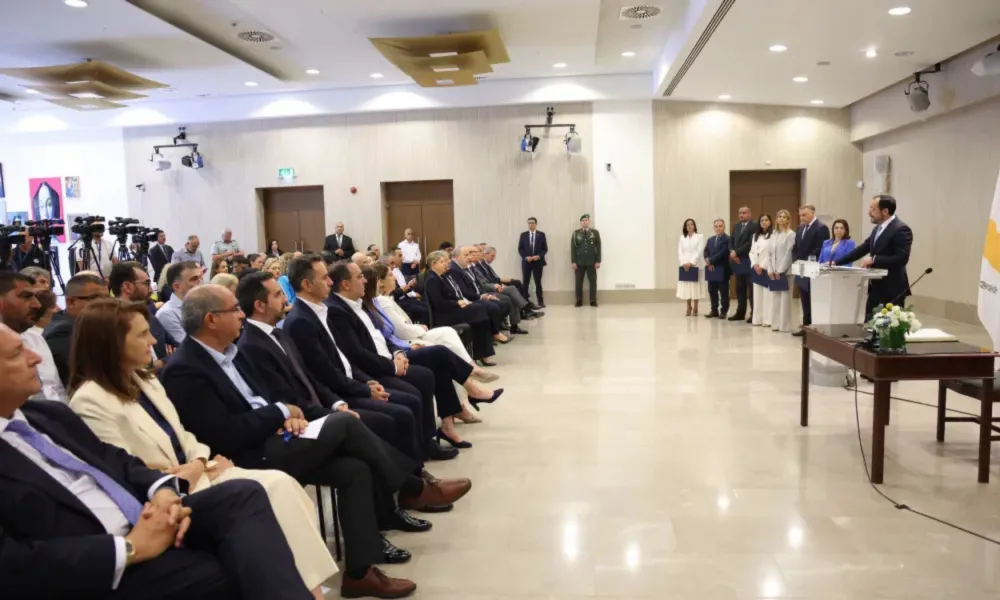

The government reshuffle and the appointments to semi-governmental organisations are closely interconnected.
Together, they form a single picture and reveal the same political logic.
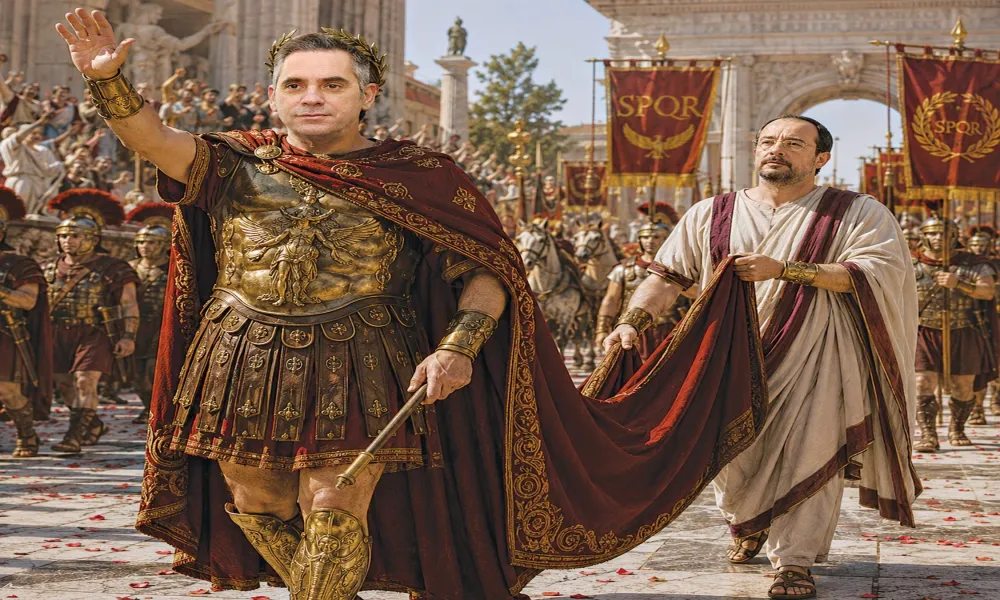
A logic that suggests President Nikos Christodoulides has already shifted the centre of gravity of his administration away from policymaking and towards preparations for the next presidential election.
Leadership ability?
Three and a half years after taking office, it has become increasingly clear that Nikos Christodoulides lacks the leadership ability required to conceal what the author describes as his real objective: creating the conditions necessary to remain in power in 2028.
Every major decision now appears to be filtered through the lens of political alliances, party balances and electoral arithmetic.
According to the article, this is something the president struggles to hide because of inherent weaknesses in his political character.
The reshuffle represented a major opportunity for a genuine reset.
It could have served as an indirect acknowledgement that the government had failed to meet many of the goals it had set itself. It could have signalled a change in philosophy and brought forward figures with proven technocratic competence and political independence.
Instead, the picture that emerged was one of political rebalancing, with the primary objective being the preservation and strengthening of the president's political support base.
That includes DIKO, what remains of the other parties that backed his election, a strong far-right audience with which he is said to align closely, particularly on the Cyprus issue, while also seeking to maintain channels to the centre-right and elements within DISY.
Without significant defections from that political space, building a new majority in 2028 will be difficult.
Every move made by the president today therefore appears, in the author's view, to be part of a carefully organised pre-election strategy.
When every political decision is interpreted primarily through its party-political consequences rather than its social impact, it is inevitable that the impression is created that the president governs with the next election in mind rather than the country's needs.
No matter how much he insists otherwise.
The appointments fiasco
That perception was reinforced further by the appointments to semi-governmental organisations.
The reaction that followed, the criticism from opposition parties and, most importantly, claims that some appointees were selected despite not having submitted applications for consideration, created a serious political issue.
The controversy has revived criticism of what the article describes as the proven failure of the so-called Advisory Council process.
The author argues that all questions surrounding the appointments should be answered with complete transparency and that it is the duty of the legislature to ensure this happens.
Even beyond the validity of the allegations, however, the controversy highlighted what is described as a deeper problem bordering on political deception regarding the supposed strengthening of boards of directors at semi-governmental organisations.
The reason, the article argues, is that appointments continue to be made on political rather than merit-based criteria.
These organisations manage critical infrastructure, public assets and strategically important services.
Their leaderships should inspire confidence not only because of their competence but also because of the way they are selected.
A captive of political ambition
Meritocracy, the author argues, cannot function merely as a communications slogan.
It must be a prerequisite for credibility.
Yet in what the article calls "the Christodoulides universe", everything has been transformed into a communications exercise.
Christodoulides was elected after promising to confront the pathologies of old-style party politics.
He promised a government of the best-qualified individuals, distance from party quotas and a new model of governance.
Today, however, he appears captive to what the author describes as an unchecked desire to do whatever is necessary to secure conditions that will enable his re-election.
The reshuffle and the appointments create the impression that party and personal considerations have not been reduced but remain the primary mechanism through which decisions are made.
This has broader consequences.
It strengthens the belief among many citizens that, regardless of who is in power, the same political habits survive.
That electoral promises about meritocracy are abandoned once power is obtained and that institutions continue to be treated as tools for managing political balances.
Real challenges pushed aside
Even more worrying, according to the article, is that while public debate is dominated by personalities, party balances and appointments, discussion of the country's major challenges remains on the sidelines.
The cost-of-living crisis continues to pressure households.
The housing crisis is worsening.
Energy costs remain high.
Public-sector reform continues at a slow pace.
The justice system still suffers from serious delays.
And no meaningful progress is visible on the Cyprus issue despite what the author describes as superficial initiatives promoted mainly for the president's communications objectives.
On all these fronts, the reshuffle and the appointments failed to send a clear political message or suggest the emergence of a new strategy.
Instead, they created the impression that the government invested more energy in shaping its future electoral alliances than in addressing society's real problems.
Every president has the right to plan for his political survival.
That is part of the democratic process.
However, when the pursuit of re-election begins to determine almost every important government decision, the article argues, the public interest becomes trapped between the country's needs and what it describes as Christodoulides' unchecked ambitions and political fantasies regarding the next electoral contest.