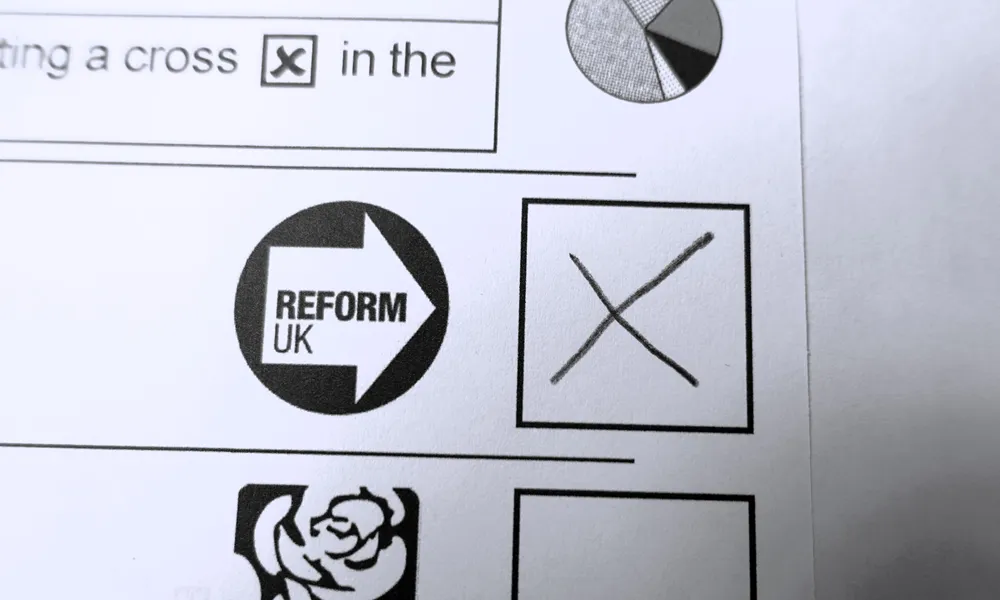
Nigel Farage has spent decades at the edges of British politics, loud enough to shift the national conversation but never quite powerful enough to seize it. That is changing with speed that has unnerved both major parties.
In local elections held across England on 7 May, Farage's Reform UK swept past the Conservatives to win 1,454 council seats and made inroads into the Scottish and Welsh Parliaments. The party took control of councils that had long been Labour territory, establishing itself, by most measures, as the single most potent political force in England outside the governing party. With a general election due by 2029, Reform's leadership is now seriously discussing the path to Downing Street.
"We have professionalised the party," Farage said on 8 May, describing the results as "a big, big day not just for our party but for a complete reshaping of British politics in every way."
A party remaking itself
Reform is no longer the shoestring operation it was even two years ago. It has relocated to Millbank Tower, a nearly 400-foot skyscraper on the Thames, and is expanding to a second floor to accommodate growing policy and campaign staff. Farage has begun assembling a shadow cabinet: Robert Jenrick, a former Conservative MP who joined Reform in January, has been named shadow chancellor, while Suella Braverman and Richard Tice, both defectors from the Conservative Party, have taken shadow portfolios in education and energy respectively.
The financial backbone has also solidified. Christopher Harborne, a cryptocurrency billionaire based in Thailand, has donated approximately $12.1 million to Reform UK and a further $6.7 million directly to Farage, a gift Farage says was made before he became a parliamentary candidate. The payment has nonetheless triggered a parliamentary rules inquiry over whether it should have been declared.

Limits of the surge
The scale of Reform's ambitions runs up against real constraints. The party won approximately 26% of the national vote on 7 May, meaning roughly three in four voters chose someone else. Its support is heavily concentrated in non-metropolitan England, with almost no inroads into London or the major cities. Critics from within the movement acknowledge that winning council seats in a fragmented field is a different proposition to winning a general election outright.
"So far, Reform hasn't really made a coherent political case to the country," said Ben Habib, a former senior Reform official who broke with Farage in 2024. "They can't just assume the other two parties are going to lose."
The party has also been embarrassed by several of its newly elected councillors. One was suspended after it emerged he had suggested online that the Nigerian population in his district should be melted down to fill potholes. Another resigned and was expelled after posts surfaced describing white people as a "master race." Reform's leadership acted quickly in both cases, but the episodes underscored the difficulty of managing a rapidly expanding membership.
Tim Montgomerie, a former adviser to Boris Johnson who defected to Reform after 33 years in the Conservative Party, put the challenge directly: "We have to do something to reassure middle England that we aren't the Nazis."
The anger fuelling the rise
What analysts consistently note is that Reform's base is not a monolith of conspiracy theorists or hard-right activists. Nick Tyrone, a journalist who spent almost two years interviewing Reform supporters for a forthcoming book on the party, said he found something more complicated: former Labour voters, working-class communities in the most economically deprived parts of Britain, people who feel entirely abandoned by the political mainstream.
"I thought it would be like diving into a Facebook meme; 'Christmas is being canceled,' anti-vax and conspiracy theories about Soros," Tyrone said. Instead, he found "a lot of people from traditionally Labour backgrounds. Very working class. And they're getting the most traction in the places that are most impoverished in Britain."
Immigration remains the party's centrepiece. Opposition to it ranks as the second-highest concern among British voters in recent polling, behind the cost of living, even as net migration has fallen under Prime Minister Keir Starmer's government. Farage, who has pledged to deport every undocumented migrant, is a polarising figure: one poll found that a third of Britons consider him "extreme right."
That anger is difficult to quantify but easy to observe. In one widely circulated incident, a British man repeatedly heckled Chancellor Rachel Reeves during a media appearance over taxes and the cost of living. For Montgomerie, the moment crystallised what Reform has managed to bottle. "The anger is extraordinary. It's off the scale. People feel that the government just has no idea how hard their lives are."
Makerfield: the next test
The most immediate measure of Reform's reach will come in a matter of weeks, when a parliamentary by-election is held in Makerfield, a working-class constituency between Liverpool and Manchester. The seat fell vacant so that Greater Manchester Mayor Andy Burnham could return to Westminster, a move widely seen as the opening gambit in a Labour leadership challenge against Starmer.
Reform swept all eight of Makerfield's council wards on 7 May, taking nearly twice the vote of the next closest party. Robert Kenyon, a plumber, is the Reform candidate. Stopping Burnham's political trajectory would send a powerful message.
"The stakes are high for us," Montgomerie said. "If we can't win in Makerfield, can we win anywhere? White, working class, not many graduates. It's our kind of territory."
Jonathan Brown, Reform's former chief operating officer and founder of the Centre for a Better Britain, argued that even a loss would not stall the party's trajectory. The infrastructure is in place, the money is flowing, and voter frustration with Starmer runs across party lines. "If there's anything that unites the country at the moment, it's that everyone hates Starmer. It really is remarkable."
Tyrone was equally direct about what he found on the ground. "There's going to be whole swathes of the Midlands that are going to go Reform, no matter what. When people are enthusiastic about someone, it's usually Reform."
Source: The New York Times