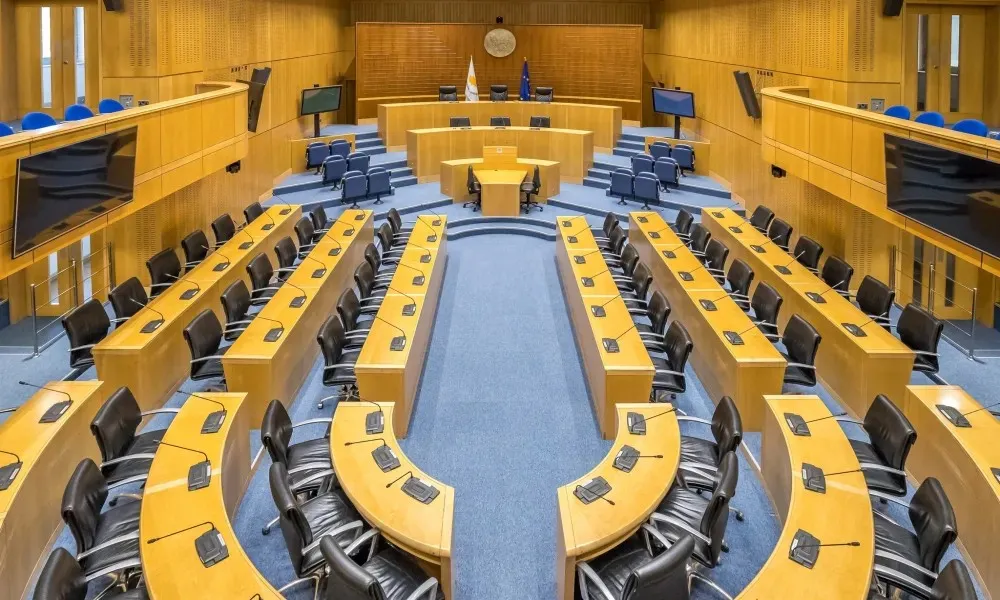
Hours after the parliamentary elections, the parties represented in the House are turning their attention to the second most important institutional position – the presidency of the House. The election result has created new data and a complex political equation that concerns not only the election of the new Speaker on 4 June, but also the broader political alliances that may take shape ahead of the 2028 presidential elections.
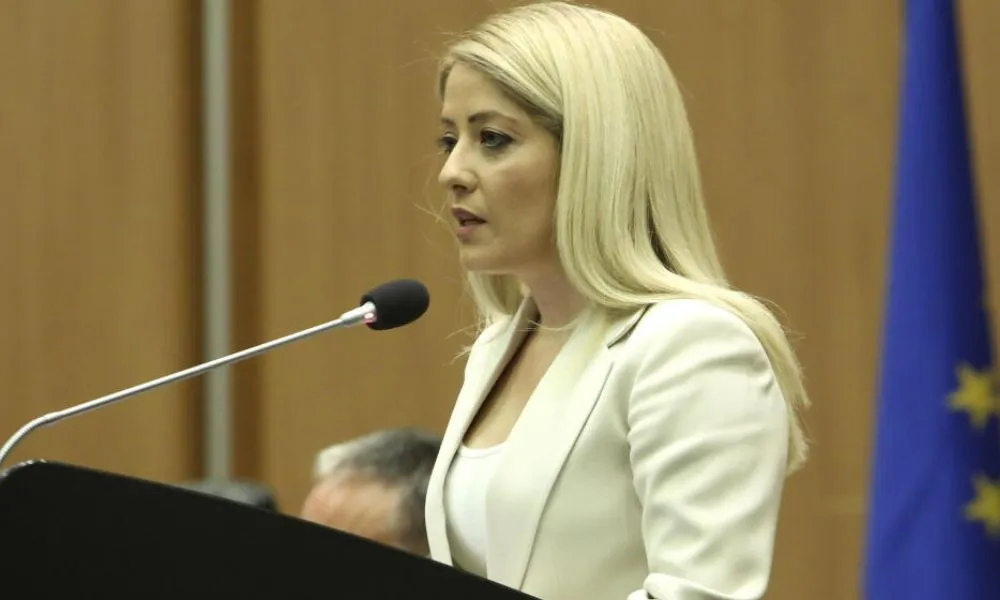
With DISY securing first place and 17 seats in parliament, Annita Demetriou’s position is naturally strengthened to seek the presidency once again.
Although the major parties have yet to fully reveal their positions, negotiations are already under way. At the centre of discussions is whether DISY will insist on Demetriou’s re-election or move towards a political compromise with DIKO, potentially handing the Speakership to the centrist party as part of a broader strategic cooperation with a 2028 horizon.
The ambition
Annita Demetriou herself has clearly signalled her desire to remain in the role. According to information, she has already informed close associates of her intention to run again, believing that DISY’s electoral result justifies such a move. In the aftermath of the elections, hers is expected to be the name DISY will formally place on the table during consultations with other parties.
Despite topping the vote, DISY does not have the numbers to impose its candidate outright. At the same time, ELAM, with its eight seats, has made clear it will not support Demetriou personally, while leaving open the possibility of backing another candidate from the DISY camp. It also appears open to supporting a DIKO candidate, which also holds eight seats, provided there is an agreement between DISY and DIKO.
It should also be noted that, under the new parliamentary rules, the Speaker can be elected with a simple majority in a second vote if no absolute majority is achieved in the first round.
This scenario is widely considered the most likely political outcome. A DISY–DIKO cooperation, potentially with ELAM support, could secure a strong parliamentary majority and at the same time lay the groundwork for future political alignments. In such a case, DISY will have to decide whether to insist on Demetriou’s candidacy or opt for a strategic compromise. It is also possible, based on past practice, that ELAM may field its own candidate in the first round, despite knowing the chances of success are minimal.
“Contacts and consultations”
On the other side, AKEL, with 15 seats, is carefully monitoring developments without publicly engaging in the discussion for now. Party leader Stefanos Stefanou avoided taking a substantive position, noting that contacts and consultations are needed to clarify the intentions of the other parties. Nonetheless, behind the scenes it is considered that AKEL’s only realistic option is cooperation with DIKO, possibly expanded to include smaller parties outside the DISY–ELAM axis.
Not interested…
ALMA is also seeking some role in the election, within the limits of its parliamentary strength. Its leader, Odysseas Michaelides, made clear that he will not personally seek the presidency of the House, stating that his priority is to consolidate the new party. He also reiterated that he rules out supporting candidates from the DISY–DIKO–ELAM bloc, leaving open the possibility of backing an alternative candidacy aligned more closely with AKEL.
In the coming days, political manoeuvring is expected to intensify, with parties balancing immediate parliamentary objectives against longer-term strategic goals. The election of the new Speaker thus takes on the character of a political barometer for alliances and convergences that may shape the political landscape in the period ahead, always with an eye on 2028.