


The Greece-Cyprus electricity interconnection is not a bilateral project but European energy infrastructure of strategic interest, Panicos Pourgourides, head of the European Commission Representation in Cyprus, told Politis, in a position aimed at Turkey. He repeated that the Commission supports the project and is following developments closely, "and is working with the Cypriot and Greek authorities, as well as with the implementing body, with the aim of advancing the project and addressing the delays". On the EU's involvement in the Cyprus problem, he said the appointment of Executive Vice-President Raffaele Fitto as the European Commission's special representative for Cyprus "confirms our commitment to contribute actively to the effort to resume negotiations". He also stressed the need to tackle "significant practical and administrative obstacles, which continue to limit the full use of the potential of the Green Line Regulation, both in everyday contacts and in economic cooperation". On EU-Turkey relations, and specifically the upgrading of the EU-Turkey Customs Union agreement, Pourgourides explained that "the erga omnes implementation of the existing customs union has always been a prerequisite for any further step, since December 2006". In other words, for negotiations on upgrading the agreement to formally begin, Turkey must lift the restrictions "that continue to apply against the Republic of Cyprus, including the access of Cypriot ships to Turkish ports and Cypriot aircraft to Turkish airports".

Turkey must respect sovereignty
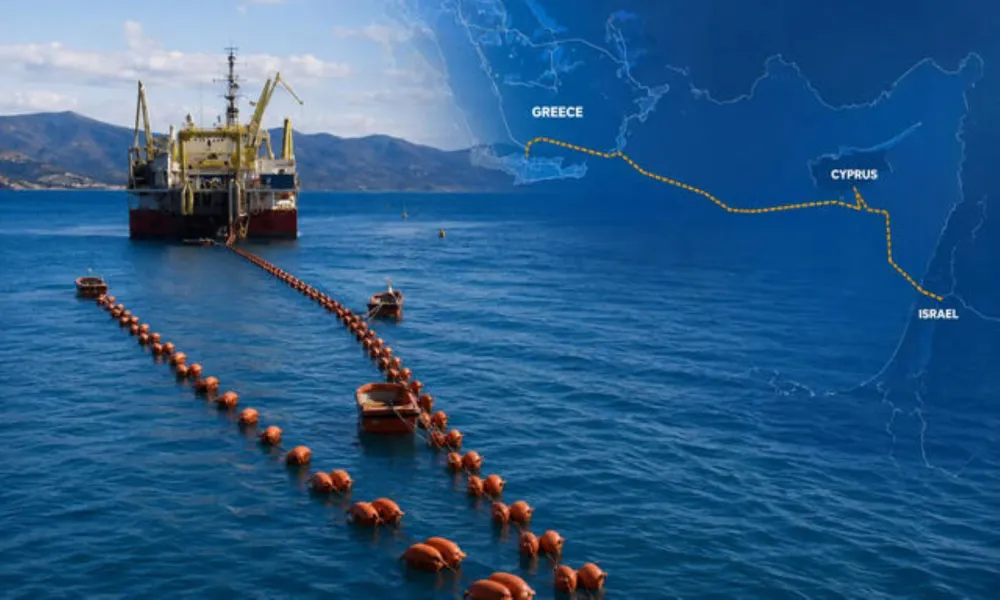
Asked whether the EU grant for the Great Sea Interconnector (GSI) could rise if the cost of the project increases, Pourgourides said the Commission has repeatedly confirmed its strong support for the GSI, "a project of strategic importance for the energy security of Europe and particularly of Cyprus, which remains the last member state without an electricity connection to the European grid". The project has been designated a Project of Common Interest and is among the eight strategic energy interconnections the Commission has prioritised under its "Energy Highways" initiative. EU funding of €657 million from the Connecting Europe Facility has been approved for its implementation. Completing the interconnection, he said, would end Cyprus' energy isolation, make it easier to integrate more renewable energy and strengthen security of energy supply. On a possible increase in the EU grant, he said the existing funding was approved on the basis of specific terms and procedures. "As a general principle, I would like to point out that an increase in the cost of a project does not automatically mean a corresponding increase in the European grant," he said. Any additional funding need would have to be assessed against the applicable rules, the funding available and the relevant European procedures, he said, adding that the Commission's priority remains advancing the strategic project and seeing it through to successful completion.
Asked what the EU is hearing from Turkey on the so-called geopolitical risk, and what has been done to shield the project politically, Pourgourides said the Commission has made clear that it expects Turkey "to respect the sovereignty and sovereign rights of all member states, in accordance with international law, including the United Nations Convention on the Law of the Sea", and to show a genuine commitment to good neighbourly relations and the peaceful settlement of disputes. The political and institutional significance of the project also stems from its clearly European character, he said. "The GSI is a Project of Common Interest, it is co-financed from the European budget and it has been included among the strategic energy interconnections the Commission has prioritised. It is therefore not simply a bilateral project of Greece and Cyprus, but European energy infrastructure of strategic interest."
Funding the economy after the Recovery Fund
Asked how Cyprus can fill the gap in public investment when Recovery Fund financing ends, Pourgourides said the Recovery and Resilience Facility had been an unprecedented tool of European solidarity, allowing Cyprus to finance important reforms and investment in the green and digital transition, health and competitiveness. "Its completion, however, does not mean the end of European support," he said. Instead, it highlights the need to ensure continuity of investment by making effective use of both national and European resources. The next Multiannual Financial Framework for 2028–2034 is precisely the opportunity to secure that continuity, he said, noting that the Commission has proposed an ambitious European budget of almost €2 trillion, focused on competitiveness, economic and social cohesion, energy security and Europe's resilience. At the heart of the proposal are new National and Regional Partnership Plans, which will allow member states to combine investment and reforms tailored to their specific needs, while the proposed European Competitiveness Fund will create additional funding for innovation, clean technologies and the growth of European businesses.
There is also a second dimension, which Commission President Ursula von der Leyen particularly highlighted in her State of the Union speech, he said. "The European budget on its own is not enough. We must mobilise much more private capital." Europe has a large pool of savings, he said, but it is not being turned into productive investment in Europe to the extent it should be, which is why the Savings and Investments Union, deeper capital markets and reduced fragmentation of the banking system are critical parts of the Commission's strategy. For Cyprus, he said, this new approach should mark a transition to a longer-term investment model, with better use of the new EU budget and cohesion resources, greater mobilisation of private capital and a focus on productive investment. The priorities are energy grids and interconnections, storage and renewables, digital infrastructure, innovation and skills. "The aim is to ensure a smooth transition without an investment gap," he said.
The Cyprus problem
"The resolution of the Cyprus problem remains a matter of particular importance for us," Pourgourides said. The Commission firmly supports the UN Secretary-General's efforts to resume negotiations, with the aim of a comprehensive and viable solution on the basis of a bizonal, bicommunal federation with political equality, in line with the relevant UN Security Council resolutions, the EU's principles and values and the EU acquis. The Commission plays an active role in supporting the UN-led process, he said, while contributing to confidence-building between the two communities through specific initiatives and funding programmes. The appointment of Fitto as the Commission's special representative for Cyprus last July "confirms our commitment to contribute actively to the effort to resume negotiations", he said. Fitto is working closely with the Secretary-General's Personal Envoy María Ángela Holguín and all parties involved, to support efforts to create the right conditions for substantive progress. Confidence-building is an integral part of that effort, Pourgourides said, and the Commission supports practical measures that bring the two communities closer, such as easing crossings across the Green Line, strengthening bicommunal cooperation and supporting civil society. The new Aid Programme for the Turkish Cypriot community, worth €34 million for 2026, serves the same goal. "The Commission remains ready to use all the means at its disposal to support the UN-led process and contribute to efforts for a comprehensive settlement and the reunification of Cyprus," he said.
The Green Line Regulation
Asked, in light of difficulties such as the foot-and-mouth disease crisis, whether the Green Line Regulation has achieved its aim and how it could work better, Pourgourides said the regulation sets the framework for the movement of people, goods and services and, more broadly, is an important tool for strengthening contacts and economic interaction between the two communities. The Commission's latest annual report records almost 7.8 million legal crossings in 2025, a figure he said shows the regulation's importance in the daily lives of Cypriots. EU funding has also allowed work to go ahead on expanding the Ayios Dometios crossing point to make movement easier. "However, there is still significant room for improvement," he said. The Commission has repeatedly pointed to the need to tackle significant practical and administrative obstacles that continue to limit the full use of the regulation, both in everyday contacts and in economic cooperation. Addressing them, in cooperation with the competent authorities and through dialogue with relevant stakeholders from both communities, could further strengthen contacts and economic exchanges, always with full respect for EU rules. "Our aim is for the Green Line to be less and less of an obstacle in the daily lives of Cypriots, and for the regulation to be used to the full as a tool to strengthen cooperation, build trust and prepare for the reunification of Cyprus," he said.
Turkey and the customs union
Asked whether an upgrade of the Customs Union agreement is feasible when Turkey does not recognise a member state, Pourgourides said the framework set by the European Council is clear. "The full and non-discriminatory implementation of the Additional Protocol to the Ankara Agreement towards all member states continues to apply in full. All parties are fully bound by the Council's decisions," he said. In simple terms, this means, among other things, that Turkey must lift the restrictions that still apply against the Republic of Cyprus, including the access of Cypriot ships to Turkish ports and Cypriot aircraft to Turkish airports. Modernising the customs union could bring significant economic benefits to Turkey, as well as mutual benefits for both sides, he said, including by extending it to areas such as services and public procurement and by giving better access to a single, dynamic market of 450 million consumers, "the only market with this level of legal certainty". "The potential benefits are therefore significant. Further progress, however, requires full respect for the rules and obligations that have been agreed," he said.
Migration: no room for complacency
Pourgourides said managing migration is a common European challenge that requires effective protection of the EU's external borders, cooperation with countries of origin and transit, tackling smuggling networks and respect for international law and fundamental rights. Migration flows are falling both in Cyprus and at European level, he said. As von der Leyen has stressed, Europe must keep control of migration management, combining responsibility with solidarity. "As the President stressed, irregular arrivals in the EU fell by 55% over the last two years and by a further 35% this year. This is substantial progress, but there is no room for complacency," he said. The new Pact on Migration and Asylum is an important step towards a common European approach that strikes a better balance between responsibility and solidarity, which makes its implementation particularly important for frontline countries such as Cyprus. The EU continues to support the Cypriot authorities in managing migration effectively, he said.