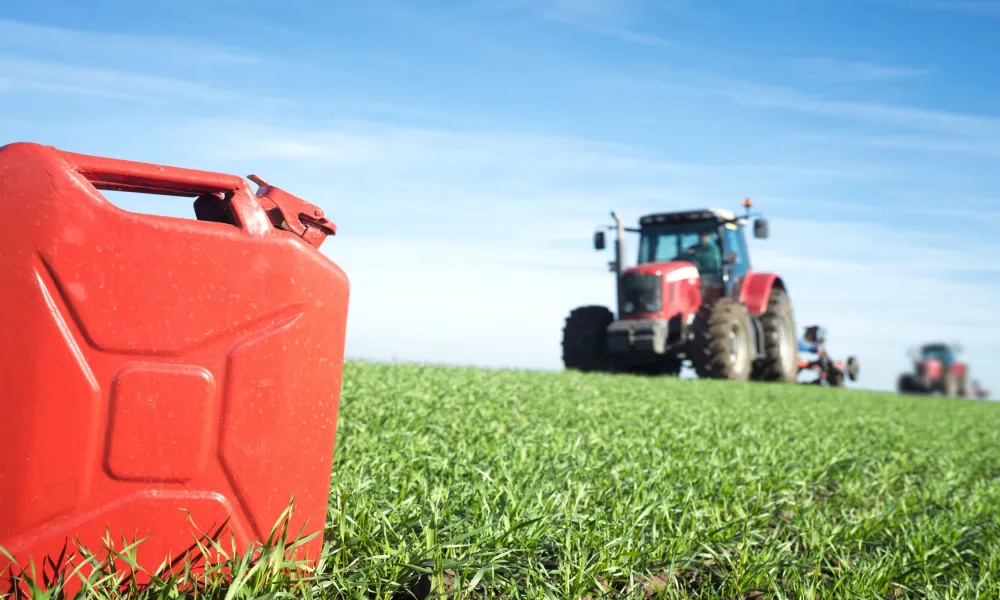
Soaring fuel prices and the rising cost of fertilisers and pesticides are the two main factors behind the dramatic increase in production costs in the primary sector, leaving farmers, livestock breeders and fishermen struggling to survive.
“Tell the Agriculture Minister that new support schemes for the primary sector are needed immediately. The two schemes of €1.5 million and €4.5 million will not solve the problem.”
With this message to Agriculture Ministry officials, House Agriculture Committee chairman and AKEL MP Yiannakis Gavriel brought yesterday’s parliamentary discussion on the issue to a close.
Committee MPs and representatives of farming organisations made similar points during the meeting, stressing, among other things, that it is inconceivable for a support scheme to amount to around €1 million each time and still not be enough to cover all agricultural sectors. The result, they said, is that the funding is distributed to half of the sectors, while the other half blame the farming organisations for being left out.
Although the rain falling outside the committee room briefly created a sense of optimism among some of those present because of Cyprus’ water situation, with some openly expressing their relief, it was not enough to dispel the overriding concern inside the room.
‘It remained at 10%’
Gavriel recalled that reducing production costs in the primary sector had been listed as a top priority in President Nikos Christodoulides’ election programme and joined fellow MPs and farming organisations in calling for government measures.
Regarding marked agricultural diesel, he said it remained limited to 10% of the quantities consumed by farmers for agricultural purposes.
He also referred to a 2013 Council of Ministers decision that provided for financial assistance to farmers for diesel used for transport, noting that the decision was never implemented.
“To understand the suffocating pressure on the farming community, it is enough to point out that, for marked agricultural diesel alone, the increases of recent months correspond to an additional annual burden of more than €10 million for farmers. And that is without taking into account the huge increases in fertilisers, pesticides and road diesel, which has exceeded €2 per litre,” Gavriel later told journalists.
He said Agriculture Ministry officials had informed the committee that a support scheme was being prepared under which farmers could, subject to certain conditions, receive up to €1.5 million to address increases in fuel and fertiliser costs.
“I regret to say that if this is the government’s approach, these are half-measures that will not change anything. Decisive and substantial measures are needed. That is why, at an upcoming meeting, we will invite the competent Agriculture Minister,” Gavriel said.
Continuation of the sector under threat
During the meeting, DISY MP Giorgos Karaiskakis said increased production costs threaten the ability of livestock breeders and farmers to continue operating in the sector.
DISY MP Prodromos Alambritis said there was an evident need to support the agricultural and livestock sector.
AKEL MP Efraim Christou said subsidising diesel used for the transportation of agricultural products should be reconsidered.
Regarding the retrospective payment of environmental charges, Christou warned that many people could collapse financially if required to pay the entire amount retrospectively.
ELAM MP Sotiris Ioannou questioned whether the state understands that any support provided to the agricultural and livestock sector should be reciprocal.
“The most important thing is to see what happens in the long term. It would be useful to have specific data for each sector,” Alma MP Litsa Drousiotou said.
Farming groups call for long-term measures
Representatives of farming organisations called for immediate and far-reaching measures to prevent the collapse of the primary sector.
Tasos Giapanis, secretary-general of Panagrotikos, called on the government and the Agriculture Ministry to immediately formulate and announce a specific and targeted support measure for the purchase of fertilisers and plant-protection products.
He said such a scheme should take into account the particular conditions affecting Cypriot agriculture, including Cyprus’ status as an island state, the absence of domestic production plants and supplies coming through the Green Line.
Giapanis called for new schemes that are accessible, simplified and practical to implement.
“We are not disregarding what is being done by the Agriculture Ministry, but it is not enough. It is not enough to announce measures. We need to take long-term measures to protect the agricultural population. We demand that all existing programmes be reassessed on the basis of today’s high-cost environment,” said Michalis Lytras, secretary-general of the Pan-Cyprian Farmers Union.
“The situation is tragic. Producers are bearing all these costs arising from the consequences of wars and the situation prevailing internationally, particularly in relation to energy,” EKA secretary-general Panikos Hambas said after the meeting.
Hambas said the government must examine a comprehensive programme covering the entire primary sector, including professional and non-professional producers.
He stressed that otherwise “some will abandon the primary sector and there will be an issue of food security for the Cypriot people.”