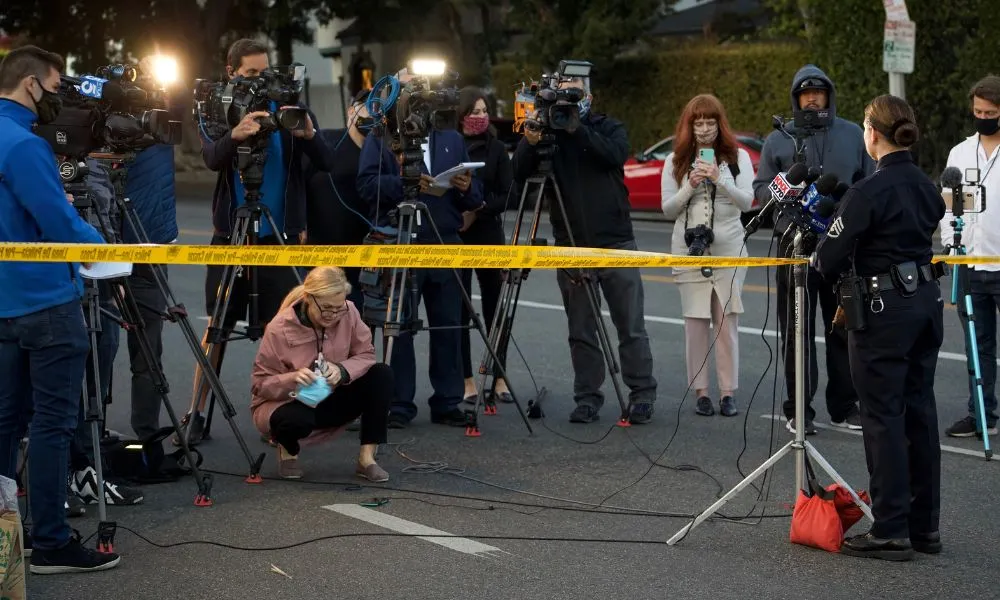

The journalistic coverage of suicides is internationally considered one of the most sensitive areas of information. Guidelines of the World Health Organization (WHO) and international mental health organisations recommend that Media avoid detailed description of the method, refrain from dramatic headlines, avoid shocking images, do not present suicide as a “solution,” do not link the incident to a single cause and avoid publishing personal notes or private details.
At the same time, reference to support structures, mental health services and intervention options is encouraged. Experts warn that excessive publicity or emotional dramatization may affect vulnerable individuals, especially adolescents and young people.
In Cyprus, public discussion around mental health often remains burdened by social stigma and prejudices. Although in recent years there is greater sensitisation, several mental health professionals express concern about how some cases are presented in the public sphere and on social media. Particularly in cases involving minors or young people, the issue of protecting privacy, the dignity of families and avoiding reproduction of traumatic content is increasingly raised.
When it is not concealed
The president of the Cyprus Journalists Association, Giorgos Frangos, pointed out, speaking to Politis, that the issue of journalistic coverage of suicides, especially when it concerns minors, cannot be approached one‑dimensionally, dogmatically or formalistically. Each case has its own particularities. For example, if the causes of a suicide are linked to deficient or irresponsible handling by the competent Authorities, the fact should not be concealed, as its highlighting serves the public interest and leads to corrective measures.
However, the general rule remains clear: Journalists avoid referring to suicides, omitting unnecessary details about the way the act was carried out. Experience shows that excessive exposure may trigger chain similar incidents. The position of the Cyprus Journalists Association is based on the Code of Journalistic Ethics, which defines the general avoidance of references to suicides or attempts. In exceptional cases where publication is justified, utmost sensitivity is required, while for minors the publication of details or images leading to identification or intensifying the family’s trauma is strictly prohibited.
Thanasis and Stylianos
As characteristic examples, Mr Frangos referred to the cases of Thanasis Nicolaou and the minor Stylianos. In the case of Thanasis Nicolaou, the easy adoption of the version of suicide functioned as a means of avoiding responsibility, despite the serious doubts about what really happened. In the case of Stylianos, suicide was used as a mitigating factor for the inaction of the competent services. These two contrasting but parallel cases demonstrate the limits and responsibilities of the profession: Media must not uncritically accept the first conclusions of the investigative Authorities when there are indications to the contrary.
Mr Frangos underlined that reporting should not be a dry police recording full of vivid descriptions of the act. It must focus on where state structures failed and function as a control mechanism towards power. Ethics does not require the “burial” of the problem but its different framing. Suicide must be approached as a public health and social welfare issue through evidence‑based reporting. Instead of the incident, the discussion should focus on deficiencies in psychiatric structures, stigma, bullying, understaffing of support helplines and on highlighting stories of people who overcame the crisis.
Imitation
Answering the question about imitation in other crimes, he noted that psychology has scientifically proven that imitation operates much more directly and intensely in suicide. A vulnerable recipient suffering from depression tends to identify with the person who committed suicide, especially if it is a minor or a well‑known person, and the description of the method provides a “ready scenario” of escape. On the contrary, rapes and arsons are malicious acts directed against others. The projection of an arson will rarely turn a healthy citizen into an arsonist, but the dramatized projection of a suicide may trigger the self‑destructive tendency of a person who is in despair.
Regarding the International Federation of Journalists (IFJ), Mr Frangos stated that it aligns fully with WHO guidelines. The IFJ calls for strict avoidance of sensationalism, dramatization and reference to methods or locations. It explicitly prohibits the publication of farewell notes and the simplistic attribution of the act to a single cause, requiring absolute respect for the mourning of the family. On the contrary, it promotes responsible information for prevention, presentation of the complexity of mental illnesses and the mandatory inclusion of official helplines in every relevant publication.