


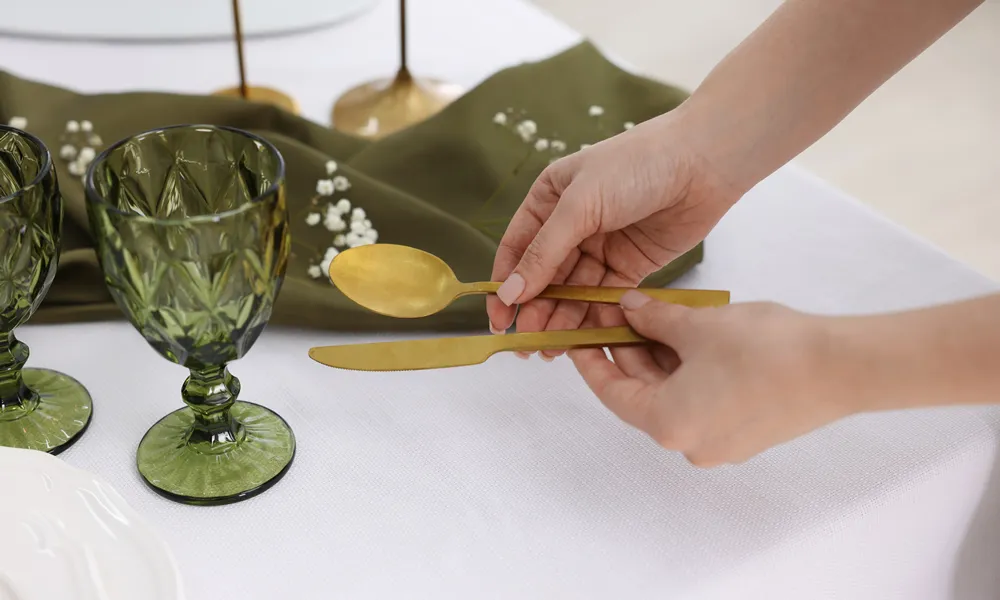

The way cutlery is arranged on a table follows a clear logic: each piece has a specific place determined by the order in which it will be used. Whether setting a simple family dinner or a formal table for guests, understanding these rules makes the experience easier for everyone at the table.
The everyday table
For a casual meal, the setup is straightforward. A large fork goes to the left of the plate, a large knife to the right with the blade facing inward toward the plate, and a spoon to the right of the knife if needed. This is the most common arrangement used in homes for daily meals.
The formal table
At a restaurant or formal dinner, the guiding principle is to work from the outside in. The first piece of cutlery a guest will use sits furthest from the plate, and each subsequent piece is placed progressively closer.
On the left side of the plate, forks are arranged in the following order from the plate outward: the main course fork closest to the plate, followed by the salad fork, and then the fish fork if a fish course is being served. The fish fork is wider and flatter than standard forks, designed to help separate fish from its bones.
On the right side of the plate, the arrangement from the plate outward is: the main knife with the blade facing the plate, the fish knife, a smaller starter or salad knife, and the soup spoon furthest out on the right if soup is being served. The fish knife has a gentler blade than a standard knife and is designed specifically for separating fish rather than cutting.
Above the plate, the dessert fork and dessert spoon are laid horizontally, with the fork handle pointing left and the spoon handle pointing right. These can also be brought to the table with the dessert course itself.
The bread plate and butter knife sit above and to the left of the main plate, with the small butter knife resting across the bread plate.
A note on spoons
The soup spoon, when included, goes to the far right of all the knives since soup typically comes before the main course. The dessert spoon is placed above the plate or brought with the dessert at the end of the meal.
The logic behind the layout is simple: guests work their way inward through the cutlery as each course arrives, without having to think about which piece to pick up. A well-set table removes that uncertainty and allows the meal to unfold naturally.
Source: Cantina


