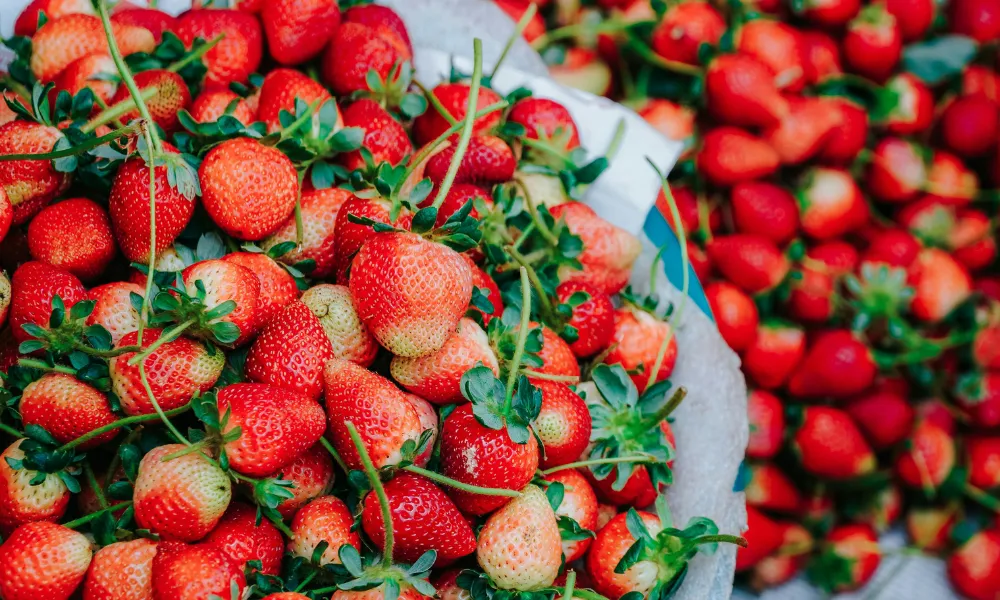

Strawberries are among the most delicate fruits in the refrigerator. You may buy them fresh and, within just one or two days, notice mould starting to appear. The reason lies partly in their biology and partly in how we store them at home.
Strawberries contain a large amount of water and have very thin skin, which offers little protection. They bruise easily and tend to retain moisture on their surface. These conditions – moisture, small injuries to the fruit and close contact between berries – create the perfect environment for mould to develop.
Another key factor is how quickly mould spreads. If even one strawberry spoils, it can affect the others within hours.
The common storage mistake
Many people place strawberries directly in the refrigerator inside the plastic container they were sold in. This often means the fruit is tightly packed together.
When strawberries are crowded like this, moisture becomes trapped and airflow is limited. The result is a small humid chamber that encourages mould growth.
How to store strawberries properly
A few simple steps can significantly extend their shelf life.
- Do not wash them before storing
- Remove damaged or soft berries immediately
- Store them in a shallow container
- Line the container with kitchen paper to absorb moisture
- Keep them in a single layer rather than stacked
- Avoid airtight containers without ventilation
Strawberries should be stored dry in the refrigerator, ideally in the fruit drawer where the temperature remains stable.
Should strawberries be washed before refrigeration?
If you want them to last longer, the answer is no.
Washing strawberries before storage adds moisture to their surface, which accelerates mould growth. Instead, they should be washed only shortly before eating.
The vinegar trick
Some people extend freshness by briefly soaking strawberries in water with a small amount of vinegar. This can help remove microorganisms on the fruit’s surface.
However, the method works only if the strawberries are dried completely afterwards. Any remaining moisture can have the opposite effect and speed up spoilage.
How long do strawberries last?
With proper storage:
- 3–5 days is typical
- Up to one week if the fruit is very fresh
Without careful storage, strawberries can begin to deteriorate in less than 48 hours.
A small detail that matters
Do not remove the green stem before storing them. The stem helps retain moisture inside the fruit and slows down deterioration.
Signs strawberries have gone bad
Because strawberries spoil quickly, it is important to recognise the warning signs:
- Visible mould – even a small white or grey patch means the fruit should be discarded
- Soft, watery texture – the berry loses its firmness
- Dark or brown spots – clear signs of degradation
- Sour or unpleasant smell – fresh strawberries have a light, sweet aroma
- Liquid collecting at the bottom of the container – often indicates that some berries have already begun to spoil
If there is any doubt, it is safer not to eat them. Strawberries are highly sensitive fruit, and once deterioration begins, it spreads rapidly even when it is not yet visible across the entire berry.