A familiar dining habit may have a surprising psychological explanation. According to a study published in the journal Food Quality and Preference, food that feels “forbidden” or slightly risky to obtain may actually taste better. The idea reflects an old Italian saying that “stolen food tastes better.” Researchers set out to test whether this intuition holds true under controlled conditions.
The experiment with 120 participants
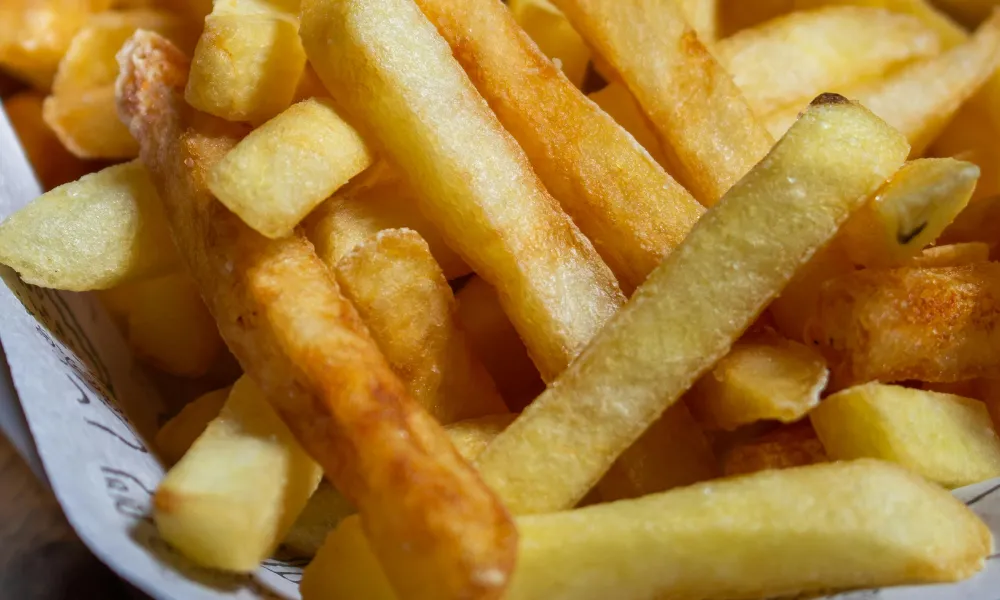
In the study, 120 participants were given identical portions of French fries to taste in four different scenarios. The fries themselves never changed. They were prepared the same way, served at the same temperature and eaten in the same environment. What changed was the way participants obtained them.
In some cases, the fries were served directly to the participants. In other instances, they were offered fries from another diner’s plate. Two additional scenarios required participants to secretly take fries from someone else’s serving while that person was distracted. One situation involved a relaxed setting with little risk of being caught, while another involved a higher-risk situation in which a stern-looking stranger was present nearby.
Why the “stolen” fries tasted better
Participants rated the taste of the fries on a scale from one (not good) to nine (very tasty). The results were striking. Fries that participants “stole” were consistently rated as more enjoyable than those served directly to them.
The effect became stronger when the perceived risk increased. Fries taken in the high-risk scenario were rated, on average, about 40 per cent more enjoyable than fries that participants simply received. Importantly, nothing about the food itself changed. Yet the way it was obtained altered how participants perceived not only the taste, but also the saltiness and crispiness.
The psychology behind forbidden food
Researchers believe several psychological mechanisms may explain the effect. One explanation comes from economics. The principle of scarcity suggests that items perceived as limited or difficult to obtain often become more desirable. This idea also helps explain the appeal of limited-edition products or exclusive experiences. Psychology offers another interpretation. Forbidden actions can increase both desire and enjoyment. Small acts of rule-breaking may create excitement, which can enhance how rewarding an experience feels.
Participants in the study reported not only tastier food, but also stronger feelings of thrill and a hint of guilt when taking fries without permission.
Taste may depend on how food is obtained
The research was conducted by Valentin Skryabin of the Russian Medical Academy of Continuing Professional Education in Moscow. The author acknowledged that the experiment had limitations. The “theft” occurred in controlled settings without any real consequences. In real life, stealing food could damage reputations or lead to legal trouble, factors that might quickly reduce anyone’s appetite.
Even so, the findings point to a broader insight: how we obtain food can influence how we experience its flavour. The idea appears in several cultures. In Japan, the term nusumigui refers to eating something secretly that one is not supposed to. In South America, a similar saying exists: lo prohibido es lo más sabroso – what is forbidden is the most delicious.
Source: The Times