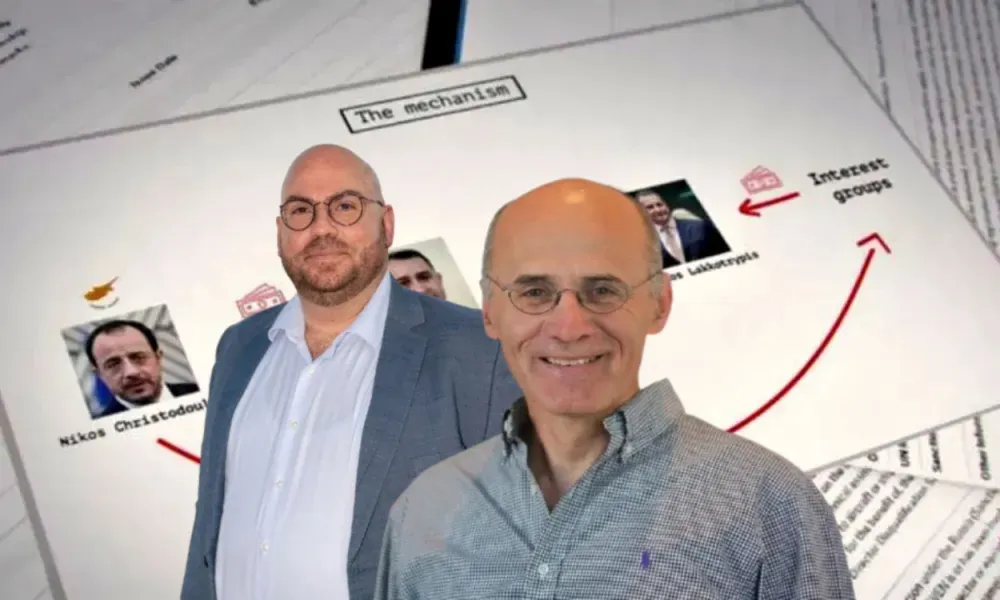

Questions over the findings and completeness of the investigation into the so-called VideoGate case were raised by lawyer Andreas Christou and academic Haridimos Tsoukas following the publication of the findings by criminal investigator Andreas Paschalides.
The investigator's report found no evidence of criminal wrongdoing or other improper conduct by individuals appearing in the controversial video material. The findings also adopted the position of the Presidency that the case formed part of a hybrid attack against the Republic of Cyprus.
Concerns over the report's conclusions
Speaking on Politis Radio 107.6 and 97.6, lawyer Andreas Christou said the conclusion that the video material had been edited did not, on its own, address the key issues raised by the case.
According to Mr Christou, the fact that audiovisual material has been subject to editing does not necessarily mean that statements heard in the footage were never made or that its content is inaccurate.
He said that a court would ultimately determine, based on the authenticity and reliability of the material, whether such evidence could be accepted. However, he argued that the report should clearly explain how investigators concluded that the video was edited and what that means for the substance of the recorded conversations.
Questions over possible legal implications
Mr Christou also referred to public scepticism surrounding the investigation, noting that debate had focused on the reappointment of Mr Paschalides and the subsequent findings.
He argued that the report does not sufficiently clarify whether any potential breaches of anti-corruption legislation could arise from the matters discussed in the footage.
"Simply describing statements as empty talk does not resolve the issue," Mr Christou said, according to the report.
Academic criticism of published findings
Haridimos Tsoukas, Professor of Strategic Management at the University of Cyprus and Dean of the School of Economics and Management Sciences, also criticised the announcement issued by the criminal investigator.
Mr Tsoukas said the published conclusions were not accompanied by the evidence and analysis required to allow the public to assess their validity.
He noted that what had been released was not the full report but a summary announcement outlining the investigator's principal findings.
According to Mr Tsoukas, the public has been asked to accept that no wrongdoing was identified without being informed about the evidence examined, the testimonies obtained or the reasoning behind the conclusions.
He described the announcement as "superficial and undocumented" and argued that it did not provide sufficient detail to justify its findings.
Questions about transparency
Mr Tsoukas focused on conclusions concerning the financing of the President's election campaign, lobbying activities and a fund linked to the First Lady.
He argued that the announcement presents definitive conclusions without explaining how those conclusions were reached.
As a comparison, he referred to a statement issued by the Independent Authority Against Corruption regarding its investigation into the book Mafia State, saying that although the full report was not published, the authority provided a detailed summary of its findings and reasoning.
According to Mr Tsoukas, this allowed the public to assess the evidence and understand the basis of the conclusions.
Debate over edited footage
Mr Tsoukas also addressed the investigator's conclusion that the video footage published was not original material but had been edited.
He said that editing is a common element of television and journalistic production and argued that the central question is whether the statements heard were actually made, whether their meaning was altered and in what context the conversations took place.
According to Mr Tsoukas, the investigation should have examined each disputed statement individually and presented evidence showing which claims were verified and which were not.
He further argued that the announcement appeared to align with the government's position that the case formed part of a hybrid attack, while not providing sufficient detail on who organised such an operation, how it was carried out or what evidence linked the video material to a coordinated influence campaign.