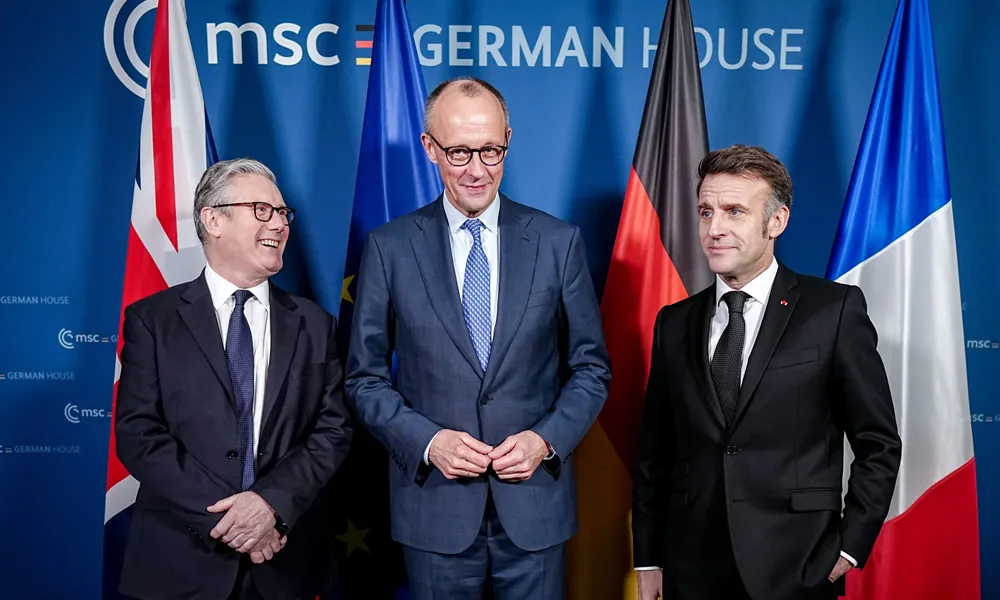
World leaders and high-level officials gathered in Munich on Friday to talk security in a period of “wrecking-ball politics” where movers, shakers and mere bystanders share front row seats to the “sweeping destruction” of the international order built over eight decades.
The Munich Security Conference (MSC) released its annual security report on the eve of the three-day summit (February 13-15), under the telling title: ‘Under Destruction’.
Profound uncertainty
MSC Chairman Wolfgang Ischinger writes in the report’s foreword that the Conference takes place at a moment of “profound uncertainty” with so many fundamental questions on the future of European security, the transatlantic relationship, and the international community’s ability “to manage an increasingly complex and contested world”.
For generations, US allies relied on American power but also on a shared understanding of the principles underpinning the international order, says Ischinger. This is no longer the case as the current US administration recalibrates US foreign policy away from the bipartisan liberal-internationalist consensus that drove US grand strategy for so long, he adds.
“The implications of this shift for Europe, but also for the world at large, are hard to overstate,” says Ischinger.
The former German ambassador to Washington argues this is why the report addresses “the elephant in the room head-on”.
US changing the world
Most challenges listed in the report and on the agenda of the Munich Security Conference are closely linked to the United States’ evolving view of the international order, explains Ischinger. Hence, the focus on “the growing backlash against core principles of the post-1945 order, evident not only in the United States but in many parts of the world”.
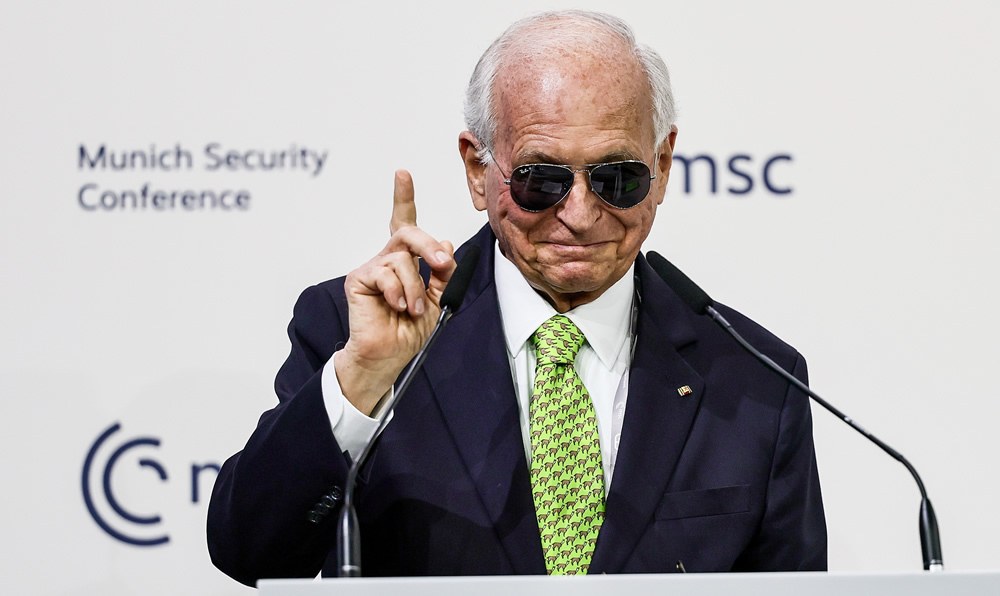
On current US foreign policy, one thing is clear, he says: “It is already changing the world, and it has triggered dynamics whose full consequences are only beginning to emerge.”
Destruction over reform
According to the report, the US-led post-1945 international order constructed 80 years ago is now being destroyed. The report analyses the far-reaching consequences of the rise of political forces that favour destruction over reform. It notes that these forces are “driven by resentment and regret over the liberal trajectory their societies have embarked on”. They build their “disruptive agendas” on widespread disenchantment with democratic institutions and a loss of trust in reforms and policy corrections.
Political structures – both domestic and international – are now seen as impossible to reform to better serve people’s needs.
“The result is a climate in which those who employ bulldozers, wrecking balls, and chainsaws are cautiously admired if not openly celebrated,” notes the report.
As for the main culprit operating the heavy machinery against the US-led international order….
“The most powerful of those who take the axe to existing rules and institutions is US President Donald Trump.”
Breaking deadlock or privileging the rich and powerful
Trump’s supporters view his bulldozer politics as a means to break institutional inertia and find solutions to challenges marked by gridlock, pointing to breakthroughs on NATO defence spending targets and the Israel-Hamas ceasefire as cases in point.
However, the report’s authors argue it is not clear whether destruction of the international order will increase the security, prosperity, and freedom of the people.
“Instead, we might see a world shaped by transactional deals rather than principled cooperation, private rather than public interests, and regions shaped by regional hegemons rather than universal norms. Ironically, this would be a world that privileges the rich and powerful, not those who have placed their hopes in wrecking-ball politics.”
Scrambling for a fail-safe option
The report notes that the effects of this new direction are mostly being felt in Europe and the Indo-Pacific, which rely heavily on the relative global stability dominated by the US since 1945.
As Russia makes some gains in Ukraine and intensifies its hybrid warfare campaign across Europe, Washington’s gradual retreat, shaky support for Ukraine and threats on Greenland have heightened Europe’s sense of insecurity, it notes.
“The US approach to European security is now perceived as volatile, oscillating between reassurance, conditionality, and coercion. Facing shifting signals from Washington, European nations are striving to keep the US engaged while preparing for greater autonomy.”
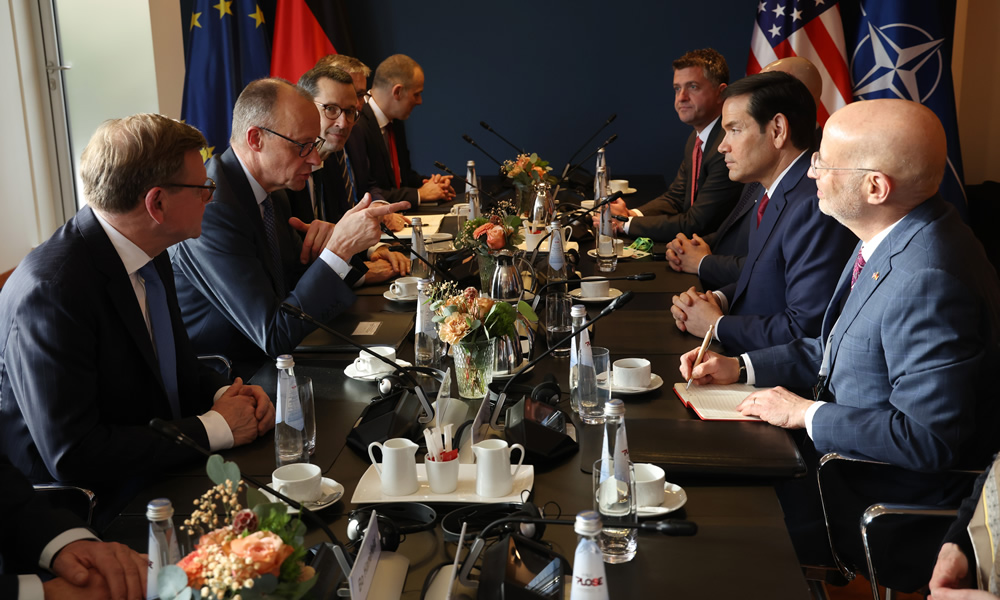
German Chancellor Friedrich Merz gestures to US Secretary of State
Marco Rubio on sidelines of MSC: EPA/Sean Gallup
US partners in the Indo-Pacific face a similar situation with an increasingly powerful China seeking regional dominance but have fewer options than Europe.
“Lacking mechanisms on a par with the EU or NATO, Indo-Pacific actors are torn between trying to attract US commitment and hedging their bets, often through outreach to China.”
Humanitarian assistance in existential crisis
Washington’s U-turn on existing institutions and rules has also had a significant impact on global trade, international development and humanitarian assistance. On global trade, governments around the world are confronted with unfair trade practices by both the US and China.
On development, the report notes that even before Trump’s second term, the world was not on track to achieve any of the 17 UN Sustainable Development Goals (SDGs) by 2030.
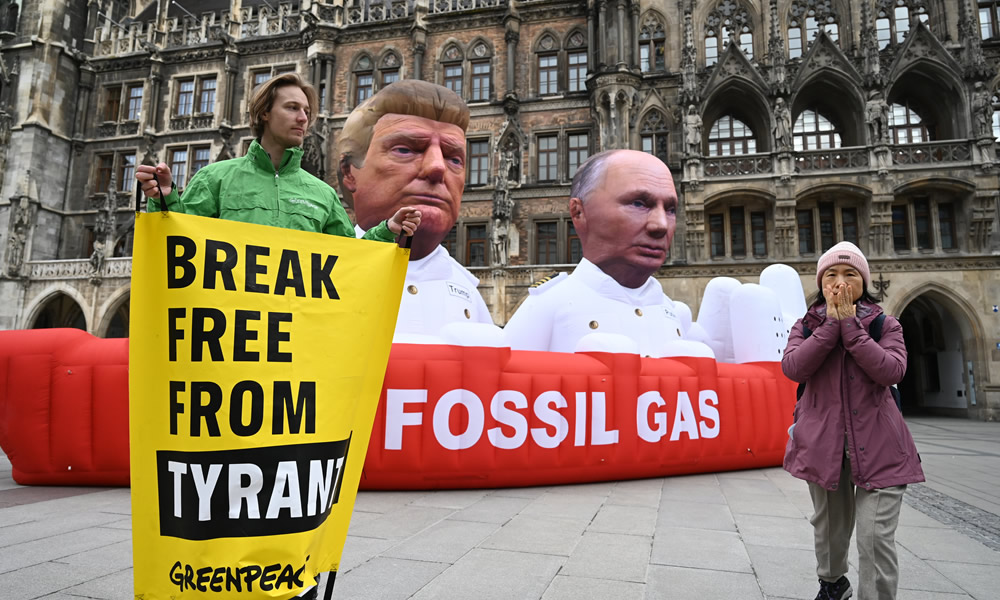
Greenpeace activists demonstrate in Munich: EPA/FARIHA FAROOQUI
“Yet US policies have pushed the already strained development and humanitarian systems into an existential crisis. The Trump administration has rejected the SDGs, denouncing them as ‘globalist endeavours’.”
US budget cuts are already impacting people in many low- and middle-income countries, notes the report.
Moving forward
While the challenges are substantial, the report argues that actors still invested in a rules-based order are organising, seeking ways to contain the effects of “wrecking-ball politics” and find new approaches that do not depend on Washington’s lead.
“Many understand that, if they continue to be bystanders to bulldozer politics, they will end up at the mercy of great power politics and should not be surprised to find cherished rules and institutions in rubble.”
For Europe, it can no longer assume unwavering US military support. Global power competition, along with regional conflicts and technological risks (such as cyber threats, artificial intelligence in warfare, space security) requires greater European strategic autonomy.
Highlighting gaps in Europe’s current defence readiness, the document urges enhanced investment in defence innovation, stronger EU defence industrial integration, and coordinated responses to hybrid and climate-linked security risks. Europe must also rethink how it contributes to nuclear deterrence and deterrence credibility.
In essence, Europe is at a pivotal moment, and must move from reliance to resilience, balancing NATO ties with a more self-reliant and integrated security architecture in response to evolving global threats.
The 2026 Munich Security Report concludes that to oppose demolition politics, governments will have to step up and significantly invest in their own power resources while pooling them through closer cooperation.
Governments must also credibly demonstrate that meaningful reforms and political course corrections are a viable alternative to a policy of widespread destruction.
Message received
Opening the Conference on Friday, German Chancellor Friedrich Merz said the rules-based order “no longer exists”, with the world entering an era of “great power politics” in which the US may have lost its leadership position.
He also said he was holding talks with French President Emmanuel Macron over creating a joint European nuclear deterrent as he urged Europe to rebuild its relationship with the US.
"We're not doing this by writing NATO off. We're doing it by building a strong, self-supporting European pillar within the alliance," he said.
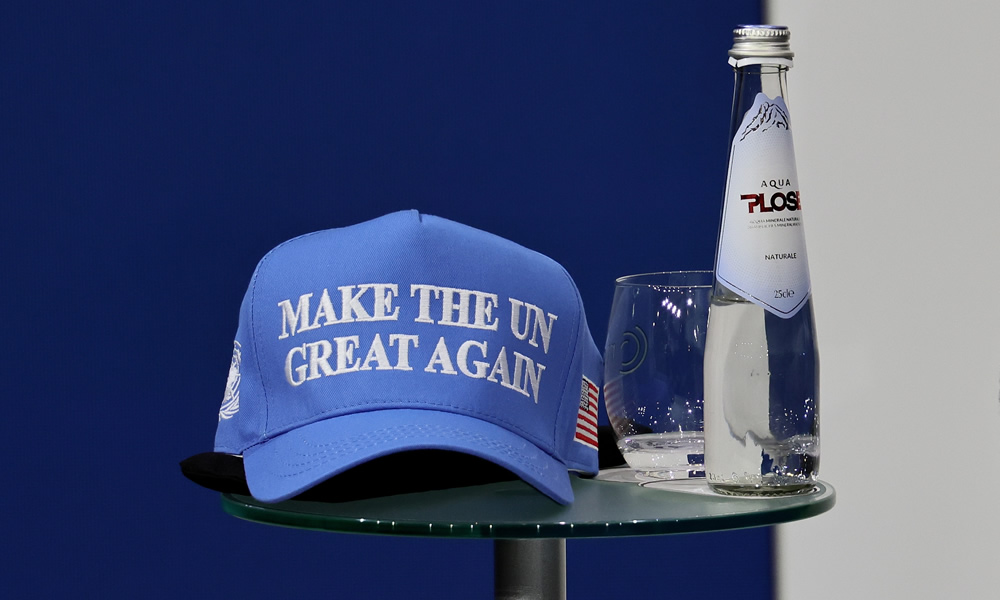
US Ambassador to UN Michael Waltz brings a baseball cap with the slogan
“make the UN great again” to the MSC: EPA/RONALD WITTEK
In a panel discussion at the Conference, EU foreign policy chief Kaja Kallas told US Ambassador to the UN Mike Waltz that we may be operating by the rules of the jungle, but “even in the jungle, animals cooperate”. She added that while Russia does not have strong allies when it goes to war, the US has Europe. “You also need us, to be this superpower,” she said.