
Middle East Tensions Escalate After Khamenei Death as Iran Launches Counter-Strikes
US and Israeli attacks that killed Iran’s supreme leader have triggered missile and drone strikes across the region, raising fears of broader conflict.
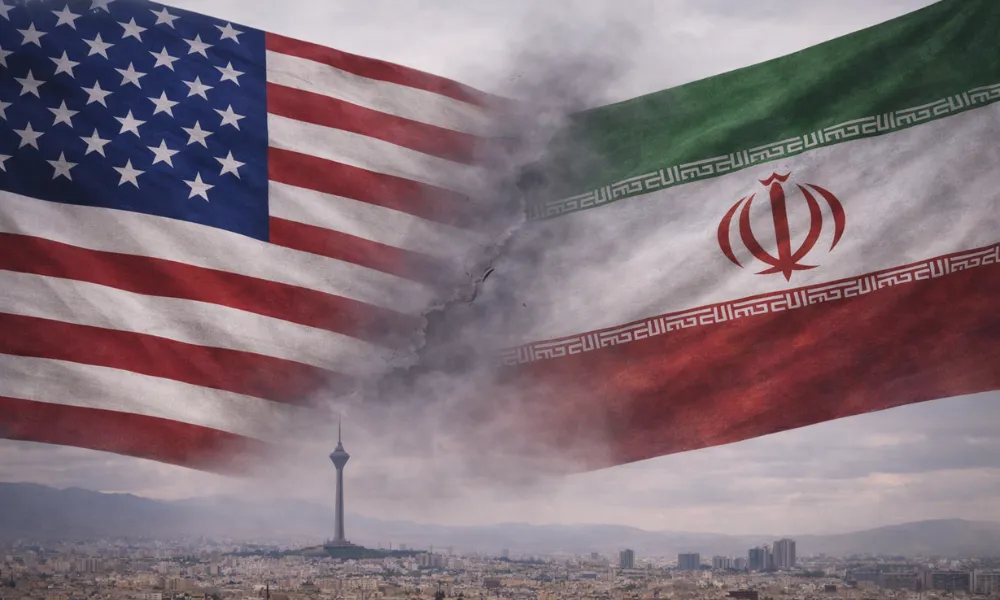
The death of Iran’s Supreme Leader Ayatollah Ali Khamenei has intensified concerns of wider regional instability. Iranian authorities confirmed he was killed in US and Israeli strikes, prompting retaliatory missile and drone attacks against Israel and Gulf states hosting US military bases.
What happened in Iran
At 09:30 local time on Saturday, Iranian media reported explosions in Tehran. Images showed smoke rising above Jomhouri and Hassan Abad squares. Blasts were also reported in Karaj near Tehran, Isfahan and Qom in central Iran, and Kermanshah in the west.
A spokesperson for the Iranian Red Crescent said 24 of the country’s 31 provinces were affected by US and Israeli strikes. Satellite imagery showed extensive damage near Khamenei’s residence in Tehran, with burned buildings and debris visible. Explosions were reported within one kilometre of the compound.
Israeli Prime Minister Benjamin Netanyahu said Khamenei’s residence had been destroyed in what he described as a powerful surprise attack. US President Donald Trump stated on Truth Social that Khamenei was dead and praised cooperation with Israel.
Iran’s Supreme National Security Council confirmed on Sunday that Khamenei was killed in his office. The office of President Masoud Pezeshkian was also hit, although he was reported safe.
Despite severe internet disruption, further explosions were reported throughout the day. Iran’s Civil Aviation Organisation announced that the country’s airspace would remain closed until further notice.
Casualties and regional impact
According to the Iranian Red Crescent, more than 200 people were killed and over 700 injured in Iran. At least 108 people were reported killed in an initial explosion at a school in southern Iran.
In Israel, one person was killed and more than 20 injured after Iranian missiles struck buildings in Tel Aviv. One death was also reported in Abu Dhabi in the United Arab Emirates.
Iran launched missiles and drones towards Israel and four Gulf states hosting US military bases: Bahrain, Kuwait, Qatar and the United Arab Emirates.
Airlines including Wizz Air, British Airways, Swiss, Lufthansa and Air India have suspended or diverted hundreds of flights across the region. Iraq and Jordan temporarily closed their airspace.
Succession process in Iran
Under Iran’s constitution, the Supreme Leader is appointed by the 88-member Assembly of Experts, whose members are elected every eight years. A successor must be selected as soon as possible, although the process may be delayed due to ongoing military developments.
In the interim, a council comprising the president, the head of the judiciary and a cleric from the Guardian Council is expected to assume temporary responsibilities.
With information from BBC