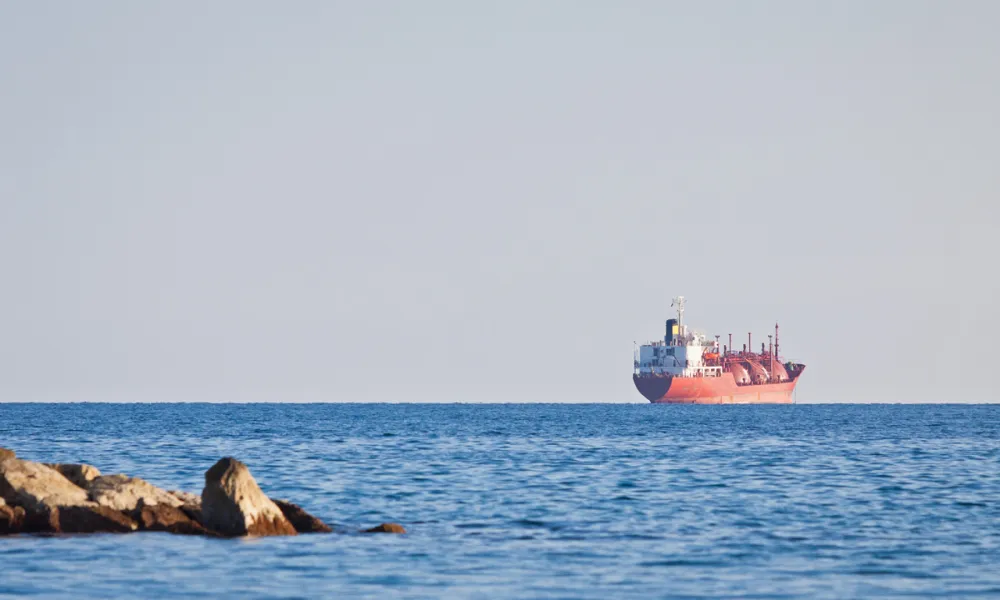

Shipping traffic has begun to move again through the Strait of Hormuz following a ceasefire between the United States and Iran, with two vessels marking the first confirmed transits under the fragile truce.
Data from MarineTraffic showed a Greek-owned bulk carrier, NJ Earth, and the Liberia-flagged Daytona Beach passing through the strait on Wednesday morning, becoming the first ships to do so since hostilities disrupted traffic in the area.
Fragile truce with unclear terms
The crossings come after Washington and Tehran agreed to a two-week ceasefire that includes provisions for limited maritime movement.
Iran has said ships will be allowed to pass under coordination with its armed forces and subject to technical constraints, while US President Donald Trump announced a “complete and immediate” reopening of the waterway.
Differences in how the two sides describe the agreement have raised uncertainty over how the arrangement will operate in practice, including when exactly the truce takes effect and under what conditions vessels can transit.
Hundreds of vessels remain stranded
Despite the initial movements, shipping activity remains heavily restricted.
More than 800 vessels are still believed to be waiting in the Gulf, according to Lloyd's List, with operators preparing to resume journeys gradually as security conditions stabilise.
Industry experts caution that while the ceasefire reduces immediate risk, the region will continue to be treated as high risk by insurers and shipowners.
Neil Roberts of the Lloyd's Market Association said ships stranded in the area would begin moving once it is deemed safe, but warned that normal traffic levels are unlikely to return in the near term.
Dispute over potential transit fees
Uncertainty also surrounds whether vessels will be required to pay for passage.
Regional sources indicate Iran and Oman may introduce transit charges, with some reports suggesting fees of around $2 million per ship, though no official confirmation has been issued.
Iran’s parliament is reportedly examining proposals to formalise such a system, after the Islamic Revolutionary Guard Corps took de facto control of the strait during the crisis and, in some cases, collected payments in exchange for safe passage.
The Strait of Hormuz has historically operated as an international waterway without tolls.
Global energy flows at stake
The reopening of Hormuz is closely watched by global markets due to its central role in energy supply.
Around 20 million barrels of oil pass through the strait each day, accounting for roughly one-fifth of global consumption, alongside a significant share of liquefied natural gas exports, particularly from Qatar.
Any disruption to traffic in the narrow waterway has immediate consequences for global energy prices and trade flows, underscoring the importance of the ceasefire holding in the coming days.
Source: Euronews