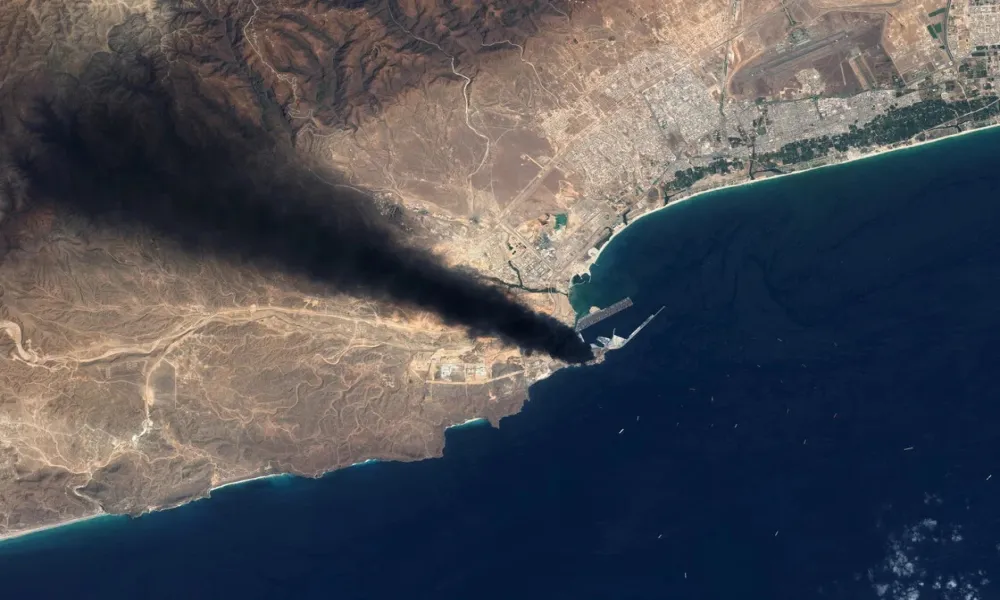
The war in Iran has triggered what the International Energy Agency describes as the worst oil crisis in history.
Climate experts are urging a faster transition to renewable energy sources, but the conflict in Iran is creating significant barriers to achieving that objective.
Disruptions to global energy supply
US and Israeli attacks on Iran have disrupted supply routes through the Strait of Hormuz, through which about 20% of global oil production passes.
In addition, attacks on fossil fuel facilities by various sides have created further turbulence in energy markets.
Reducing dependence on oil and natural gas has helped protect some regions from the current energy crisis. “Energy from the sun and wind is almost unaffected by fossil fuel price fluctuations. Once the infrastructure is installed, the ‘fuel’ is free,” explains Jan Rosenow, professor of energy at the University of Oxford.
The conflict’s impact on clean energy
At the same time, climate experts are urging countries to accelerate the transition to renewable energy sources in order to achieve greater energy independence. Countries such as Spain and Portugal have seen electricity prices fall in recent weeks, while Pakistan is benefiting from the widespread installation of rooftop solar panels.
The use of electric vehicles is also helping economies such as China and Nepal withstand rising petrol prices by reducing dependence on fossil fuels.
Despite the push for clean energy, however, the conflict is creating problems in global supply chains. The transport of metals such as aluminium, essential for solar panels, has been disrupted due to developments in the Middle East, which produces around 9% of global supply.
Rising inflation is also making the construction of new clean energy projects more expensive, as these require significant upfront investment. In the short term, the crisis is favouring the use of fossil fuels, including the most polluting one, coal.
Countries that rely on liquefied natural gas (LNG), such as India, Thailand and Vietnam, are increasing coal burning to meet their energy needs.
At the same time, rising prices are creating incentives for more extraction and production, enabling projects that were previously not economically viable. Proposals under discussion include revising energy taxation structures, imposing windfall taxes on oil companies, subsidising raw materials for renewable energy projects and strategic control of interest rates.
Despite the difficulties, the crisis also offers opportunities to accelerate the transition to clean energy, as solar and wind projects and electric vehicles are cheaper, faster and more local solutions compared with oil.
Source: lifo.gr