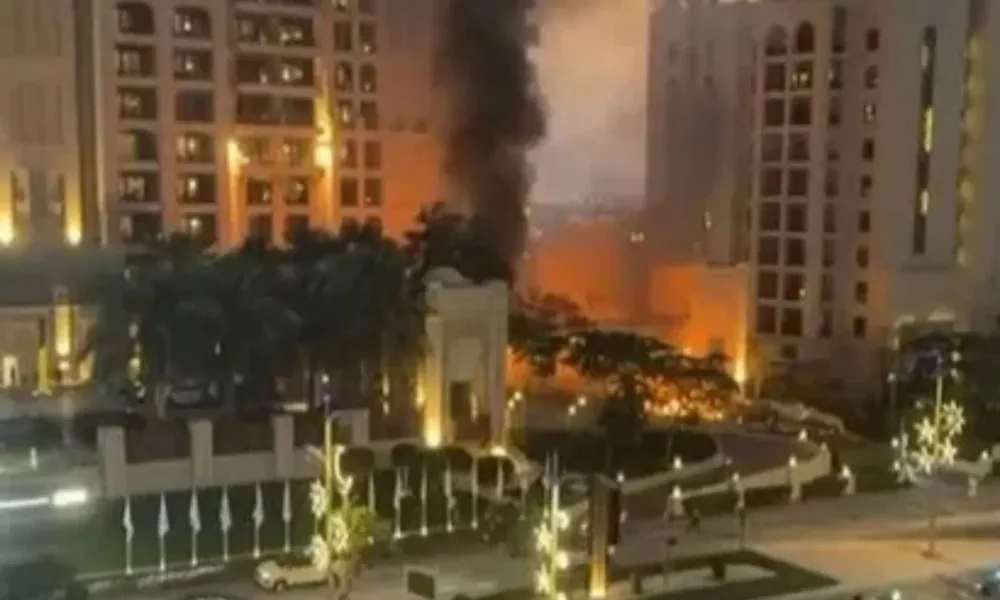

Sheikh Zayed Road in Dubai, the architectural axis symbolising the rapid rise of the United Arab Emirates, is experiencing an unprecedented geopolitical strain.
The official confirmation on Saturday morning of new debris falling in the city centre formalised a crisis that has been unfolding for days beneath the gleaming skyline of skyscrapers.
Oil exports temporarily halted
While Dubai assesses the damage to the facades of its buildings, a new strategic front opened on Saturday afternoon at the port of Fujairah.
Authorities temporarily suspended oil loading operations following a fire that broke out in an installations zone after debris from intercepted drones fell in the area.
The development has triggered alarm in international markets, as Fujairah is the terminal of the Habshan–Fujairah oil pipeline. The pipeline represents the Emirates’ only strategic “safety valve”, enabling oil exports directly to the Indian Ocean while bypassing the critical shipping route of the Strait of Hormuz.
Vulnerability felt across industries
At the Dubai International Financial Centre (DIFC), often described as the “Wall Street of the Middle East”, daily life is now adapting to the new reality of aerial interceptions.
“I closed my office in DIFC days ago,” a Greek businessman told the Greek news outlet iefimerida.gr. “Employees are working from home. Staff from India have returned to their country and are working from there.”
This movement of personnel abroad highlights the vulnerability of an economic model that relies heavily on imported talent.
'A deafening bang'
Behind the closed doors of major banking institutions, the impact of rising tensions is also reflected in personal accounts.
Maria (name changed), a Greek employee at a company based in the heart of the DIFC district in Dubai, described the moment when an interception was felt inside her office.
“It wasn’t a distant sound. It was a deafening bang that made the building shake,” she told iefimerida.gr. “I’m afraid. I’m desperately looking for a way to return to Greece.”