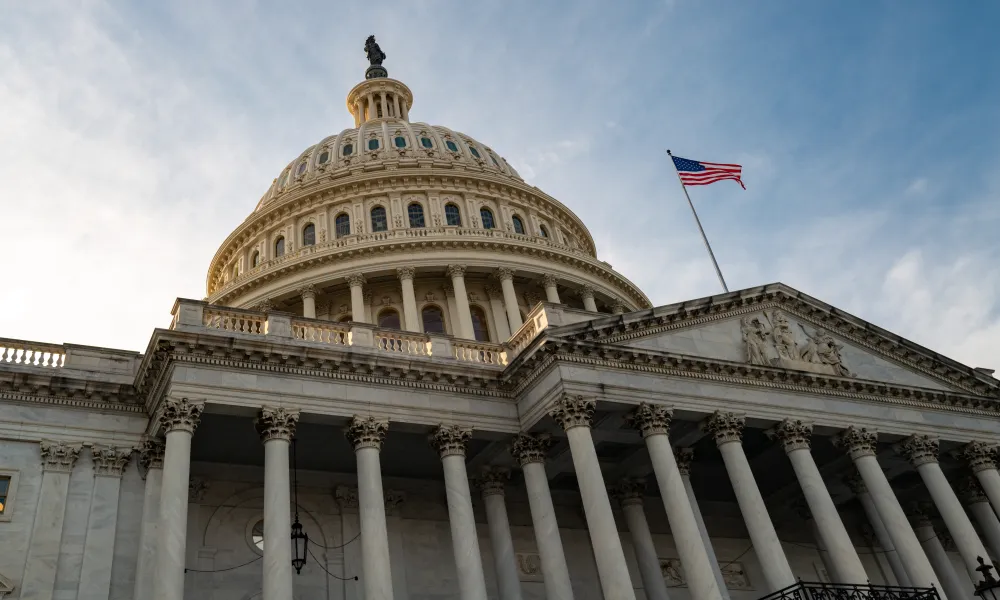

US President Donald Trump has signed a $1.2 trillion government funding bill, bringing an end to a partial federal shutdown that began over the weekend and restoring funding for most federal agencies through the end of September.
The bill was approved by the House of Representatives late on Tuesday by a narrow 217-214 vote, after which the president moved quickly to sign it into law.
“This bill is a great victory for the American people,” Trump said following its passage.
Bipartisan Spending Bill preserves U.S. funding for UN
The funding package preserves near-full US contributions to the United Nations and UN peacekeeping operations for the 2026 fiscal year, alongside significant allocations for global health. The legislation commits roughly $50 billion to international engagement, including $9.4 billion for global health programmes, signalling continued bipartisan support for US leadership within multilateral institutions despite domestic budget pressures.
Peter Yeo, president of the Better World Campaign, said the measure reflected a shared understanding in Congress and the White House that international engagement remains central to US security and economic interests, arguing that sustained funding allows Washington to shape global rules, prevent conflict and respond to crises rather than operate from the sidelines.
Funding restored through September
The legislation completes congressional work on 11 of the 12 annual appropriations bills required to fund the federal government, ensuring that the vast majority of agencies and programmes will remain operational until 30 September.
The shutdown, which began on Saturday, was more limited than previous standoffs, as several major programmes had already been funded under earlier agreements. Nutrition assistance, national parks and historic sites continued operating throughout the impasse.
With the passage of the remaining bills, around 96 percent of the federal government is now funded.
Homeland Security dispute postponed
While the agreement ends one funding crisis, it sets the stage for another. The bill provides financing for the Department of Homeland Security for only two weeks, until 13 February, postponing a contentious debate over immigration enforcement.
Democrats pushed for the short extension following the fatal shootings of Alex Pretti and Renee Good by federal officers in Minneapolis, arguing that stronger oversight and changes to immigration enforcement practices are urgently needed.
House Democratic leader Hakeem Jeffries warned that his party would not support further temporary funding for Homeland Security without substantial reforms.
“We need dramatic change in order to make sure that ICE and other agencies within the Department of Homeland Security are conducting themselves like every other law enforcement organisation in the country,” Jeffries said.
Republicans cautious, Senate sceptical
House Speaker Mike Johnson said he expects negotiations to yield an agreement before the deadline, urging both sides to act in good faith.
“This is no time to play games with that funding,” Johnson said, adding that the president had personally encouraged talks.
In the Senate, however, Majority Leader John Thune struck a more doubtful tone when asked about the prospects for a deal. “There’s always miracles, right?” he told reporters.
A fragile vote coalition
The funding bill included provisions aimed at satisfying both parties. Republicans avoided a single omnibus spending package, which they argue drives up government expenditure, while Democrats succeeded in blocking some of Trump’s proposed cuts and added language to strengthen congressional oversight of how funds are spent.
Even so, the vote exposed deep divisions. Twenty-one Republicans joined most Democrats in voting against the bill, while the same number of Democrats crossed party lines to support it. The final roll call was held open for nearly an hour as party leaders sought to secure the necessary votes.
Trump had intervened a day earlier, urging Republican lawmakers to back the bill and warning against last-minute changes.
“There can be no changes at this time,” he wrote on social media.
Shutdowns remain a political fault line
The latest shutdown differed from the prolonged autumn standoff, which lasted 43 days and affected a wider range of agencies. That dispute centred on extending pandemic-era health insurance subsidies, an effort Democrats ultimately failed to secure.
While Congress has since made incremental progress on appropriations, the unresolved fight over Homeland Security funding underscores how shutdown threats continue to serve as leverage in broader political battles, particularly over immigration.
Source: France 24, AP