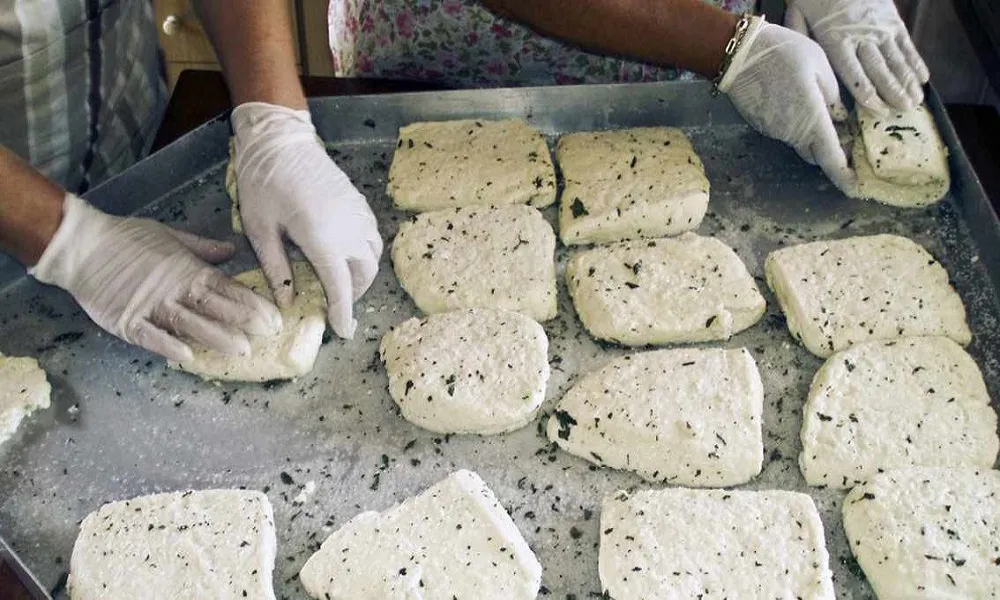



The foot and mouth disease outbreak is placing Cyprus’ halloumi PDO status under growing pressure, accelerating debate over milk quotas and exposing what industry stakeholders describe as an unworkable target. The crisis, compared by sector insiders to a wildfire in its unpredictability, has not only highlighted failures in controlling illegal movements across the Green Line and weaknesses in enforcement mechanisms, but has also brought forward a long-standing concern. The requirement for 51% sheep and goat milk in halloumi production by 2029 is widely seen as unattainable. At the Ministry of Agriculture, where the immediate priority remains containing the outbreak, which has already wiped out around 5.5% of the sheep and goat population, there is currently no alternative plan for halloumi PDO.
However, officials have begun to acknowledge that, with or without the outbreak, the PDO framework, due for review by EU authorities in June 2029 at the end of the transitional period, will likely need to be revised, particularly with regard to the milk quota. The objective is to safeguard exports and the substantial investments made in the sector, both domestically and internationally.
Sources within the ministry point to recently announced incentives worth €30 million aimed at boosting sheep and goat farming. If these measures fail to deliver the desired increase in milk production, they say, Cyprus may have no option but to request a revision of the quota, subject to EU approval. Broader conditions are also working against the sector, including prolonged drought and insufficient animal feed, forcing farmers to rely on costly imports.
Industry proposals on the table
Cattle farmers and cheesemakers, who had originally supported a far lower sheep and goat milk requirement, are now converging on two main proposals. The first involves reaching an agreement with authorities in the north to establish a flexible quota based on seasonality. Under this approach, the percentage of sheep and goat milk could fall below 10% during low-production months such as September to December and rise to around 20% during periods of higher output. Industry sources say this model is also viewed as workable by producers across the divide. A lack of agreement between the two sides, under PDO rules, could ultimately jeopardise the status.
The second proposal suggests limiting PDO halloumi to products made entirely from sheep and goat milk, while allowing mixed-milk halloumi to be marketed under trademarks rather than PDO protection. In this scenario, the 100% sheep and goat version would be positioned as a premium export product. Producers argue that PDO protection remains essential for safeguarding the identity of halloumi, provided that quotas reflect actual milk availability. They are expected to push strongly for a reduction in the current targets.
Oversight gaps in the north
Industry stakeholders also point to gaps in oversight in the north, where only four dairies are currently registered under the PDO system. Despite EU funding exceeding €12 million aimed at tackling animal diseases, including foot and mouth, controls remain limited. The certification body Bureau Veritas conducts comprehensive checks in government-controlled areas, covering both dairies and supplying farms, but in the north inspections are restricted to suppliers linked to the four registered producers.
There is also no direct EU oversight on how funds are used in the north. Stakeholders suggest the creation of a joint monitoring mechanism, involving EU-appointed experts alongside Greek Cypriot and Turkish Cypriot veterinarians, to strengthen controls and provide technical support.
Export concerns intensify
Cheesemakers say their immediate concern is containing the outbreak, warning that any further spread could directly impact exports. In 2025, halloumi exports reached €357 million, surpassing pharmaceutical exports for the first time, which stood at €356.2 million. Both sectors account for 9.6% of total exports. Production has also grown significantly over the past decade, exceeding 45,000 tonnes in 2025 compared to just 4,000 tonnes around 15 years ago.
So far, despite the culling of around 5.5% of sheep and goats, production remains stable and exports have not declined, partly due to existing stock and the product’s safety profile following double heating. However, industry representatives warn that further losses in livestock would directly reduce milk supply, with no clear way to predict the tipping point at which shortages could emerge in export markets.
Structural limits and long-term risks
Importing sheep and goat milk is not considered an option, as PDO rules require milk to come from animals raised and bred in Cyprus. Milk powder is also excluded under the same specifications. While temporary quota adjustments are allowed during the transitional period, any long-term change would require a formal revision of the PDO framework.
Replacing lost livestock is expected to take years rather than months. Newly imported animals will need time to recover from transport, adapt to local conditions and reach productive capacity. At present, there is no clear timeline for when such herds could contribute to PDO-compliant milk production. As the crisis unfolds, the halloumi sector is entering what stakeholders describe as uncharted territory, with both regulatory and production challenges converging at a critical moment for one of Cyprus’ most important export industries.