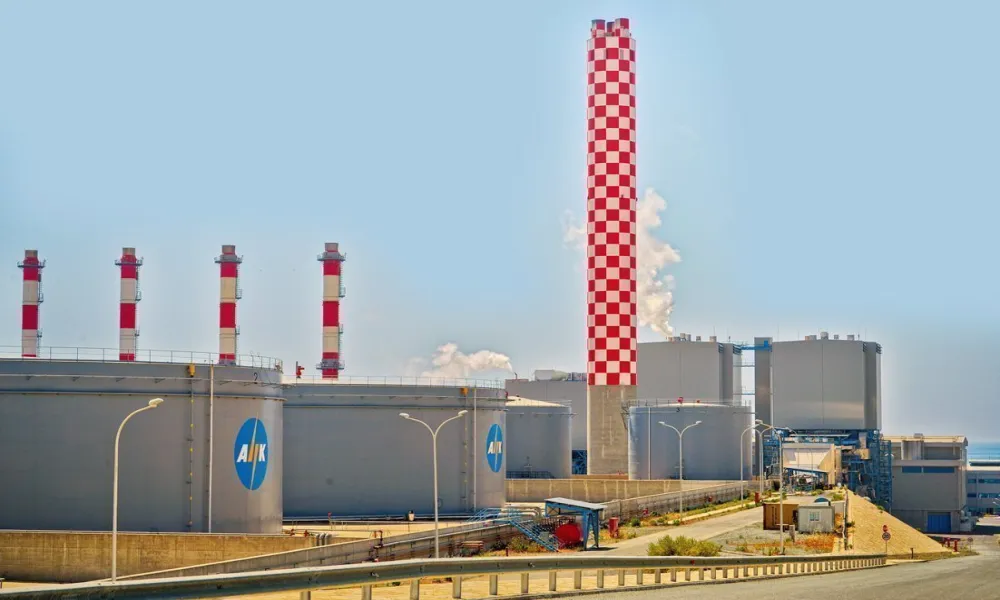
Parliament on Thursday approved the 2026 budget of the Electricity Authority of Cyprus (EAC), with 40 votes in favour and two against, following a heated debate dominated by electricity costs, emissions and delays in the arrival of natural gas.
The deficit budget provides for expenditure of €2.55bn against revenues of €1.95bn, with the cash shortfall to be covered through borrowing and the use of equity.
Opposing the budget were independent MP Alexandra Attalides and socialist MP Costis Efstathiou.
High costs and pollution under scrutiny
EDEK leader Marinos Sizopoulos said his party would support the budget but questioned why the EAC had launched a €140m tender for oil-fired engines at Dhekelia while the process to introduce natural gas is under way.
He also criticised the imposition of VAT both on electricity consumption and on emissions charges, describing it as a “tax on a tax”.
Green Party MP Charalambos Theopemptou referred to unresolved issues dating back to 2013 regarding industrial emissions at Dhekelia, arguing that repeated extensions had been granted for generator replacement without compliance. He cited environmental and public health impacts, as well as delays in smart meter installation, barriers to rooftop solar and slow progress in launching the new electricity market.
Ms Attalides called any further extension for Dhekelia “unacceptable”, framing pollution as a human rights issue for local residents. She argued that revenue from emissions charges should be directed into a fund supporting renewable energy and reducing reliance on polluting fuels.
Energy security and political clashes
DIKO MP Pavlos Mylonas raised concerns over network maintenance funding and asked whether, once natural gas arrives, the EAC would be required to purchase electricity from private producers.
AKEL General Secretary Stefanos Stefanou warned of serious electricity adequacy challenges, particularly during future summers, citing statements that maximum generation capacity will not increase in the coming years. He accused successive governments of failing to implement timely infrastructure planning and alleged the existence of a renewables “cartel” generating excessive profits.
DIKO MP Zacharias Koulias countered that past handling of natural gas policy had already cost Cyprus more than €1bn in emissions penalties, prompting a sharp exchange with Mr Stefanou over earlier political decisions.
Further debate referenced energy policy under former President Tassos Papadopoulos and subsequent administrations, with MPs trading blame for delays in bringing natural gas to the island.
DISY MP Haris Georgiades rejected claims that previous governments had inherited an “energy bomb”, noting that the destruction of the Mari power station had already occurred and that generating capacity was later restored. He added that while not all delays can be attributed to the current government, it also bears responsibility after three years in office.
Supplementary budget approved
In a separate agenda item, Parliament unanimously approved a supplementary EAC budget to cover overtime payments for staff who assisted in tackling wildfires in Limassol.
AKEL MP Giorgos Loukaides criticised the politicisation of the debate, saying workers who contributed to firefighting efforts deserved thanks rather than partisan disputes.
Despite broad support for the budget, lawmakers signalled that Cyprus’ energy transition — including the long-delayed introduction of natural gas and expansion of renewables — remains fraught with political tension and structural challenges.