Research and innovation are emerging as key drivers of the Cypriot economy, with the country’s ecosystem having strengthened significantly in recent years, according to the Chief Scientist of the Republic of Cyprus and Chair of the Board of the Research and Innovation Foundation (RIF), Demetris Skourides.
Mr Skourides was speaking during a comprehensive presentation of his work and that of RIF to media representatives, held in Nicosia on 16 December. The briefing coincided with the completion of two years since he assumed office, as well as with preparations ahead of Cyprus’ upcoming Presidency of the Council of the European Union in 2026.
Two years of intensive activity
During his presentation, Mr Skourides outlined his activities from September 2023 to date, noting that he has held approximately 1,700 meetings, both domestically and abroad. These efforts, he explained, were aimed at creating the right conditions for Cyprus to collaborate with highly advanced research countries such as the United States, Japan, Australia, India and Israel, as well as with technologically advanced economies, opening up new opportunities for both Cyprus’ research system and its innovation-driven companies.
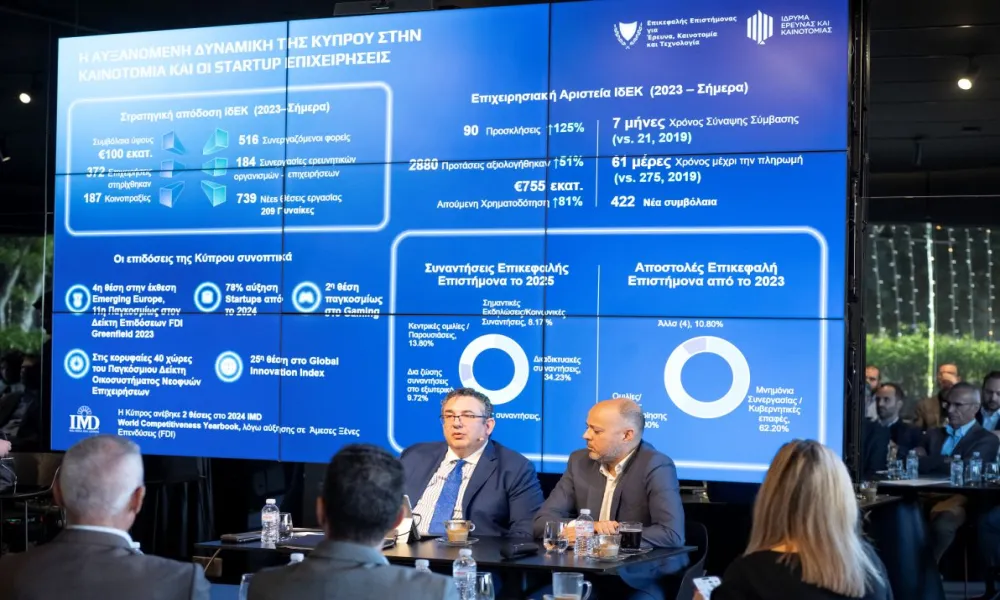
In his opening remarks, Mr Skourides highlighted key performance indicators of the ecosystem, noting that Cyprus has now reached 25th place in the Global Innovation Index, while the country’s ecosystem of innovative companies has climbed five positions in the Startup Blink ranking.
A reliable international partner
Cyprus is now considered a reliable partner for international cooperation, reflecting the success of its outward-looking innovation diplomacy. Particular emphasis was placed on the mapping of the artificial intelligence ecosystem and the creation of critical links between research centres and commercialisation.
Vision for the future
“Our goal is for Cyprus to evolve into a dynamic and competitive economy, driven by research, scientific excellence, innovation, technological development and entrepreneurship. Our actions and policies are focused in this direction,” Mr Skourides said.
The Chief Scientist acts as a strategic adviser to the President of the Republic and the Deputy Minister for Research, Innovation and Digital Policy on the country’s rapid and effective digital transformation, as well as on assessing the impact of modern technologies. He contributes to shaping government policy in research, innovation and technology and plays a key role in the smooth functioning of the governance system and the adaptation of stakeholders to new institutional frameworks.
Mr Skourides also chairs the Research and Innovation Foundation, the National Artificial Intelligence Task Force and the Committee of Research and Innovation Coordinators. He represents Cyprus on the Board of the Joint Research Centre, serves as a member of the National Research and Innovation Council, contributes to the country’s digital strategy and has recently assumed the role of Vice-President of the European Science Advisors Forum (ESAF).
Openness and internationalisation
During his tenure, and in cooperation with the Deputy Ministry for Research, Innovation and Digital Policy, Mr Skourides helped shape a strategy for signing Memoranda of Understanding that add value to Cyprus’ bilateral relations. He led the design of these initiatives and actively participated in their signing, while continuing to support their implementation with countries such as Japan, India and the United Arab Emirates.
This includes the Memorandum of Understanding on Artificial Intelligence and cooperation with Khazna, as well as a decisive role in Cyprus’ signing of the Artemis Accords, the attraction of Tenstorrent to Cyprus, and other strategic partnerships with private and international organisations. He also signed a Memorandum of Cooperation with Invest Cyprus, further strengthening the country’s international presence.
Strong impact from RIF programmes
Referring to RIF-funded research programmes, Mr Skourides noted their significant social and economic impact. The programmes focused on the four pillars of the National Research and Innovation Strategy:
- World-class research and infrastructures,
- Research and innovation in businesses,
- The new generation, and
- Internationalisation.
Between 2023 and 2025, RIF launched 90 calls for proposals and signed contracts worth a total of €100 million, leading to the creation of 739 new jobs in high-growth sectors, 209 of which were filled by women. In total, 372 businesses were supported, while 187 collaboration networks were created, with 184 companies partnering with research organisations.
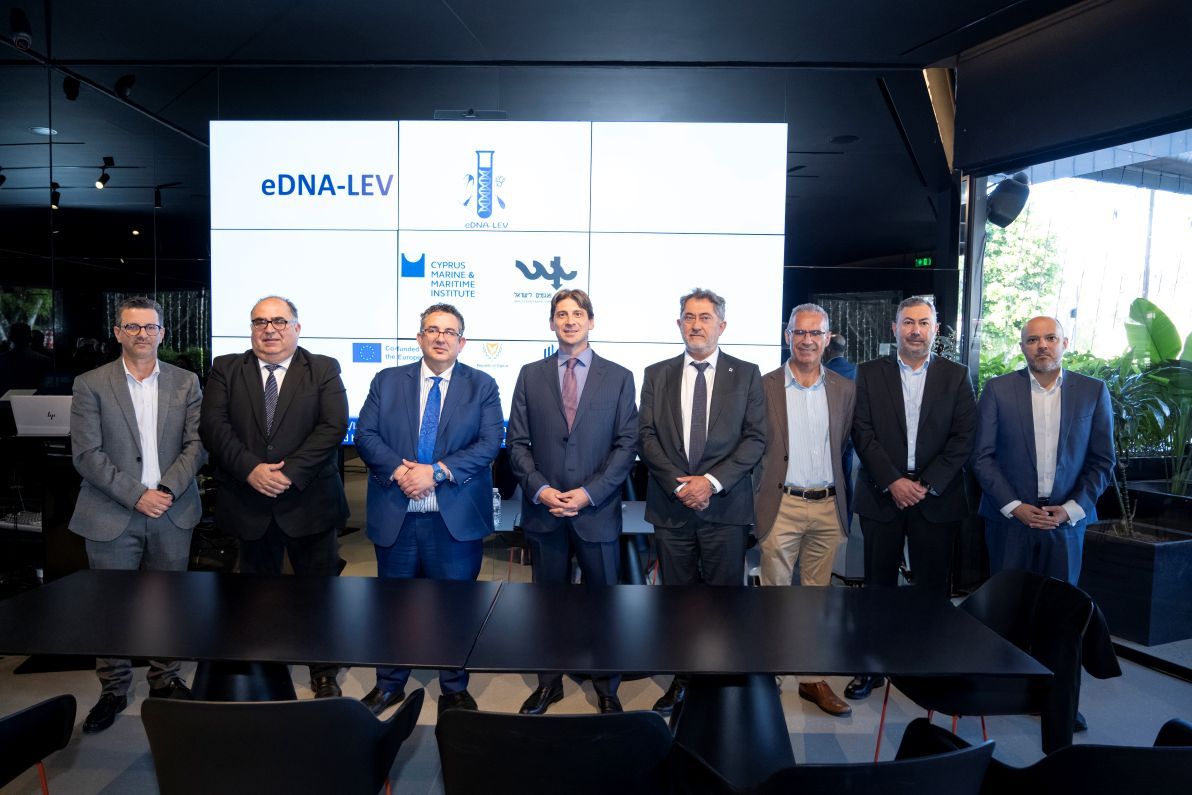
Mr Skourides made special reference to RIF investments in strategic infrastructures, amounting to €25 million, and presented in detail the five infrastructures that received funding.
Supporting young researchers and excellence
Particular emphasis was placed on opportunities for young people to take on leadership roles early in national research projects. A total of 48 young researchers are now leading cutting-edge research projects, while researchers have also secured funding through specialised programmes such as Vision ERC and ERC Fellowship. Combined with RIF’s proposal support services, these initiatives act as stepping stones towards success in ERC and other European excellence programmes.
Mr Skourides also highlighted the impact of RIF investment in fast-growing companies through the Disrupt programme — the first blended finance scheme of its kind. Through this programme, RIF invested €10.5 million, leveraging an additional €12.5 million in private venture capital investment into seven companies, whose combined valuation exceeds €150 million. This investment led to the creation of 58 new jobs.
“The research and innovation ecosystem in Cyprus has become strong and resilient,” Mr Skourides stressed, noting that it delivers measurable excellence and performs successfully at European level in attracting competitive funding.
Operational efficiency at RIF
Mr Skourides explained that RIF has evolved into a more flexible and reliable body for implementing state investments in research and innovation, operating with high efficiency as the executive arm of the state in this field. As a result, RIF has secured additional funding, which has been channelled back into the ecosystem.
He noted in particular that the average time for signing contracts has been reduced to seven months, compared with 21 months in 2019, while the average payment time has fallen from 275 days in 2019 to 61 days.
Gender equality
Mr Skourides presented measures introduced by RIF in postdoctoral funding programmes that have led to increased participation and leadership by women in research and innovation projects. Specifically, 61.16% of submitted proposals were coordinated by women, compared with 29.67% in previous calls, while 76.4% of funded projects had female coordinators, up from 23% previously.
Alignment was also achieved with the European Commission’s White Paper on Artificial Intelligence, incorporating non-discrimination, gender equality and fundamental EU values.
Artificial intelligence as a national priority
Artificial intelligence has emerged as a strategic national priority under Mr Skourides’ guidance. The goal is to modernise Cyprus’ national AI strategy, with an emphasis on a human-centric approach that ensures responsible and ethical use of technology.
Mr Skourides chairs the ten-member AI Task Force responsible for preparing and implementing the new AI strategy, strengthening Cyprus’ position as a regional hub for innovation and technological development.
The event also featured leading Cypriot researchers whose work and infrastructures have been supported by RIF. They shared practical examples with media representatives of the impact of national research programmes, the results achieved, and Cyprus’ broader contribution to regional and international innovation.