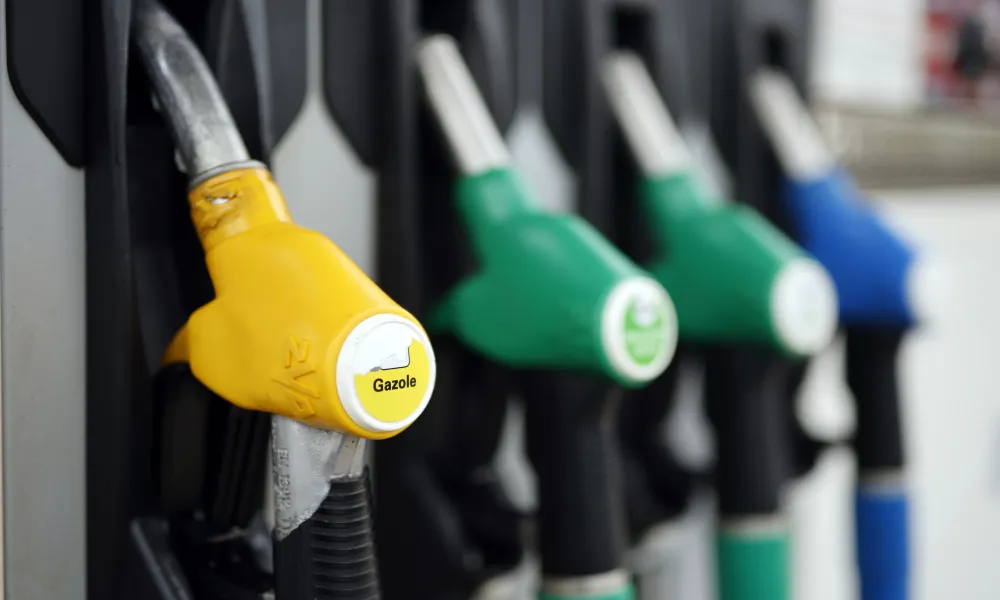

There is no justification at present for imposing price caps on food or fuel, according to the Consumer Protection Service, which says recent increases reflect underlying market conditions.
Aliki Iordanou, head of the Competition Branch at the Consumer Protection Service of the Ministry of Commerce, told the Cyprus News Agency that no unjustified price hikes have been identified that would trigger state intervention.
She said that under the law, price caps can only be introduced when increases cannot be explained by international or domestic factors. “This is not the case at the moment,” she noted.
According to March data, prices rose in 33 out of 45 basic product categories compared with February, while 12 categories recorded declines. Of those, eight also showed year-on-year decreases.
Iordanou added that both suppliers and supermarkets appear to be containing price increases, contributing to inflation standing at 1.2 per cent in March, the second lowest rate in the European Union.
She pointed to the e-kalathi platform and greater price transparency as factors strengthening competition and putting downward pressure on prices, both for listed products and those outside the scheme.
Fuel prices driven by import costs
On fuel, Iordanou said increases are linked to the cost of imported refined products, mainly from Greece and Israel. The service monitors the full supply chain, including import prices, timing, volumes, wholesale and retail pricing, to assess whether changes are justified.
“If increases are found to be unjustified, the service will recommend the imposition of a price cap to the minister, although this is difficult in such cases,” she said.
She reiterated that current conditions do not support such a move, stressing that no unjustified increases have been recorded in either food or fuel.
Supermarkets report stable conditions
Andreas Hadjiadamou, executive secretary of the Pancyprian Supermarkets Association, said there is no evidence of a broader wave of price increases beyond typical fluctuations.
He described market conditions as stable, despite earlier pressures linked to energy costs and the wider geopolitical environment.
Consumer behaviour has also remained normal, he said, noting that the post-Easter period typically sees reduced activity. “It is a cycle we observe every year,” he explained, adding that there are no signs of uncertainty affecting supermarket traffic.
He also said there were no supply shortages during the Easter period and that alternative sourcing solutions were used where necessary.
On the e-kalathi platform, Hadjiadamou said supermarkets comply with legal requirements but do not see any significant impact on consumer behaviour.
Consumer group raises concerns
However, the Cyprus Consumers Association offered a more critical assessment, with its president Marios Drousiotis saying prices of basic goods in the e-kalathi have been rising since mid-April.
He said competition appears limited to a small number of supermarkets and mainly applies to products included in the scheme, with less evidence of competitive pricing outside it.
The largest increases, he added, are seen in flour-based products and chocolate.
Drousiotis also questioned the effectiveness of government fuel subsidies introduced earlier this month, arguing that part of the support has not been passed on to consumers.
He cited monitoring data showing that retail fuel prices remained broadly unchanged after the reduction in excise duty on 4 April, while some stations increased prices despite no corresponding rise in wholesale costs.
According to his findings, 22 stations raised prices without official announcements from their suppliers, with some increases exceeding those declared by other importers.
He criticised authorities for what he described as statements without substance, despite assurances that fuel pricing is being closely monitored.
Source: CNA