
By Michalis Koullouros
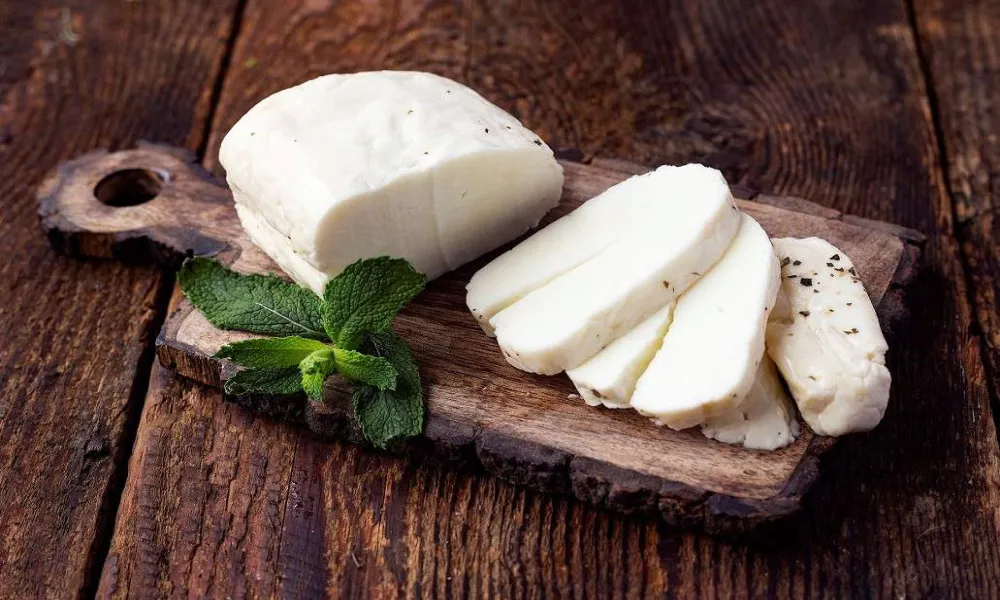
Halloumi PDO (Protected Designation of Origin) is tied to the history of this place and the people who sustained it, first in Cypriot villages and later on international markets. From the Mediterranean to North America, halloumi has become closely associated with authenticity, quality and Cypriot gastronomy.
Its transformation from a locally produced cheese into one of Cyprus’s most recognisable exports did not happen quickly. It is the result of sustained effort by the country’s cheesemakers, who invested in production, promoted the product abroad and helped establish cheesemaking as a stable part of the domestic economy. Today, halloumi ranks as Cyprus’s second most exported product.
This progress is also linked to consistent participation in international exhibitions and swift responses to cases of imitation or mislabelling, in cooperation with the competent authorities.
Export performance
According to official data from the Statistical Service, Halloumi PDO ranked second among Cyprus’s exports in the first half of 2025. Exports reached €201.1 million between January and June, accounting for 11.1 percent of total exports during that period.
Its recognition as a Protected Designation of Origin further strengthened its position internationally. Demand for products with a clear identity and traceable origin continues to grow, and halloumi meets those criteria through its production method, taste and geographical link.
Key markets and expansion
The United Kingdom remains the main destination for Halloumi PDO, accounting for 45 percent of exports. Sweden follows with 9 percent, while Australia, Germany and Greece each account for around 5 percent.
Alongside efforts to expand within existing markets, Cyprus’s cheesemakers are also targeting new ones, including the United States and the Middle and Far East. These efforts are being pursued in cooperation with the Ministry of Energy, Commerce and Industry and Cyprus’s commercial attachés abroad, using national planning and EU co-funded programmes.
A product shaped by use
Halloumi’s appeal also lies in its practicality. It can be grilled or fried, served as a side or as a main dish, and used across different cuisines. Chefs value it for its texture and flavour, as well as its reliability in professional kitchens.
It is a product that moves easily between traditional tavernas, casual street food and fine dining settings, without losing its character.
The main challenge now is to sustain growth without weakening the qualities that established halloumi in the first place. Protecting the product means protecting jobs, preserving a shared cultural reference point and supporting the wider economy.
Halloumi’s success shows that when tradition is combined with quality, consistency and long-term planning, it can secure a place on global markets without losing its roots.
Michalis Koullouros is a senior officer at the Department of Industrial Development, Innovation and Environment, Cyprus Chamber of Commerce and Industry (KEBE), and executive secretary of the Cyprus Cheesemakers Association