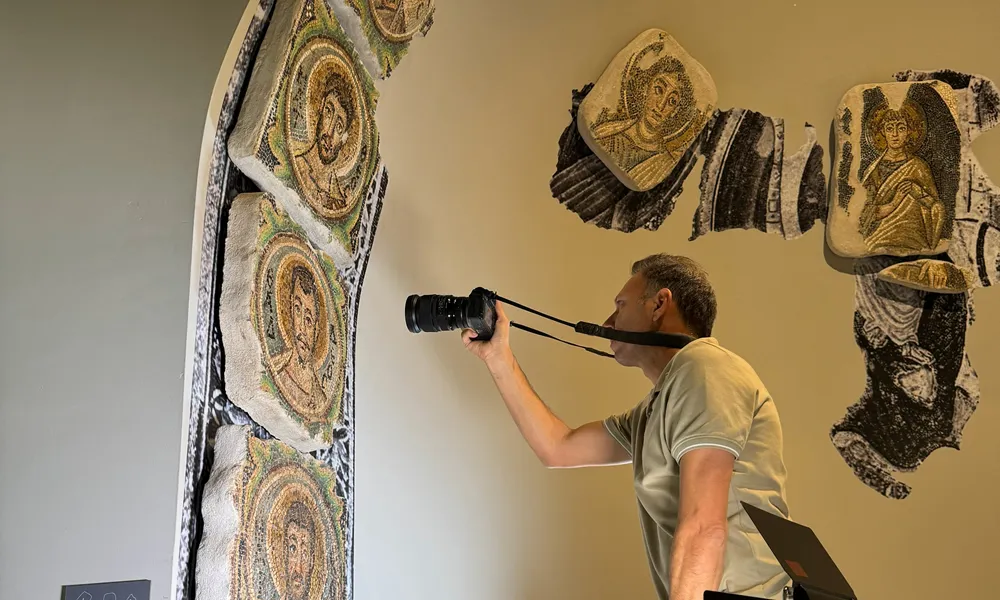

Frederick University is participating in the innovative programme “Documentation, Enhancement and Reproduction of Mosaics from Ecclesiastical and Other Sites of High Cultural Value” (MOSAIC). The project is being implemented in collaboration with the Technical University of Crete, the Byzantine Museum of the Archbishop Makarios III Foundation, and the Department of Antiquities of Cyprus Deputy Ministry of Culture.
According to a press release issued by Frederick, the project involves leading researchers Professor Antonios Londos, Professor George Demosthenous, Professor Kostas Kyriakou, Professor Sotiris Omirou, and alumnus of the Department of Mechanical Engineering, Demosthenis Vambourellis.
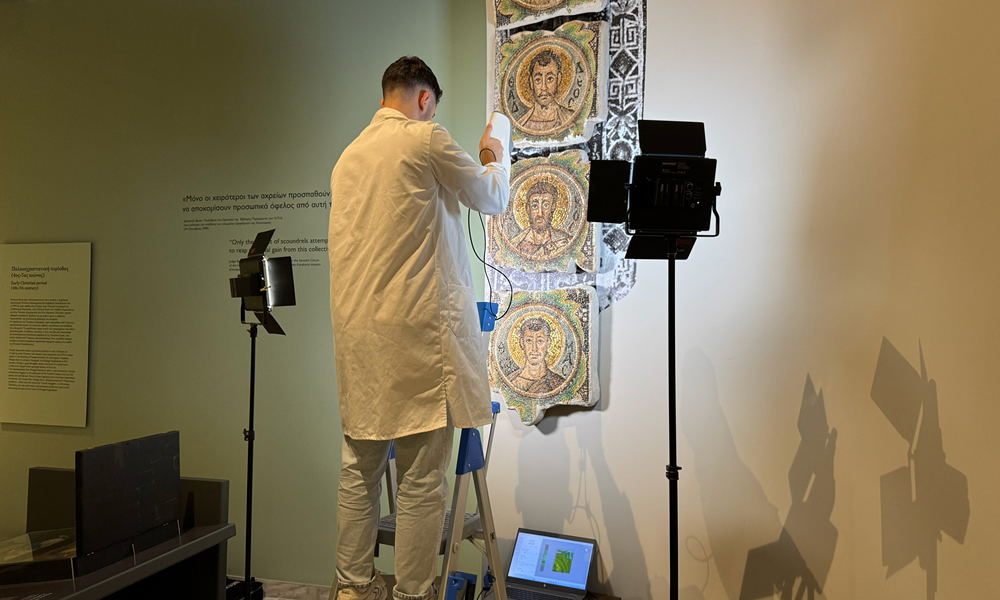
The aim of the programme is the digital documentation and faithful reproduction of Byzantine mosaics. This will be achieved through the design and optimisation of a specialised production process. The project will leverage modern technology and digital tools to develop a pioneering methodology for producing Byzantine mosaics at various scales.
This is the first time such an advanced programme has been applied to Byzantine mosaics. The initial phase involves digitising mosaics using specialised algorithms and artificial intelligence. Subsequently, through micro-processing techniques on specialised materials, moulds will be created to produce accurate replicas in different sizes.
This approach ensures precise recording of the form, texture, and colour shades of the mosaics, contributing to the preservation and documentation of cultural heritage. The ultimate goal is to create replicas suitable for educational and exhibition purposes, providing a contemporary approach to studying and showcasing Byzantine art.
Frederick University will contribute using both existing and newly acquired state-of-the-art equipment funded through the project. “This ensures the mosaics are captured in detail, including any cracks or colour deterioration, making the information available if the original works are lost or damaged,” explains Professor Antonios Londos from the Department of Mechanical Engineering at Frederick University.
“It is the first effort to digitally capture Byzantine mosaics and their techniques with such precision. Our aim is to develop a comprehensive and innovative process combining traditional methods with modern technologies such as artificial intelligence. The expertise gained will also be applied to similar projects internationally, not only in Cyprus and Greece.”
The programme is co-funded by the European Regional Development Fund at 80%, with the remaining 20% provided by national funds from Greece and Cyprus, under the INTERREG VI-A “Greece-Cyprus 2021–2027” Cooperation Programme.