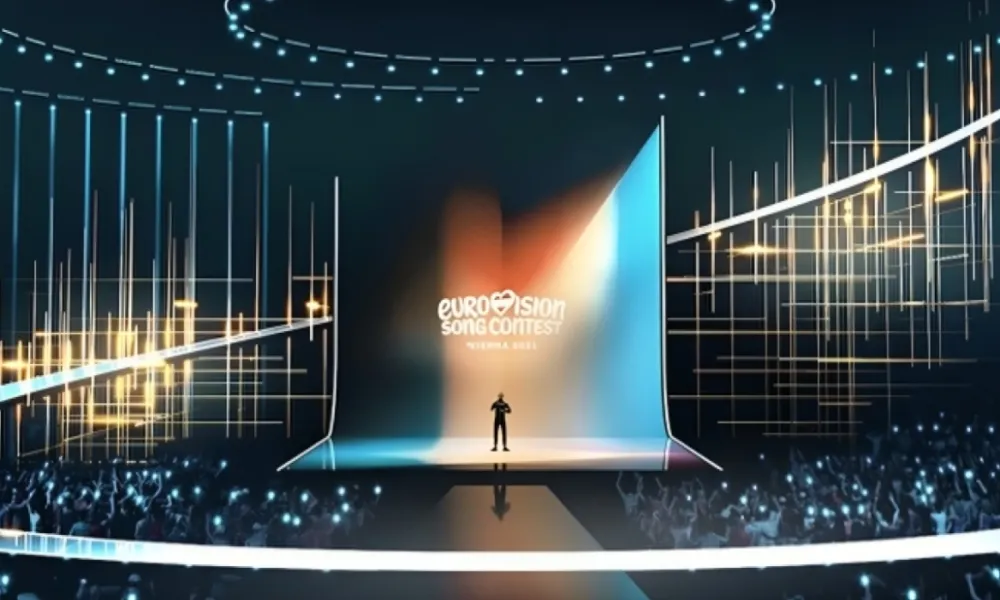
With months still to go until Eurovision returns to the stage, the world’s biggest live televised music event is already facing one of the most divisive periods in its history. Despite the long-standing slogan “United by Music”, diplomatic tensions, withdrawals and protests are set to dominate the lead-up to the 70th anniversary of the contest.
Fewer countries on the Eurovision stage
A total of 35 countries are expected to take part in Eurovision 2026, according to organisers. This marks the lowest number of participating broadcasters since 2003, when the contest expanded to accommodate more entries.
Five national broadcasters — Spain, Ireland, the Netherlands, Slovenia and Iceland — have withdrawn in protest over Israel’s continued participation. In statements, these countries argued that taking part would be “unconscionable” given the scale of civilian casualties in Gaza following Israel’s response to the 7 October 2023 attack by Hamas.
ORF responds to protests
Against this backdrop, Austrian public broadcaster ORF, which will host Eurovision 2026 in Vienna, has addressed concerns over censorship and editorial interference during the live shows.
ORF confirmed it will not prohibit the Palestinian flag from appearing in the audience and will not censor or mute any booing directed at Israel’s performance.
“We will allow all official flags that exist in the world, provided they comply with the law and meet specific requirements regarding size and security,” said Michael Kroen, the show’s executive producer. “We will not sugarcoat anything or avoid showing what is happening, because our task is to show things as they are.”
No artificial applause
Stefanie Groiss-Horowitz, ORF’s director of programming, also confirmed that the broadcaster will not mask audience reactions.
“We won’t play artificial applause over it at any point,” she said, referring to practices seen during Israel’s performance at this year’s contest, when crowd noise was reportedly altered.
Artists return trophies in protest
Tensions surrounding Israel’s participation have also reached past Eurovision winners. Swiss artist Nemo, who won the contest last year, recently announced plans to return their winner’s trophy.
In a statement, Nemo said Eurovision presents itself as a platform for “unity, inclusion, and dignity for all”, but argued that Israel’s continued participation contradicts those values, citing conclusions by the UN’s Independent International Commission of Inquiry. Nemo added that when countries withdraw from the contest, “it should be clear that something is deeply wrong”.
Irish singer Charlie McGettigan, who won Eurovision in 1994 alongside Paul Harrington, has also pledged to return his trophy in solidarity. McGettigan said Nemo had personally explained their decision and described them as “sincere and very intelligent”, adding that if he is able to locate his original trophy, he will return it to the EBU.
A fraught road to Vienna
With protests, withdrawals and open disagreements between broadcasters, Eurovision 2026 is shaping up to be one of the most politically charged editions in the contest’s history. The event is scheduled to take place in Vienna on 16 May 2026, but organisers face mounting pressure as debates over participation, censorship and values continue to intensify.
Source: euronews.com