
Pointless
I went to the exhibition almost accidentally.
My dear colleague Christothea Iacovou and I decided to go on a whim. It was one of those decisions you make late in the afternoon, not entirely sure what to expect. It was also my first time at NiMAC, which in hindsight feels like an omission I should have corrected long ago.
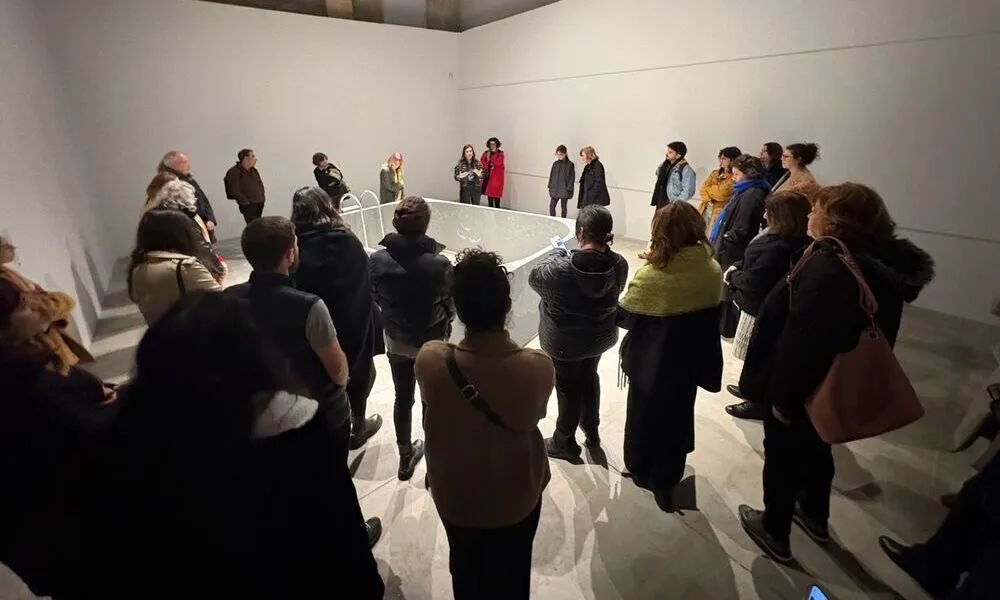
By the time we arrived, the space was already filled to the point where the person coordinating the evening expressed concern about whether everyone would be able to hear the curator’s tour. I realised I had never seen that in Limassol. I had never seen someone worry that too many people had shown up for contemporary art.
The exhibition, Fluid Persistence, unfolds around water as ecology, as myth, as memory and as geopolitical force. Yet what stayed with me was the atmosphere in which it was presented and received.
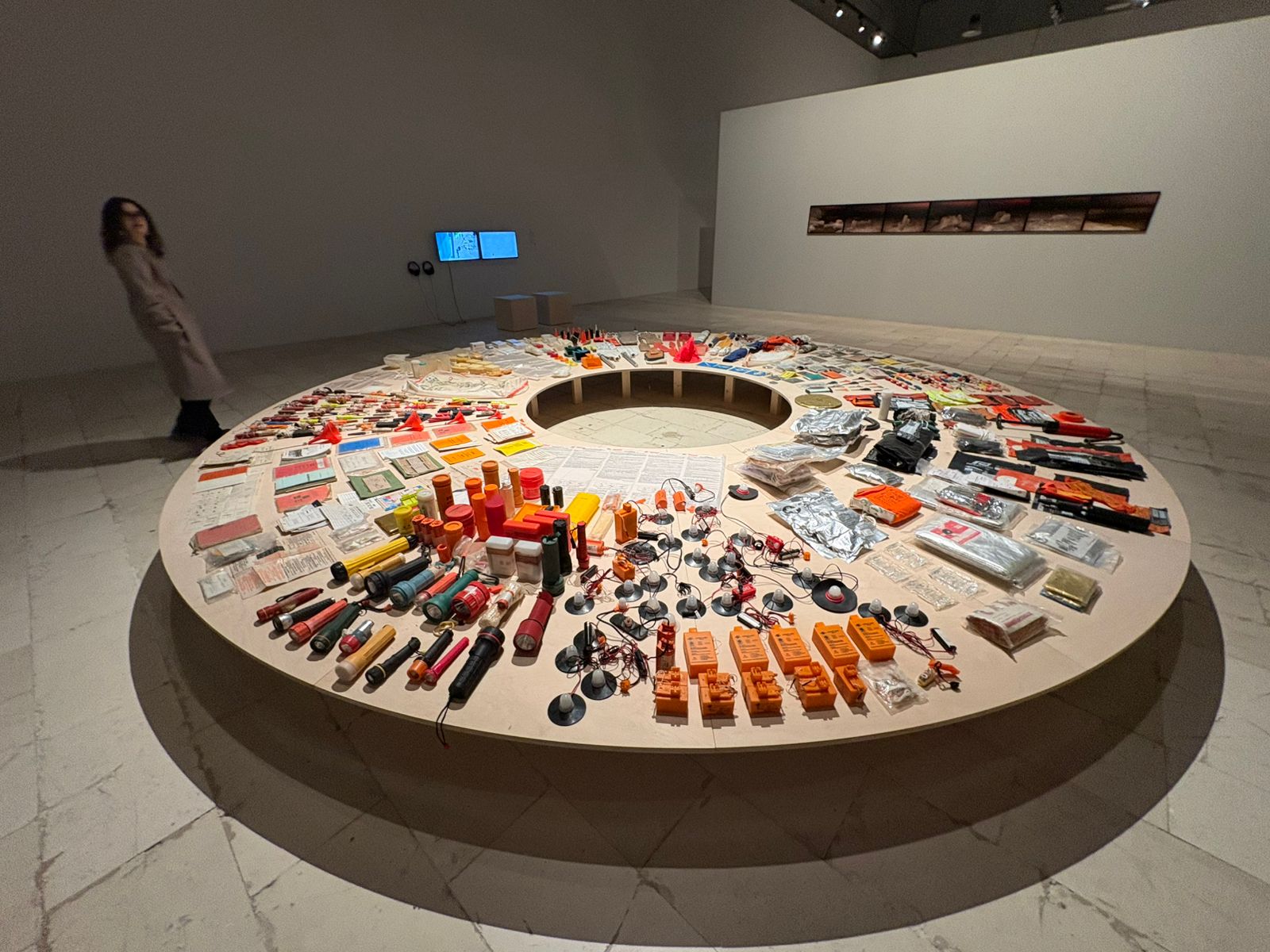
The curator, Dr. Elena Stylianou, guided the tour with a depth of familiarity that was immediately disarming. She spoke about each work as part of a longer intellectual and emotional process. She referenced the artists’ motivations, their research trajectories, the conceptual tensions they were navigating. It was clear that this was knowledge accumulated through sustained engagement.
Some of the artists were present among us, listening as she spoke about their work. The exchange felt fluid. At one moment she paused and invited the group to share their own readings. There was no self-consciousness, no defensive posture. The works seemed to open rather than close under discussion.
Coming from Limassol, I could not help noticing the difference. I have attended exhibitions where the artist stands alone in the room, the curator absent, the interpretative burden resting entirely on wall text or on the viewer’s private reaction. Here, there was a shared vocabulary.
Artists were scattered throughout the crowd, recognisable to one another even if not to me. Long-time exhibition-goers greeted each other with the familiarity of people who have been attending openings together for years. Academics, collectors, practitioners and regular cultural participants stood side by side, listening attentively. There was nothing ostentatious about it. It was simply a community that had been in conversation for a long time.
I became aware, perhaps too acutely, of my own position within that room. I was not part of that history. My face, I imagine, must have reflected a mixture of surprise and admiration. And that reaction in itself unsettled me. Why did it feel so unusual to be in a space where art was treated as something intellectually serious and socially shared? It should not feel exceptional to be among artists, curators and engaged viewers who approach an exhibition as a site of inquiry. Yet it did feel exceptional. It felt almost like entering a parallel cultural reality within the same island.
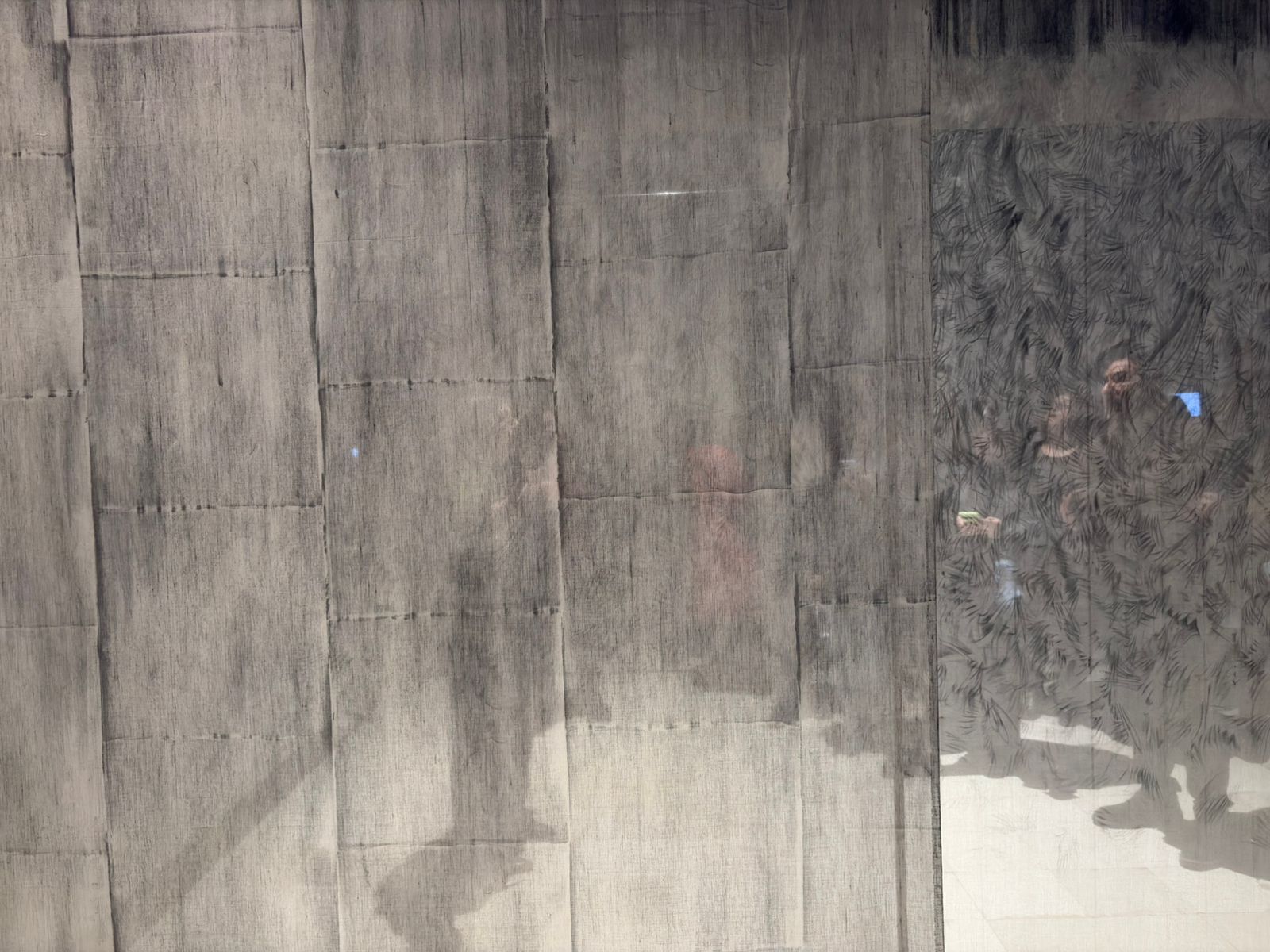
Fluid Persistence asks what water wants, and in doing so it frames water as a force that resists containment. Do we expect it to decorate, to soothe, to fill a cultural quota? Or do we allow it to provoke, to complicate, to gather people into sustained dialogue?
The evening at NiMAC suggested that another model is possible. One in which the institution holds memory and continuity. One in which the curator is simply present. One in which artists are participants in an ongoing public conversation.
Leaving the building, I felt like I had stepped briefly into a cultural current that has been flowing quietly for years. The question that lingers is why it felt rare to me, and what that says about how unevenly we cultivate such spaces across the island.