Cyprus is facing a “very serious situation” due to the spread of foot-and-mouth disease, the Director of Veterinary Services, Christodoulos Pipis, said on Sunday during a press briefing in Nicosia.
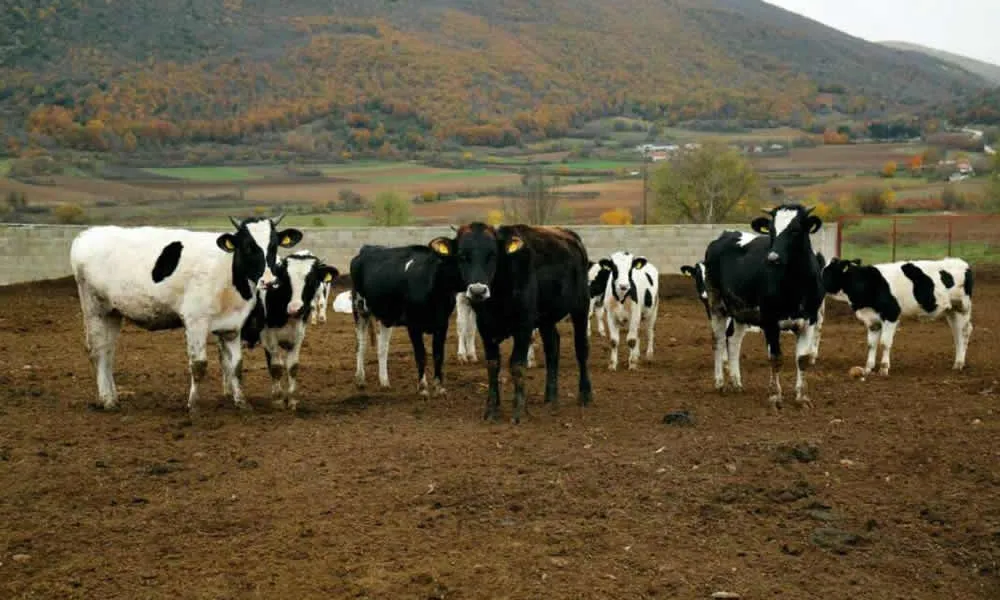
Pipis said that approximately 5,000 animals - including cattle, sheep and goats - have been affected across six livestock units, which he described as forming a single epidemiological entity based on their geographical location.
He confirmed that the authorities are now examining the possibility of vaccinating animals against the virus, an option that had not previously been under consideration. A request for vaccines has already been submitted to the European Union, while a team of veterinary experts from the European Commission’s Directorate-General for Health is expected to arrive in Cyprus by Tuesday at the latest.
Illegal trafficking suspicions
Responding to journalists’ questions, Pipis said the Veterinary Services have received information suggesting that the virus may have entered government-controlled areas from areas not under the effective control of the Republic, possibly through illegal trafficking of animal feed that was subsequently distributed to livestock units.
He stressed that there is currently no conclusive evidence to confirm this scenario beyond doubt. However, efforts are underway to substantiate the information and, should sufficient evidence emerge, the matter could be referred to the Police for a criminal investigation.
Vaccination under review
Pipis explained that preparations for vaccine procurement had already been initiated in consultation with the European Commission in December, following an incident in the non-government-controlled areas, in order to ensure readiness.
He noted that the issue of vaccination is being reviewed depending on how the outbreak evolves. “When you observe the aggressiveness and speed of spread of the virus, combined with the extent of infection in the livestock population, the option of vaccination is placed on the table in order to safeguard the remaining animal population,” he said.
The incoming EU expert team will assist member states in managing animal disease crises, reviewing the background of outbreaks and making recommendations and corrective actions where necessary.
Movement ban and disinfection measures
Mr Pipis reiterated that strict measures have been implemented in recent days, including a ban on the transport and movement of animals and livestock-related products. Disinfection tanks have been installed in livestock areas in Larnaca, Limassol and Paphos in cooperation with district authorities, the Department of Agriculture and the Forestry Department.
He warned that failure by animal keepers to comply with the measures provided by law could have consequences for the state support they receive.
Although concerns remain about the potential illegal transfer of animal feed from non-controlled areas, Mr Pipis said this does not undermine the effectiveness or legality of the Veterinary Services’ epidemiological investigation and containment efforts. He added that the Service acted fully in accordance with legislation and successfully identified the pathogen in question. Surveillance and control measures are being carried out in cooperation with the Police, and affected areas have been cordoned off.
Rebuttal of delay allegations
The Director also addressed allegations made on Saturday suggesting delays in the authorities’ response. He rejected the claims as inaccurate, explaining that while journalists were present on one access road to an affected unit, police officers and Veterinary Services staff were simultaneously installing barriers on another road leading to the same premises.
He confirmed that he had been called to give a statement to the Police, as had livestock farmers.
According to Mr Pipis, the Veterinary Services were first informed of a suspected case on 19 February at a cattle unit in Livadia, Larnaca. Laboratory results confirming foot-and-mouth disease were announced on 20 February.
He added that, based on the facts and the farmers’ own admission that they had been aware of symptoms in their animals since 12 February, they had not acted in accordance with Article 6 of the Animal Health Law.
“Sincerity and consistency are required from animal care professionals,” Mr Pipis said, stressing that the situation is serious for national interests and particularly for the country’s animal health status.
Veterinary officers in Larnaca are currently conducting mapping and epidemiological investigations. Authorities have assured that the culling and burial of affected animals will be carried out in full compliance with legislation, including animal welfare provisions, in order to minimise suffering as much as possible.