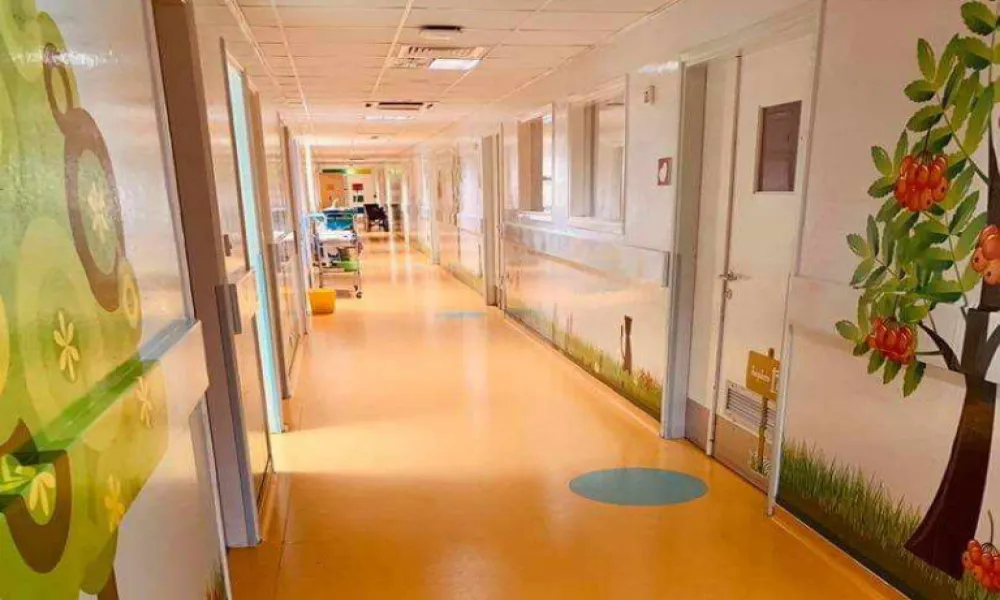
Concerns have been raised regarding the impact of ongoing upgrade works at Makarios Hospital on the Paediatric Oncology Clinic. The Pancyprian Association of Parents and Friends of the Paediatric Oncology Unit has warned of safety and health risks affecting immunocompromised children.
In a statement, the Association expressed strong concern that the works are adversely affecting the operation of the Clinic.
Concerns Raised by the Parents’ Association
The Pancyprian Association of Parents and Friends of the Paediatric Oncology Unit stated that while it understands the necessity of renovating the existing building, its long-standing objective remains the construction of a new, modern and specialised Mother and Child Hospital.
The Association expressed support for families protesting the alleged failure to implement adequate preventive protection measures during the works, particularly on the second floor, which directly affects the Paediatric Oncology Clinic. According to the statement, the situation complicates the living conditions of hospitalised children and their parents, as well as the working conditions of staff.
Despite assurances that strict protocols are being followed, the Association reported repeated safety and health issues, including:
- Continuous noise pollution, which it said seriously affects the mental health, calm and recovery of hospitalised children, as well as the psychological state of their parents
- Falling soil and dust from suspended ceilings, described as posing serious risks in an environment hosting immunocompromised children
- Water leakage from the ceiling onto beds, in the kitchen and in other areas of the Clinic
- Interruption and restoration of water supply due to faults, resulting in the flow of dirty water caused by disturbance of sediment such as soil and rust in the pipes
The Association underlined that the safety and protection of children “is not a luxury but an obvious and non-negotiable right”, adding that it is a daily recipient of the “anxiety of parents whose children are fighting their own battle, children who need calm, a clean and safe environment, stability and care”.
It called for:
- Immediate and substantive re-evaluation of all protection measures
- Updating of the risk management plan and briefing of the competent Committee
- Daily and strict scheduling, monitoring and supervision of works
The Association concluded by expressing full support for families and stated that it remains determined to protect them “by every institutional and responsible means”.
Response by the State Health Services Organisation
Following the parents’ reactions, the State Health Services Organisation stated in its announcement that the concerns of child patients and their families are justified.
According to the Organisation, the works are being carried out on the floor above the Paediatric Oncology Department, specifically in the Paediatric Surgery Ward. During demolition works, minor water leaks were observed in the Paediatric Oncology Department, as the existing valves, due to age, were not able to fully shut off the water supply.
The Organisation stated that, as a preventive measure, a plumber was continuously present throughout the demolitions to ensure immediate corrective action where required.
It further noted that increased noise was observed during the opening of floor channels in the Paediatric Surgery Department for the installation of drainage pipes, describing these works as unavoidable. It added that the Management of the Paediatric Oncology Department had been informed in advance. Based on information from the contractor, all drainage openings are expected to be completed by 13 December 2026, which will result in a significant reduction in noise.
Measures regarding working hours and water quality
With regard to mitigation measures, the Organisation stated that heavy works are carried out after 08:00 and suspended between 13:00 and 14:00, while no works that may cause disturbance take place during weekends.
Regarding water quality, the Organisation reported that samples were taken for laboratory testing, which indicated that the hospital’s water supply network does not present any problem. Nevertheless, it added that central water filters were installed at the main supply as a preventive measure.
Finally, the Organisation stated that, in addition to monthly site meetings, an additional weekly on-site meeting has been scheduled with the participation of the entire project team, as well as daily supervision by an engineer of the State Health Services Organisation, in addition to the contractor’s engineer.