
Lost lessons, parents pushed to the brink, and children once again caught at the centre of a dispute that does not concern them. Thursday’s teachers’ work stoppage brings renewed disruption to the daily lives of thousands of families, intensifying frustration over hardship they bear through no fault of their own.
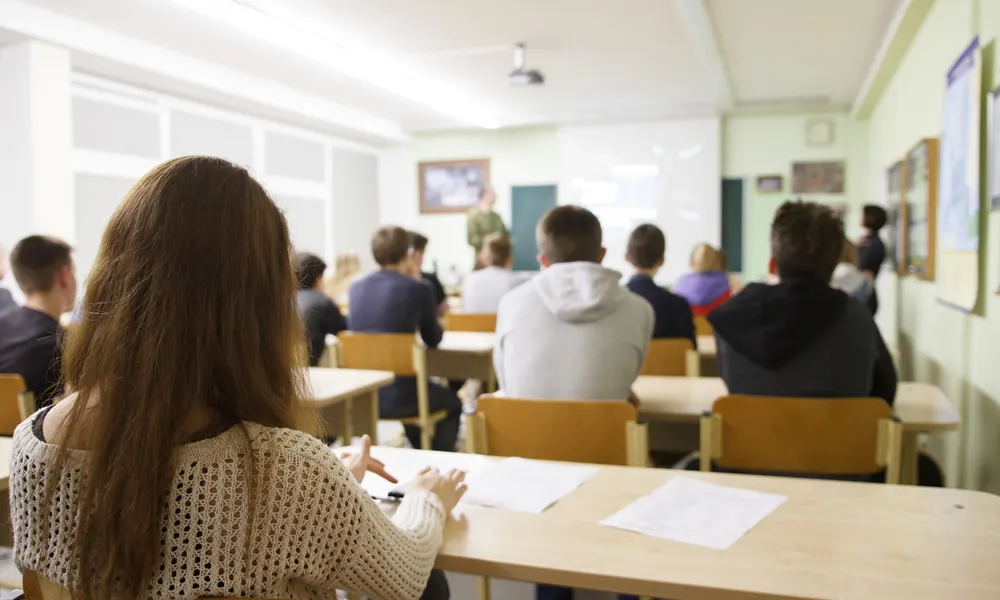
For the second time in less than a month, thousands of families are being forced to overturn their routines due to a two-hour work stoppage announced for tomorrow by teachers in both secondary and primary education. With schools effectively closed until 9.00 am, pupils, particularly in secondary education, once again lose valuable teaching time, while parents are faced with practical and work-related dead ends. All this unfolds amid an ongoing dispute over the bill on teacher evaluation, for which families carry no responsibility.
This disruption is not new. On 19 November, OELMEK had again proceeded with a work stoppage, leading to lost lessons and disruption to school operations. Less than a month later, the same scenario is repeating itself, heightening concern among parents and students about the remainder of the school year, especially at a time when the curriculum is moving at pace and lost teaching time is accumulating. In secondary education in particular, where students face increased academic demands, repeated lesson interruptions are causing understandable frustration. Parents speak of a situation that appears to be becoming entrenched, with children constantly caught in the middle of a confrontation that does not concern them, yet directly affects their educational progress.
At the same time, many families find themselves in a real bind. Numerous parents are forced to take leave from work to deal with delayed school opening hours, while others turn to grandparents or relatives for childcare support. The problem becomes even more acute for those travelling from remote areas, as school buses cannot alter their routes, leaving little room for alternative solutions. It is also considered a given that a large number of students will not attend school on Thursday, something that was also observed during the OELMEK work stoppage a month ago.
In this climate, a growing perception is taking hold in society that parents and students are being inconvenienced due to the “whims” of teachers’ organisations, with the burden once again shifted onto families. This perception deepens dissatisfaction and fatigue, particularly as strike actions are repeated without any immediate sign of de-escalation.
“They are using our children”
Strong reactions are being voiced by organised parents in secondary education. The president of the Confederation of Secondary Education Parents, Loizos Constantinou, spoke of children being used as a “lever of pressure”, stressing that pursuing labour demands is one thing, while directly affecting students’ rights and burdening parents is another. He recalled that the total number of parents and students in primary and secondary education amounts to 310,000, underlining the scale of the issue. Particular anger was also sparked by references to possible non-delivery of first-term progress reports as an escalation measure should the bill be passed, with parents openly describing this as “punishing students” in the context of pressure on the state.
Reactions are not limited to secondary education. Strong dissatisfaction has also been expressed by organised parents in primary education, who reacted publicly from last Friday, when it became known that POED would also proceed with strike action. The president of the Confederation of Primary Education Parents, Yiannos Ioannou, made it clear that, while respecting teachers’ constitutional right to strike, there is a clear line when the everyday educational reality of thousands of families is directly affected. He stressed that children’s education cannot be turned into a tool of pressure.
Defending their position
From the side of the teachers’ organisations, POED president Myria Vasileiou defended the decision to take strike action, noting that authorisation from the organisation’s members had been in place since June and that the activation of the strike was carried out with restraint, once, as she said, patience had been exhausted. At the same time, OELMEK president Dimitris Taliadoros rejected criticism of “blackmail”, arguing that strikes are a constitutionally protected right of workers. As he put it, “democracies are not blackmailed”, stressing that strike action must be respected, regardless of the reactions it provokes.
Minister disappointed
On the other side, Education Minister Athena Michaelidou expressed disappointment over the strike action, speaking of lost valuable time and hardship for thousands of families. She also questioned the rationale behind the mobilisations, at a time when, as she noted, differences between the positions of the teachers’ organisations are limited to one or two points of the bill. She added that everything included in the draft regulations submitted to Parliament has been discussed repeatedly with the teachers’ organisations.