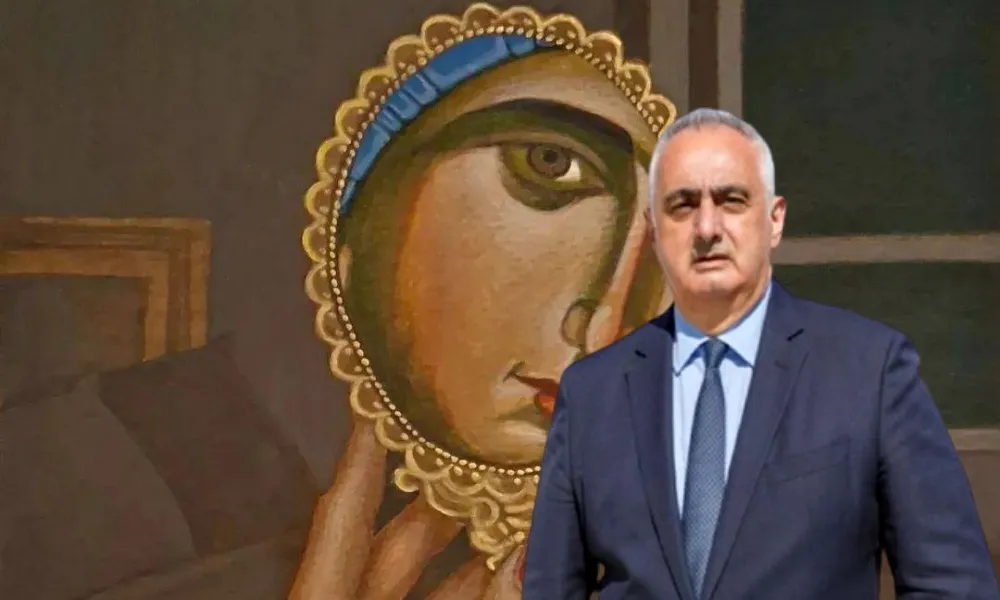
Achilleas Demetriades, speaking on Politis 107.6’s radio show The Morning Review, addressed the recent controversy surrounding a collage of works by the artist Giorgos Gabriel, created by a group and posted by DISY MP Efthymios Diplaros, clarifying the legal distinctions between freedom of expression, offense, and the use of criminal law in matters of art and public discourse.
Commenting on those feeling offended because the artis raises religious issues, Demetriades emphasised that Cyprus, under its 1960 Constitution, has no official religion and was founded with a clear separation between state and religion. He highlighted that discussions about where one person’s right to express themselves ends and another’s right not to be offended. He further pointed out that the discussion must be seen through the political and temporal context, as heightened tensions often occur during pre-election periods.
Regarding the Gabriel case, Demetriades explained that the artist had planned a private exhibition in Paphos, while a third party created and circulated a collage of his works on social media, later promoted by a member of parliament. He stressed the importance of intellectual property rights, noting that works cannot be taken to harm an artist.
Demetriades also addressed the ethical dimension, pointing out that the exhibition was private and that it is a fundamental right of creators to showcase their work. He remarked that any offense to religion originated from the collage creator, not the artist.
On the topic of online harassment, he confirmed that it may fall under hate speech legislation but clarified that criminal proceedings are not always the appropriate response, and civil courts may provide a more suitable path.
Concluding, Demetriades highlighted the broad scope of artistic freedom in a democratic society, stating that courts may only rule in favor of someone claiming offense if this is demonstrably proven, reinforcing the legal and ethical support for artistic expression.