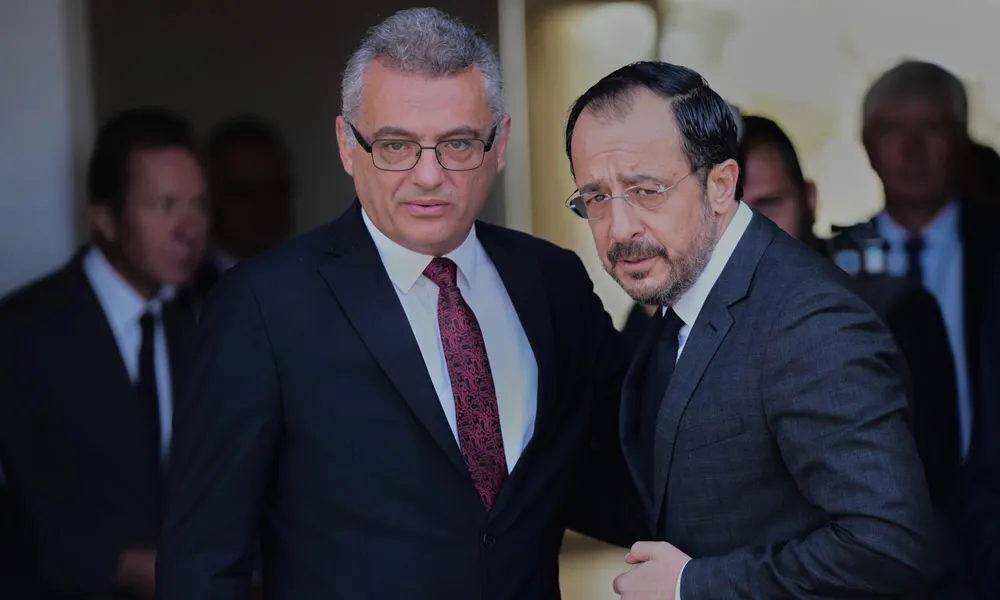

In a detailed post on social media, Turkish Cypriot leader Tufan Erhürman explained his policy on crossing points, saying that he did not wish to engage in a public debate but that it became unavoidable following “successive statements” from the Greek Cypriot side.
The post, published in Turkish on Friday afternoon, came in response to comments by President Nikos Christodoulides on the need for reciprocity in opening crossing points so that they benefit both communities.
Erhürman noted that when he took office in October 2025, he found before him a map marking four new crossing points, related to an issue that had been discussed in New York before he assumed his duties. These four crossing points included Louroudjina, Mia Milia, Athienou, and Aglandjia, he said.
'Mia Milia benefits both communities'
In a clear reply to Christodoulides’ suggestion that Mia Milia would only serve Turkish Cypriot interests – based on a translation of convenience – Erhürman said:
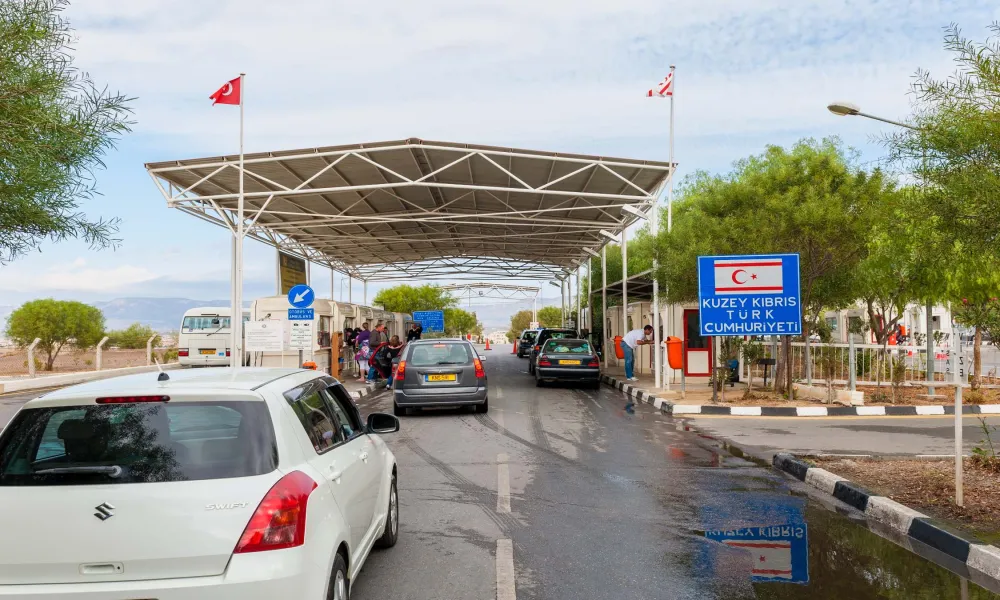
“It is clear that the Haspolat (Mia Milia) and Akıncılar (Louroudjina) crossings would benefit both Turkish Cypriots and Greek Cypriots. Especially in light of the difficulties experienced at the Metehan (Agios Dhometios) crossing point, opening a second crossing for Nicosia at Haspolat (Mia Milia) would bring relief for both Greek Cypriots and Turkish Cypriots. There is no logical justification for thinking that this crossing would benefit only Turkish Cypriots – particularly under current conditions where the economy is flowing southwards.”
Athienou-Aglandjia meets Greek Cypriot needs
Regarding the Athienou-Aglandjia route, he noted that this naturally would meet the needs of Greek Cypriots wishing to travel between Larnaca and Nicosia.
“But from our perspective, this is by no means a reason to reject it. We would not be bothered by Greek Cypriots having an easier daily life; on the contrary, we would welcome it,” he said, adding that for this reason, the Turkish Cypriot side tried to find solutions to enable this crossing.
Erhürman said he proposed building a new road in the north, going up to Aglandjia, the cost of which would be covered by the Turkish Cypriot side, but this was rejected by Christodoulides on the grounds that Greek Cypriots would prefer not to travel through the north for a long period and would not feel safe.
The Turkish Cypriot leader added that he tabled a second proposal, where he suggested crossing to the south through the narrow part of the buffer zone, and then the two leaders could jointly request EU funding to build a road from there to Aglandjia.
Christodoulides ‘again did not accept’
According to Erhürman, the EU was willing to proceed but again Christodoulides did not accept. Then, at a later point, he argued, the Greek Cypriot leadership claimed there were many Greek Cypriot properties along the road he had proposed to build in the north, which would require expropriation. In response, he suggested compensation could be paid through the Immovable Property Commission (IPC), which has been recognized by the European Court of Human Rights as an effective domestic remedy. “This, too, was not accepted,” he said.
The Turkish Cypriot leader did not refer in his social media post to the length of time needed to conclude property cases at the IPC – which struggles with a huge backlog of cases and delayed payments to applicants – nor on the time required to build a new road between Athienou and Aglandjia.
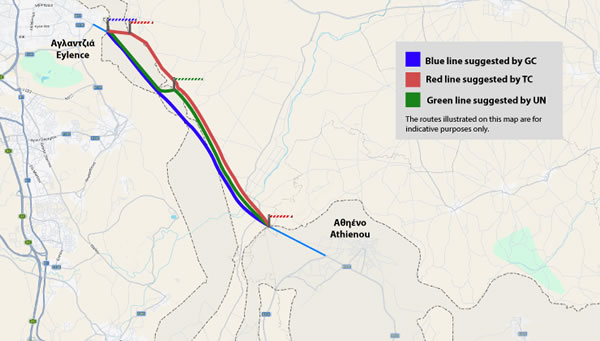
“Therefore, contrary to the claims put forward, we made numerous additional proposals for a road that is clearly one that would be used mostly by Greek Cypriots. Each time the excuses put forward were exhausted, Mr. Christodoulides reverted to his initial position that he could accept this road only if it passed through the buffer zone.”
Erhürman added: “Setting aside the difficulties of routing large numbers of vehicles through the buffer zone – traffic control, accident response, and so on – the difference in driving distance between a road through the buffer zone and a new road from either the north or the south is so small that it is negligible.”
‘Dispute ultimately over a few hundred metres’
The Turkish Cypriot leader went on to note that these four crossing points have been on the agenda since New York, while he has been working on them for four months since taking office. And yet, they “remain unresolved despite our continual efforts to propose solutions to a matter involving only a few hundred metres.”
In a likely reference to the Greek Cypriot request to open a crossing point at the Turkish military site in Kokkina to reduce travel time to Nicosia for Greek Cypriot residents of the region, Erhürman said: “bringing forward proposals for additional new crossings now, […] seems less like a genuine attempt at progress and more like ‘spoiling the soup’.
“And when this is accompanied by relentless, daily public statements and media reports, the impression that such a tactic is being pursued only grows stronger.”
He argued that he avoided going into details until now so as not to have debates through the media. “But once again, no other choice was left.”
The Turkish Cypriot leader said he will continue to work sincerely, patiently, seriously, calmly, and with determination for a solution, while keeping the international community briefed.
“And as we have always said, we will not engage in media manipulation or blame games. We have no need for that. However, whenever we are left with no alternative, we will issue explanations strictly at the level of providing information,” he concluded.