Donkeys are being used as a natural fire prevention tool in parts of Spain, with projects in and around Doñana National Park showing how controlled grazing can limit the spread of wildfires.
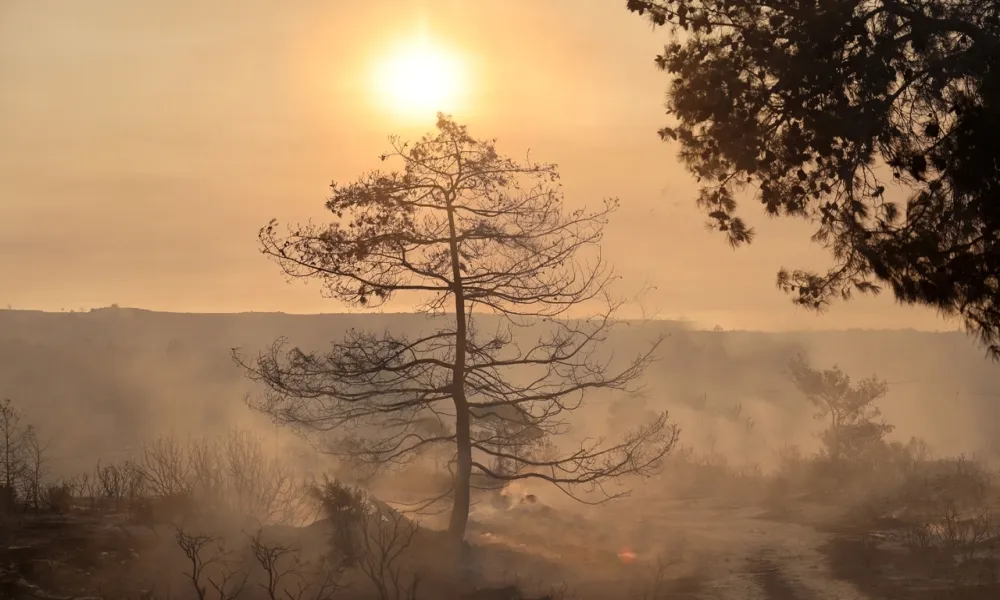
The country faces increasingly severe fire seasons, driven by higher temperatures, prolonged drought and the decline of traditional rural activity. As farming and livestock grazing have receded in many areas, dense and dry vegetation has accumulated, creating conditions in which fires can ignite and spread more easily.
To address this, local initiatives have reintroduced donkeys to graze in high-risk zones. By feeding on coarse, dry plant matter, the animals steadily reduce the volume of combustible material in forests and scrubland.
Sustained grazing in Doñana
A project operating near Doñana since 2014 has deployed a small herd of rescued donkeys to manage vegetation along the park’s perimeter. The animals are active for much of the year, grazing designated sections of land and gradually clearing undergrowth that would otherwise act as fuel.
Their work forms part of a broader prevention strategy focused on maintaining low vegetation density in vulnerable areas. Volunteers assist by monitoring the animals and ensuring they have access to water, particularly in locations that are difficult to reach by vehicle.
Supporters of the initiative point to its long-term impact, noting that the sustained removal of dry biomass has helped lower fire risk in the surrounding landscape.
A model spreading to other regions
Similar approaches have been adopted elsewhere in Spain. In Catalonia, small-scale grazing schemes have expanded significantly in recent years, with larger herds now managing extensive areas of land. In parts of Galicia, donkeys fitted with tracking devices are used to cover wide terrain while feeding on scrub.
These programmes aim not only to prevent fires but also to restore elements of traditional land use that have declined over time. The disappearance of grazing animals in recent decades has been identified as a key factor behind the build-up of flammable vegetation.
Ecologists note that donkeys are particularly effective in this role, as they can consume tougher and drier plants than many other grazing species. Their steady, daily feeding helps create natural firebreaks and reduces the intensity of potential blazes.
While specialists stress that grazing alone cannot replace comprehensive forest management, it is increasingly seen as a valuable complement to other measures, including land planning and the control of highly flammable tree species.
As wildfire seasons grow longer and more destructive, these low-impact interventions are gaining attention as part of a wider effort to protect Spain’s landscapes.
Source: Euronews