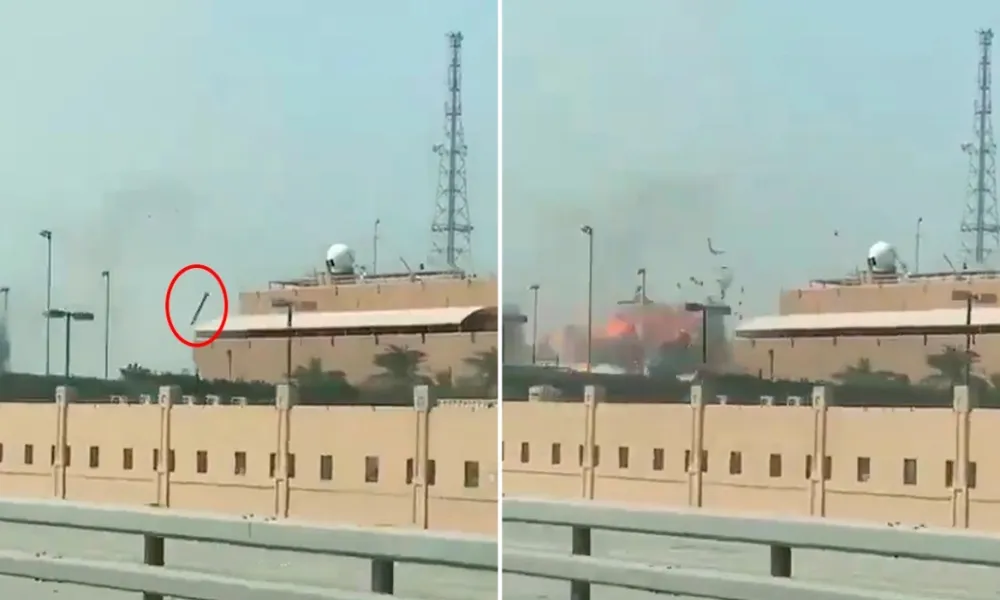

An interceptor missile from a Patriot air defence system was likely involved in the explosion that injured dozens of civilians in Bahrain earlier this month, according to an analysis by academic researchers reviewed by Reuters. The blast occurred on March 9 in the Mahazza neighbourhood on Sitra island, near the capital Manama, during a night of Iranian attacks across the region. Bahraini authorities said 32 people were injured, including children, some seriously.
Conflicting accounts over cause of blast
Both Bahrain and the United States initially attributed the incident to an Iranian drone strike. US Central Command said at the time that a drone had hit a residential area. However, Bahrain acknowledged on Saturday that a Patriot missile was involved in the explosion. A government spokesperson said the system had successfully intercepted a drone mid-air, preventing further casualties.
“The damage and injuries sustained were not a result of a direct impact to the ground,” the spokesperson said. No evidence has been publicly provided confirming the presence of a drone over the neighbourhood.
Analysis points to US-operated system
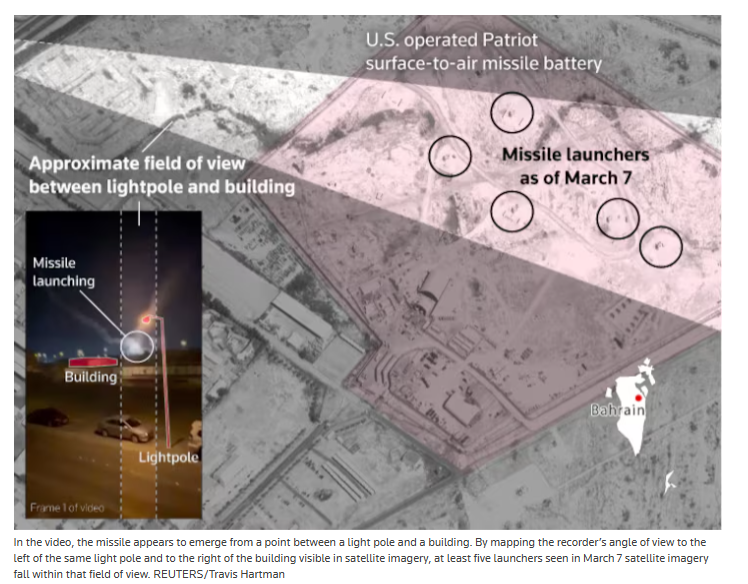
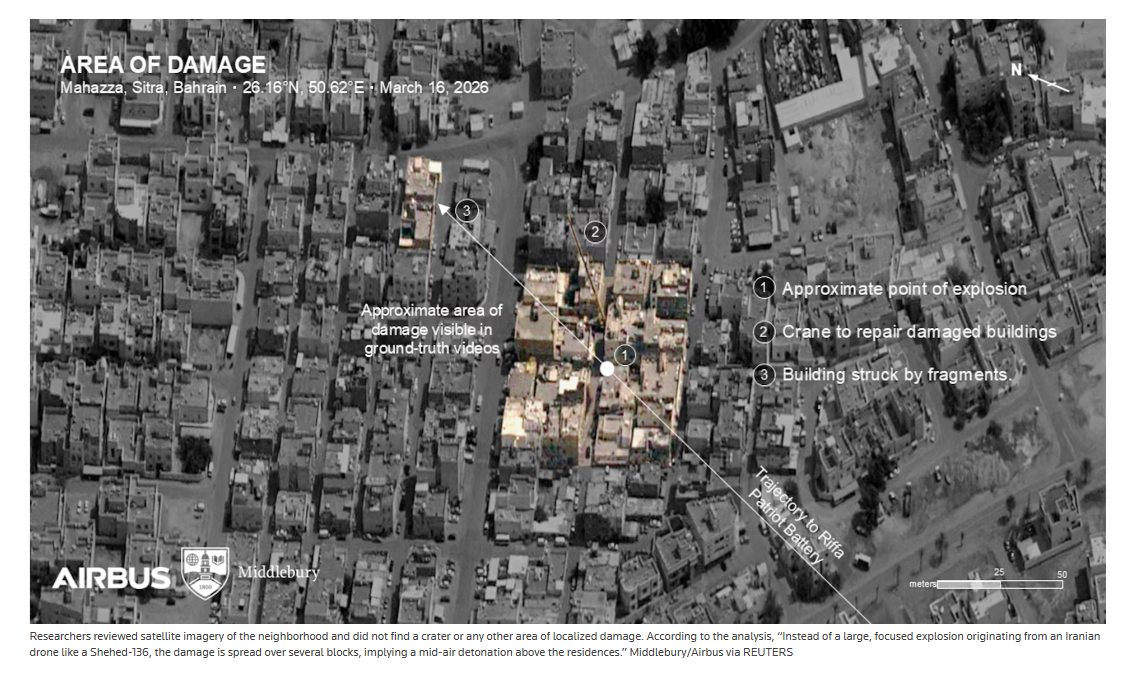
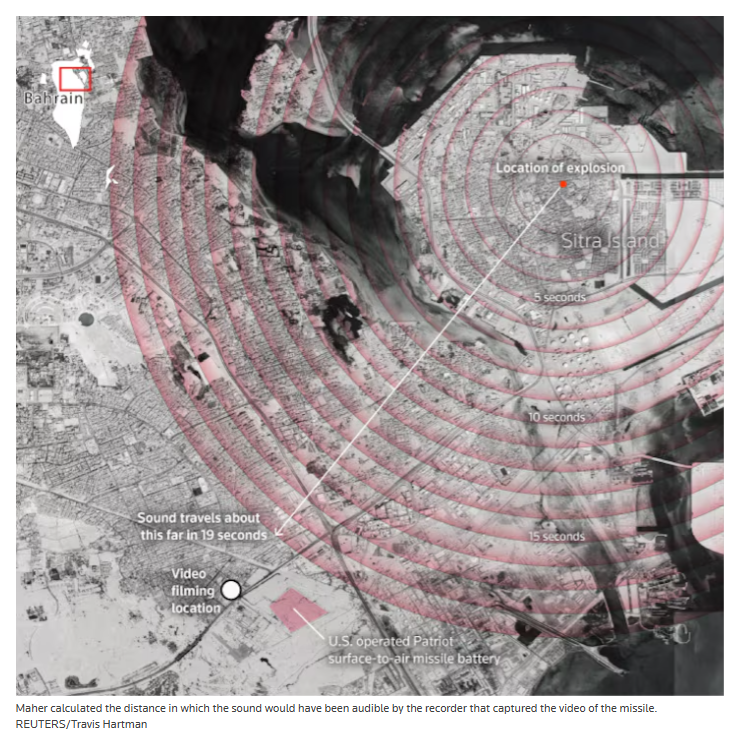
According to the analysis conducted by researchers at the Middlebury Institute of International Studies, the missile was likely launched from a Patriot battery located in Riffa, around seven kilometres from the impact site. The researchers reached their conclusion based on open-source video, satellite imagery and trajectory analysis. Independent experts who reviewed the findings found no reason to dispute the assessment. The battery in question appears consistent with US-operated systems rather than those run by Bahrain, based on structural features and deployment patterns. Bahraini authorities declined to clarify whether the missile was fired by their own forces or by US personnel.
Evidence suggests mid-air detonation
Video footage verified by Reuters shows a missile travelling at low altitude before descending and detonating shortly afterwards. Analysis of the footage, along with damage patterns on the ground, suggests the explosion occurred mid-air rather than on impact. Researchers noted that damage was spread across multiple streets, with no visible crater, indicating a wide dispersal consistent with an airborne detonation. Two scenarios were outlined: either the missile intercepted a drone and both exploded, or the Patriot interceptor detonated independently.
The analysis found the second scenario more likely, citing the absence of clear evidence of a drone and the direction of the blast damage.
Civilian risk from air defence systems
The incident highlights the risks associated with deploying high-powered missile defence systems in populated areas, particularly against low-cost drones. Even if an interception is successful, the resulting explosion can still cause significant damage on the ground. At the same time, Bahraini air defences were unable to prevent strikes on nearby energy infrastructure that night, including an attack on an oil refinery on Sitra.
Bahrain hosts the US Navy’s Fifth Fleet and plays a central role in Gulf security, particularly around the Strait of Hormuz, a key global energy route that has been heavily disrupted during the conflict. Both Bahrain and the United States operate Patriot systems in the country, forming part of a broader regional air defence network.
US officials did not directly address questions about the incident, but reiterated that the military does not target civilians and is continuing operations against Iranian missile and drone capabilities.
Source: Reuters