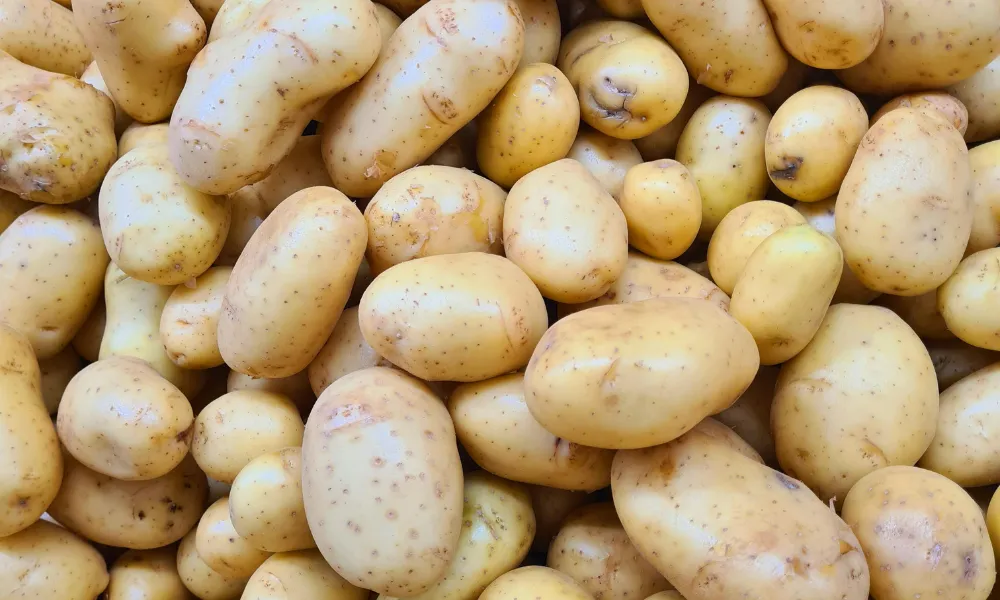
For one week in January, residents of Berlin were able to collect potatoes free of charge from dozens of locations across the city. The initiative was driven by an unprecedented surplus in German potato production, which the market was unable to absorb, leaving millions of kilos at risk of going to waste.
Free distribution across Berlin
For several days in January, what initially sounded like an urban myth became reality in Berlin: free potatoes available on a first-come, first-served basis.
According to reporting by the Financial Times, the distribution involved not small quantities but entire tonnes of potatoes. Industrial sacks filled with unwashed potatoes appeared in parks, school courtyards, outside shops and in community spaces across the city.
Tap here to read about Germany's ambitious plan to distribute 4 million kg of surplus spuds: https://t.co/GhOMeav5Ca pic.twitter.com/hquyey3U9D
— Financial Times (@FT) January 31, 2026
Residents queued with bags, trolleys and backpacks, and by midday the supplies had been exhausted.
When the potato surplus emerged
The scale of the problem became evident in autumn. A combination of favourable weather conditions and expanded cultivated areas resulted in a record harvest of 13.4 million tonnes, the largest in Germany in the past 25 years.
Production significantly exceeded demand, prices collapsed and millions of kilos of potatoes remained unused in storage facilities. Despite being fully edible, large quantities were diverted to biogas plants or animal feed.
How the mass distribution was organised
The idea of large-scale distribution was developed shortly before Christmas, when the ecological search engine Ecosia and the newspaper Berliner Morgenpost decided to finance and organise the transport of 4,000 tonnes of surplus potatoes from a farm near Leipzig to Berlin.
The stated aim was to save food that would otherwise be destroyed. Within days, more than 1,300 organisations applied to act as distribution points. Ultimately, 174 locations were selected, including food banks, schools, cultural venues, small businesses and community groups. On social media, the potato distribution quickly went viral.
Objections from parts of the agricultural sector
The initiative did not receive universal support. Agricultural associations argued that free distribution undermines an already strained market and sends a misleading message about the value of food. Some producers urged citizens not to participate, claiming that such actions deepen the crisis faced by farmers.
Practical challenges and limited reach
In practice, the campaign proved more complex than initially anticipated. Transport delays, unloading difficulties and poorly coordinated deliveries limited its reach.
By the end of January, only around 200 tonnes had reached Berlin, a small fraction of the original plan.
Social impact of the initiative
For those who queued, the experience took on a different meaning. Participants exchanged recipes, helped one another carry heavy bags and discussed food, the cost of living and waste. The initiative functioned as a moment of collective interaction, while also drawing attention to broader questions about food distribution.
Source: Financial Times