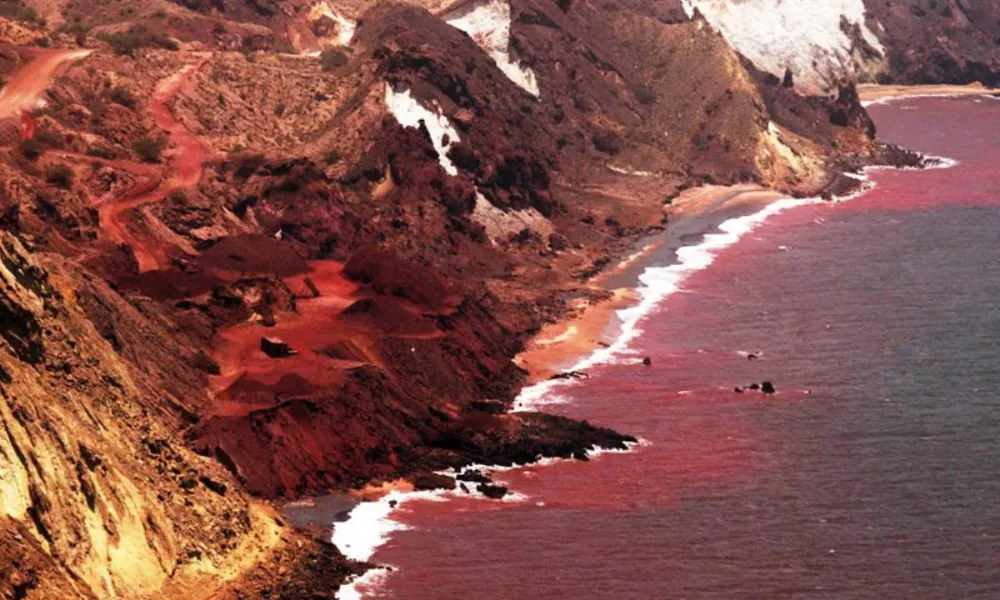
Heavy rainfall on Hormuz Island in southern Iran transformed parts of its shoreline and nearby sea into a vivid red hue this week, prompting widespread attention on social media and international news coverage. Videos and images show rainwater carrying mineral-rich red soil into the ocean, colouring coastal waters a striking crimson.
Hormuz Island, located in the Strait of Hormuz in the Persian Gulf, is known for its naturally colourful landscapes and distinctive red sediment, often referred to locally as golak. The soil contains high concentrations of iron oxide, a mineral that gives the island’s beaches and cliffs their characteristic red tone. When heavy rain falls, water runoff transports these iron-rich sediments downhill and into the sea, creating the dramatic red appearance observed this week.
Heavy rains have turned an Iranian beach on Hormuz Island bright red after iron-oxide-rich soil from the area washed into the sea. pic.twitter.com/07lwRkdNn9
— Al Jazeera English (@AJEnglish) December 17, 2025
Meteorological and geological experts note that the phenomenon is entirely natural and has been seen previously following intense rain events. The deep red colour results from suspended iron oxide particles reflecting light, much like the red colouring seen on Mars or in iron-rich soils elsewhere around the world. These sediment flows can colour both the sand and the adjacent shallow seawater, particularly near the shore.
The red tint is temporary and harmless to humans and marine life, according to scientists quoted in international reports. Once the rainfall subsides and ocean currents disperse the sediments, the waters return to their normal appearance. The occurrence highlights the interaction between climate conditions and local geology in areas with unique mineral compositions.
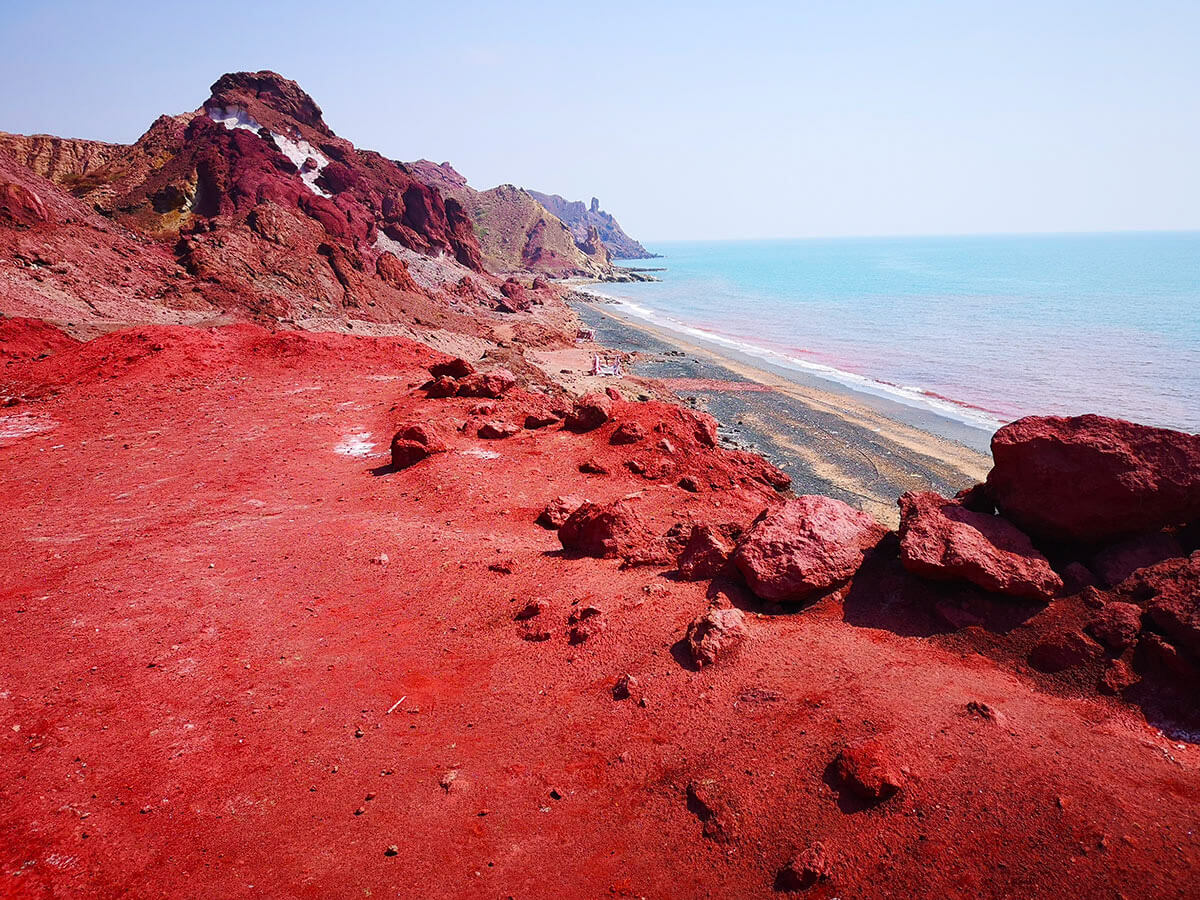
Hormuz Island’s dramatic soil and coastal formations have also made it a destination for photographers and tourists. The island’s red earth is traditionally used as pigment in art and cultural products, and its geological diversity draws visitors interested in natural landscapes that change dramatically with weather conditions.
Despite its eye-catching visuals and striking resemblance to “blood rain” descriptions in viral posts, the red-coloured waters off Hormuz this week are consistent with known geological and hydrological processes and do not indicate pollution or ecological harm.
Sources: Al Jazeera English, AP News, Gulf News