
Limassol is hot, and not only because of its famously sun-drenched Mediterranean climate. The city is now squarely in the spotlight of the European Union's most ambitious urban climate programme, as it played host to the Climate Neutral Blue Cities by 2030 international conference, convened under the Cyprus EU Council Presidency for 2026.
To understand what this moment means for the city and its residents, I sat down with Bob D’Haeseleer, a climate neutral city adviser deployed by the EU mission for climate neutral and smart cities, a programme known as NetZero Cities. What emerged was a frank, wide-ranging conversation about heat, traffic, inequality, solar energy, and the hard truth that reaching 2030 targets is anything but straightforward.
The mission
The first thing Bob wanted to clarify is what makes the EU "mission approach" different from ordinary policy. Rather than cherry-picking low-hanging-fruit projects, the mission framework asks cities to look at themselves as entire systems, and then systematically lower the barriers that stand between the status quo and climate neutrality.
"Classic politics usually goes for the low-hanging fruit first, and then the difficult questions come somewhere further down the line. The mission approach says: let's consider things as a whole."
Limassol sits at a particularly interesting intersection: it qualifies both for the EU climate neutral and smart cities mission and for the ocean mission, making it the ideal location for this first-ever joint conference between the two programmes. It is a distinction the city should wear with pride, and with urgency.
Three problems the city cannot ignore
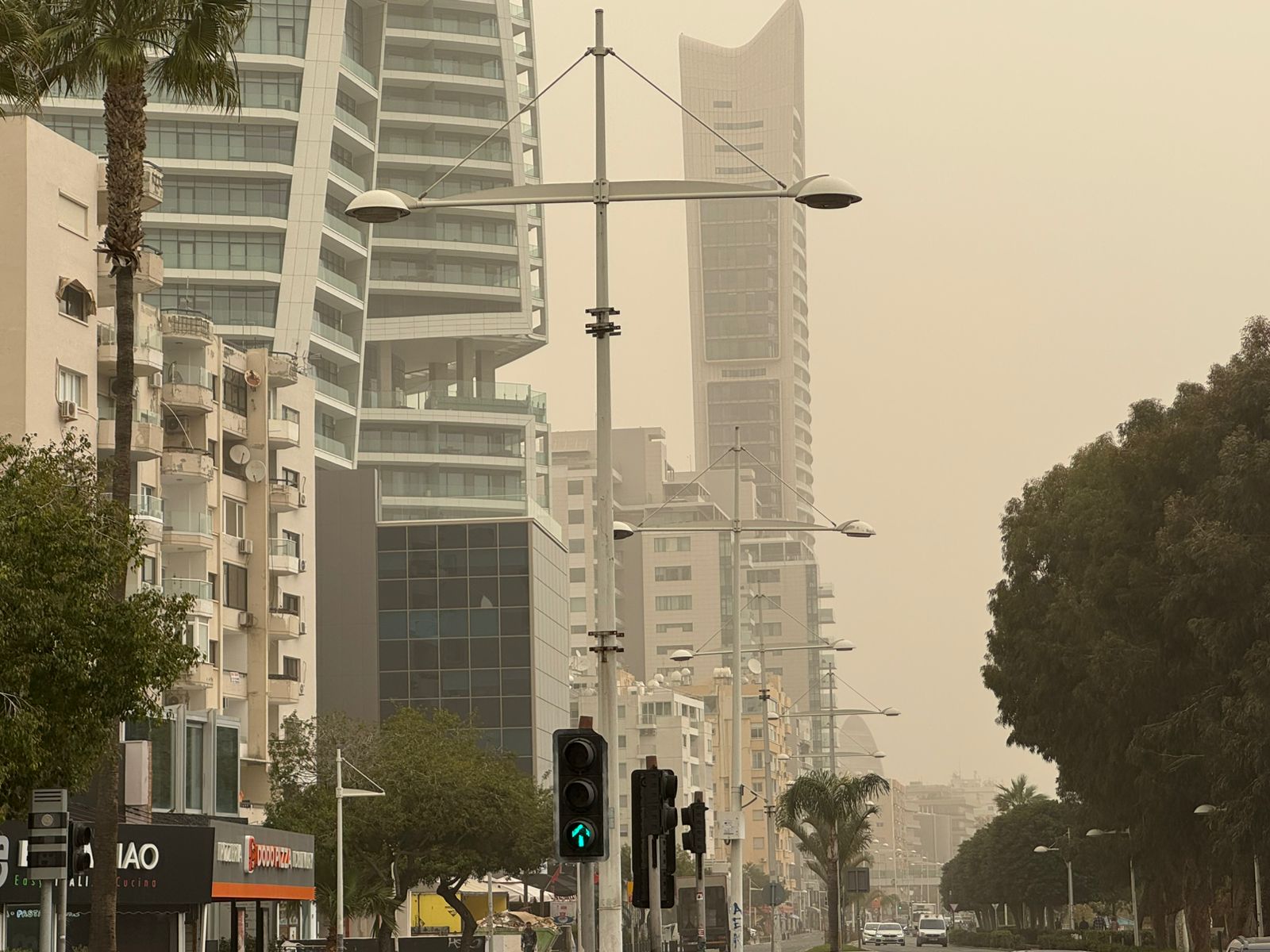
Bob did not shy away from naming Limassol's structural challenges. Three stood out in our conversation. The first is heat and the lack of green space. As one of Europe's most southerly-facing cities, Limassol has densified rapidly in recent decades, leaving little room for the parks, trees, and green corridors that could buffer future climate shocks. Pilot projects on urban regreening and temperature monitoring have already begun, but the work is far from done.
The second is traffic. The city's road network, beautiful beach promenade included, is chronically congested, especially at peak hours. Reducing car dependency is one of the areas where Bob hopes the mission's tools can make the most tangible difference for everyday residents.
The third challenge is perhaps the most politically sensitive: inequality. Wealthy investors have built penthouses and skyscrapers along the seafront, many of them contributing little in local taxes while long-term residents absorb the full cost of public services. Bob sees the green transition not merely as an environmental imperative but as an opportunity to address this imbalance, using the shift towards climate neutrality as a catalyst for a fairer city.
On the question of 2030
When I asked Bob directly whether Limassol is on track to meet its 2030 goals, he answered with characteristic honesty. The will is there, he said, but Limassol is not an island unto itself, even if it sits on one. Global conflicts, shifting political agendas, and the interconnected web of national and EU governance all have a bearing on what any single city can achieve alone.
"It would be a lot easier if you had the mandate to do everything yourself. But you don't, it's interconnected."
The pathway forward, he explained, flows from the climate city contract that Limassol submitted two years ago, a living document that sets the global goals and will be revised as implementation progresses. The focus now is on acceleration: bringing in technical experts to conduct feasibility studies for large-scale projects, and connecting the city to finance through institutions like the European Investment Bank.
The solar paradox and a Belgian lesson
One of the most striking passages in our conversation centred on energy. Cyprus burns heavy fuel oil to generate electricity, importing fossil fuels from regimes whose values are not always aligned with European ones, and sending its capital abroad in the process. Meanwhile, Northern European cities with a fraction of Cyprus's sunshine have blanketed their rooftops with solar panels.
Bob finds this paradox both baffling and telling. As an island, he argued, Cyprus has historically been self-reliant by necessity. The dependence on imported energy is a recent anomaly, and one that an island community is especially well-placed to reverse.
He drew on his own experience as deputy mayor of a small Belgian city, where he helped establish an energy community: a cooperative in which residents directly owned the wind turbines and solar panels that powered their homes. When energy prices surged following Russia's invasion of Ukraine, community members saved between €200 and €600 per year compared to market rates. The lesson for Limassol is clear, keeping the value of locally produced energy within the community, and directing the benefits to the most vulnerable residents, is both an environmental and a social argument.
Local knowledge is the missing variable
Bob was at pains to emphasise that his role is advisory, not directive. The EU is not arriving in Limassol with a playbook. Nobody has done this before, not at this scale, not in this context. What the mission offers is a framework, a network, and access to capital. What Limassol brings is something no Brussels official possesses: the genius loci, the spirit of the place.
"What works here might be the first one percent of your journey, but that first one percent might be the key to unlock the last percent of the journey of some country in Scandinavia."
That exchange, local expertise flowing outward to the rest of Europe, while external support flows inward to Limassol, is the real value proposition of the EU mission model. The conference at The Warehouse by IT Quarter on 19–20 April, if everything goes to plan, was the starting gun on an acceleration that could reshape how this city looks, feels, and functions for generations to come.
The Climate Neutral Blue Cities 2030 conference was hosted by the Limassol municipality under the auspices of the Cyprus EU Council Presidency 2026, and funded by the European Union as part of the EU mission for 100 climate neutral and smart cities.