
Redux
Every journey circles home
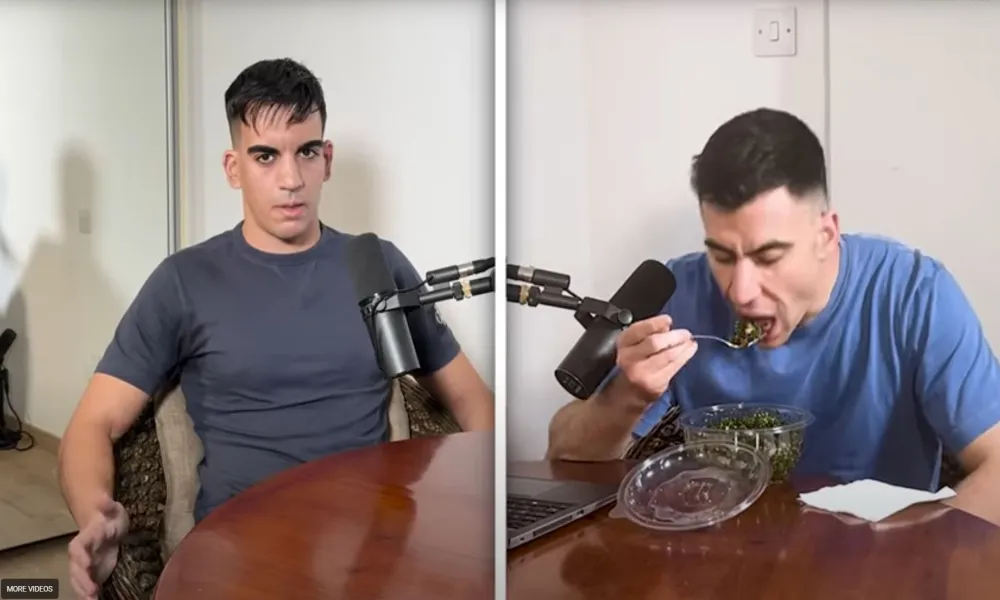
Excessive exposure will eventually leave you exposed. That was my immediate thought when I saw the misstep of our MEP, Fidias Panayiotou, during his discussion with Paralympic athlete Loizos Chrysanthou, who is also an aspiring parliamentary candidate for the Direct Democracy movement.
Chrysanthou was explaining the classification categories of the Paralympics when he mentioned category S14. At that moment, Pheidias revealed just how little he understands about sport, disability, and the protection of personal data. “Is that for crazy people?” he asked, chewing his salad and even questioning the medical condition of another athlete in S14, leaving me thinking, ouch, that really just happened.
Naturally, the clip went viral. In this environment, statements, omissions and inconsistencies in public speech are exposed without filters. Public visibility is a privilege, but it has always concealed traps. For his opponents, this was an easy goal, like Manchester United last Sunday taking advantage of Arsenal’s lethargic defence. Frankly the issue is not so much about human rights but about Fidias’ growing reach. A potential triumph of his platform in the upcoming parliamentary elections would further embarrass the traditional parties, who do not accept how a child of the algorithm, a clown in their eyes, managed to strip them bare politically. More attacks are no doubt coming. But Fidias makes it so easy.
As a psychologist explained to me, Panayiotou is not a narcissist. He is, as he put it, a “country bumpkin”. By this he meant someone without filters, seemingly immune to embarrassment or to offending others. Political responsibility, however, demands more. It requires knowledge, respect and self control. Can such people be MPs? Of course they can, and the ballot box proves it.
This is why the discussion inevitably shifts to our broader public culture. Who prepared them for public office? Who sends us out into society? Which schools did they attend without learning basic concepts, political correctness or institutional responsibility? And if they did not learn these things there, why do we assume they will learn them on social media? Perhaps because our own sense of responsibility now appears to begin and end with the mobile phone...
Lately, we have become highly sensitive, though not because we genuinely demand candidates with substance and accountability. We become sensitive after publication, about corruption, domestic violence and people with disabilities. This is our hypocrisy. And it is irrelevant whether Fidias’ “rustic” spontaneity is understandable or tolerable.
Under normal circumstances, I would reassure politicians not to worry. Sooner or later, such types are given enough rope to hang themselves. In the viral world, however, I am far from certain. The final judgement, for better or worse, will once again be delivered at the ballot box.