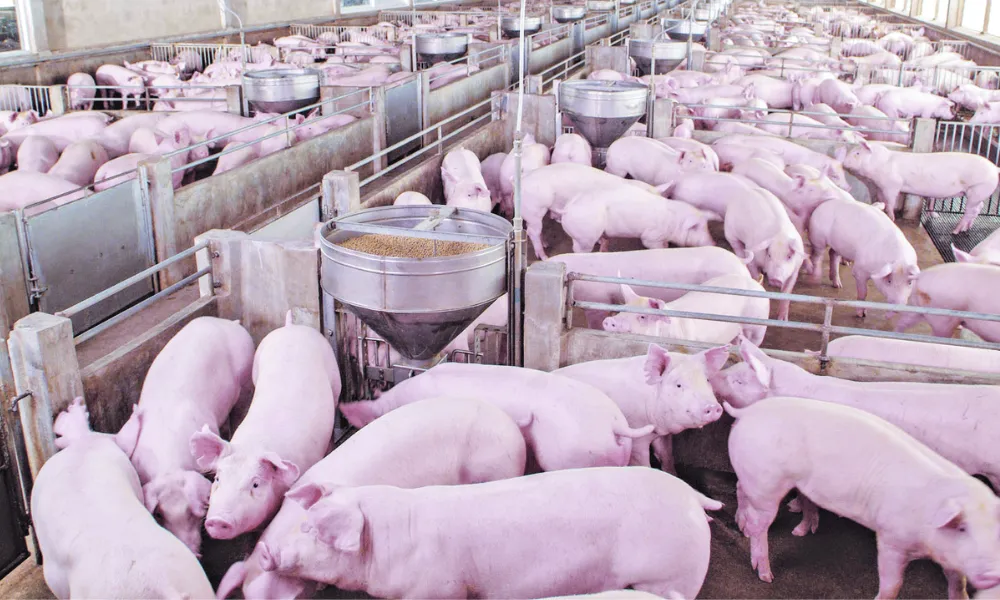
A third pig unit in Palaiometocho, with around 5,000 animals, has tested positive for foot-and-mouth disease, further escalating the outbreak and leading to the culling of approximately 24,000 pigs in the area.
The figure represents about 7% of the pig population. The corresponding rate currently stands at 8% for cattle and 2.8% for sheep and goats, while the total number of cases has now reached 102.
The affected unit is located next to the two others that tested positive in recent days, all owned by siblings. “It does not come as a surprise, it was expected given the close proximity to the other two,” senior veterinary officer Sotiria Georgiadou said on Tuesday.
She noted that, epidemiologically, the situation among pigs remains more contained so far compared to other animal categories, as the cases are limited to a small number of units within a defined area.
Georgiadou added that two sheep and goat units in the same area were either awaiting or undergoing sampling, while the nearby motorway is also acting as a natural barrier helping to limit the spread.
Vaccinations carried out in Pergamos
Regarding the north, she said communication continues through the Bi-communal Technical Committee, noting that vaccinations are taking place there but not culling, while the overall situation remains unclear.
She added that vaccinations were successfully carried out in Pergamos, despite ongoing access difficulties to units within the buffer zone, particularly for the collection of milk and dead animals.
Asked whether vaccinated animals could be exempt from culling, Georgiadou said animals that have received both doses and are not located near positive cases are largely protected, though absolute certainty cannot be guaranteed.
She stressed that in the event of natural infection, legislation is clear and requires culling, adding that the European Commission has given explicit guidance to the Republic of Cyprus to fully implement the relevant rules.
So far, the second phase of vaccinations has reached 73.8% of cattle, 60.56% of sheep and goats, and has been completed in 100% of pig units within the three- and ten-kilometre zones of the previous outbreak areas. However, it has not yet been completed in the newly established zone in western Nicosia.
Culling operations
Approximately 35,600 sheep and goats and just over 2,200 cattle have already been culled. The culling of pigs in the first unit in Palaiometocho has been completed, while operations at the second unit were ongoing as of Tuesday.
Addressing concerns about burial sites, Georgiadou said locations are selected through coordination between multiple departments, including Veterinary Services, the Department of Agriculture, the Geological Survey Department, the Water Development Department, the Department of Environment and the Land Registry.
She explained that strict specifications are followed, including layering, sealing and absorbent materials, disinfectants and soil covering, to ensure the process is carried out safely.
The spokesperson of the Veterinary Services also issued a renewed appeal to livestock farmers to strictly follow biosecurity measures, warning that mechanical transmission appears to be driving the rapid spread of the disease.
She urged reduced movement, increased disinfection, the use of protective clothing, and caution in relation to vehicles, transport and contact, noting that “there are no other measures available to protect against it”.
Sampling continues across all surveillance and protection zones. The three-kilometre zones in Nicosia are expected to be completed within the week, and those in Larnaca by the end of the month.
Of the 102 infected units so far, 13 involve cattle, 86 sheep and goats, and three pigs in western Nicosia.
“Escalation will not help”
Commenting on reactions from farmers, Georgiadou said any escalation would not help, arguing that previous protests had negative consequences, including the blocking of exports.
On compensation, she said payments are made by the Republic of Cyprus, which will then seek co-financing from the European Commission, although EU funding does not cover the full amount.
She added that farmers who choose to resume operations will receive support and compensation for lost income through individualised cases, while those who decide not to continue will be compensated for the value of their animals, as well as for hay and milk.
Finally, she said the state is ready to support those wishing to restart, either with livestock from within Cyprus or, where necessary, by examining other options. She noted, however, that there is still significant livestock capacity in the country, particularly in sheep, goats and cattle, which can support the rebuilding of affected units.