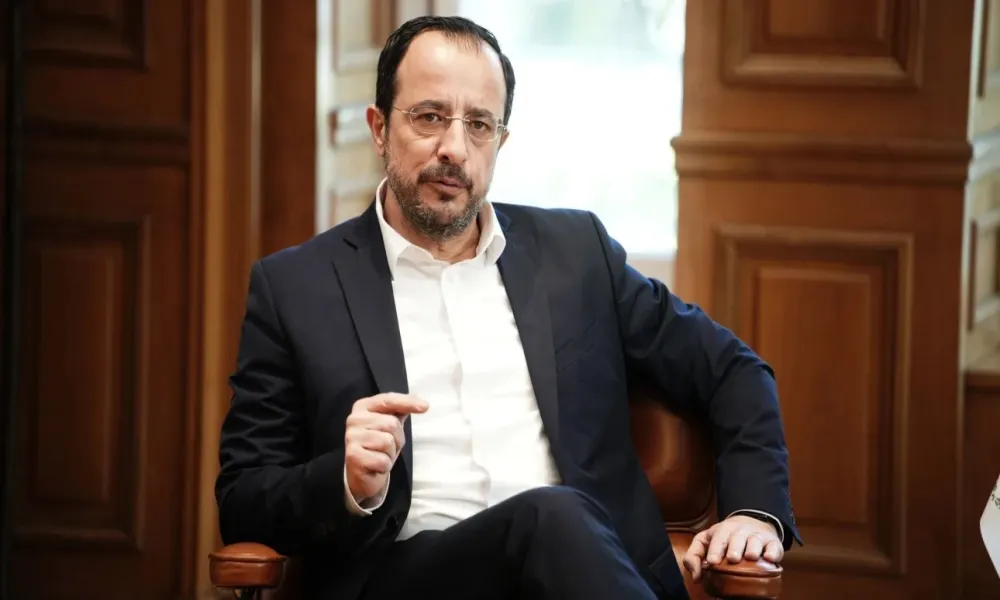
President Nikos Christodoulides has urged the European Union to define how it would respond if a member state requests assistance following an armed attack, ahead of this week’s leaders’ summit in Cyprus.
In an interview with the Associated Press, Christodoulides said EU leaders must give “substance” to Article 42.7 of the bloc’s treaties, which obliges member states to provide aid “by all the means in their power” in the event of an armed attack. He noted that the clause has never been activated, leaving no predefined response framework.
The president linked the issue to Cyprus’ recent experience, after the government sought support from European partners following a drone strike last month on a British base in the island’s south.
The drone is believed to have been launched from Lebanon. Greece, France, Spain, the Netherlands and Portugal assisted Cyprus by deploying vessels equipped with counter-drone capabilities.
Christodoulides also stressed the need to clarify how the EU’s mutual assistance clause interacts with the obligations of member states that are also part of NATO, to avoid overlaps or conflicting responsibilities.
Strengthening regional ties
He further highlighted the importance of closer EU engagement with the Middle East, presenting Cyprus’ upcoming presidency of the Council of the EU as an opportunity to elevate cooperation to a strategic level.
The president reiterated his support for the India–Middle East–Europe Economic Corridor (IMEC), and pointed to the need for greater energy diversification across the EU, including the potential use of Cyprus’ natural gas reserves.