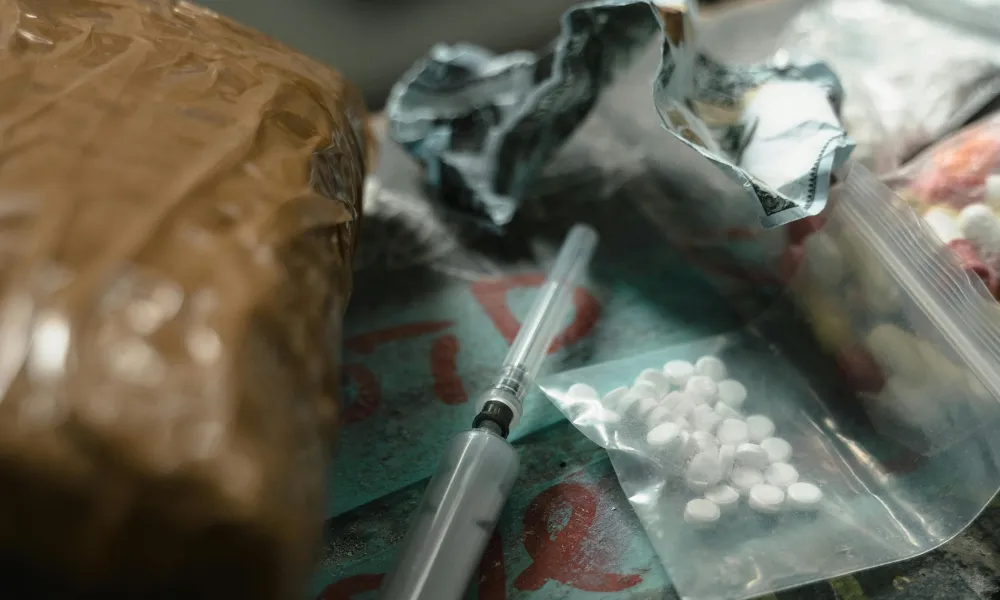
Cyprus is facing a changing drug landscape, with cannabis use continuing to rise, cocaine appearing more prominently in wastewater data and methamphetamine showing sharp local increases, according to findings presented on Tuesday in Nicosia by the Cyprus National Addictions Authority. In 2024, Cyprus recorded eight direct overdose deaths, while the number of people in treatment reached 1,531, the highest level since records began in 2004.
A changing picture
The Authority’s President, Dr Christos Minas, said cannabis remains the most widely available and most commonly used drug among the general population, but warned that cocaine and methamphetamine are also spreading, while new synthetic and semi-synthetic substances are creating additional risks. These include synthetic cannabinoids and synthetic opioids such as nitazenes and orphines.
Minas said the most worrying trend is the combination of polydrug use, higher purity and potency, and the fact that many users do not know what is actually in the substances they consume. That uncertainty, he said, increases the risks for both personal and public health.
Ioanna Yasemi, Head of the Monitoring Department of the National Documentation and Information Centre for Drugs, said the profile of overdose deaths is also changing. While most deaths between 2004 and 2021 were linked to opioids, all deaths recorded in 2022 and 2024 were linked exclusively to other substances. The report also found that 45.2% of injecting drug users retested in 2024 were positive for hepatitis C.
Cannabis still dominates
Cannabis remains at the centre of the picture. Lifetime use among the general population reached 18% in 2023, compared with 6.6% in 2006, 12.1% in 2016 and 14.1% in 2019. The highest rate was recorded among people aged 25 to 34, at 27%, followed by those aged 15 to 24, at 21.8%.
Among school pupils, lifetime cannabis use fell slightly to 8% in 2024, from 9% in 2019. The figure stood at 10% among boys and 6.8% among girls. Among university students, however, use was far higher: 32% said they had used cannabis at least once, 18% in the past year and 11% in the past month.
Seizures also point to a sharp increase in availability. The Police Drug Law Enforcement Unit seized 554.2 kg of herbal cannabis in 2023 and 617 kg in 2024, the highest level ever recorded.
Larnaca stands out in wastewater data
Cocaine use remains lower in Cyprus than in several other European countries, but the trend is upward. Lifetime cocaine use in the general population stood at 2.2% in 2023, while among university students 4.3% reported having used cocaine at least once, 2.2% in the past year and 1.5% in the past month.
Wastewater data for 2025 showed Larnaca recording the highest cocaine concentration in Cyprus, at around 135 mg per 1,000 people per day, followed by Ayia Napa and Nicosia. Cocaine seizures reached 52.1 kg in 2024, still below the historic high of 182.3 kg recorded in 2016.
“We are not at the top of Europe, but we do have an increase,” Minas said, adding that treatment requests, public health concerns, crime and violence were also rising.
Methamphetamine is showing a more localised but worrying pattern. While levels fell in Limassol, Larnaca recorded by far the highest daily concentration in wastewater, at more than 60 mg per 1,000 people per day, followed by Ayia Napa. Methamphetamine seizures dropped to 0.5 kg in 2024, after reaching 8.5 kg in 2023.
Treatment demand reaches record high
The number of people in treatment, regardless of substance, reached 1,531 in 2024, the highest number recorded since 2004. The increase is attributed to a real rise in the problem, wider access to treatment programmes, reduced stigma and the referral protocol for young people arrested by the Drug Law Enforcement Unit.
In 2024, 328 people began treatment for cannabis use, while the total number in treatment for cannabis, including those continuing from previous years, reached 522. Another 184 people began treatment for cocaine use, with 276 in treatment overall, while 73 people began treatment for methamphetamine use, with 122 in treatment overall.
Opioids, once the dominant concern, continue to decline as the main substance behind treatment demand. In 2024, 82 people began treatment for opioid use, compared with 399 in 2007. The estimated number of high-risk opioid users fell to 817 in 2024, including 147 Cypriots and 514 foreign nationals.
Source: CNA