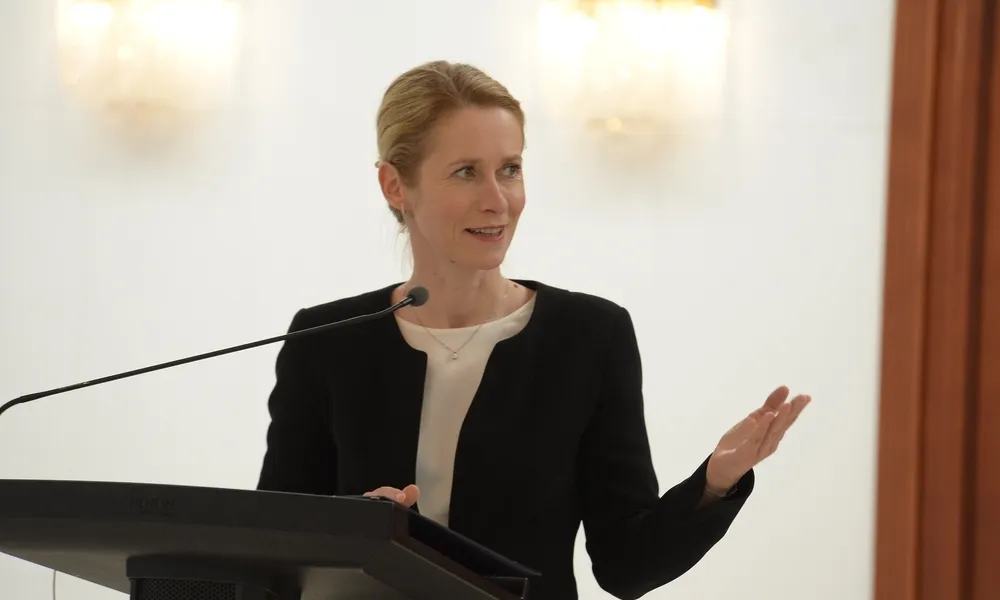

The European Union is closely monitoring developments in the Middle East and coordinating actions to protect European citizens and maintain stability in the region, according to the EU High Representative for Foreign Affairs and Security Policy, Kaja Kallas.
Speaking ahead of an extraordinary meeting of EU foreign ministers held by videoconference in Brussels on Thursday, Kallas said the bloc is working with partners in the Gulf while organising assistance and evacuation measures for EU nationals.
Emergency EU foreign ministers meeting
Arriving for the extraordinary meeting with EU foreign ministers and their counterparts from Gulf countries, Kaja Kallas said the discussion focused on the situation in the Middle East and the broader regional implications.
“Today we have an extraordinary meeting with the Foreign Ministers of the European Union and their counterparts from the Gulf countries. We are discussing what is happening in the Middle East. Iran is exporting the war and trying to expand it to as many countries as possible, creating chaos. We are calling for stability and examining what we can do together,” she said.
She also noted that Gulf states participating in the videoconference had expressed concern about the situation, including the possibility of internal conflict in Iran.
Coordination for the protection of EU citizens
Kallas said the protection of European citizens in the region is a key priority for the European Union and that member states are coordinating their response.
“We are organising our response and the evacuation of our people from the region. We are coordinating very closely the consular services of the member states to ensure that our citizens will be able to return safely,” she said.
Links to drone warfare experience
Referring to the nature of the attacks taking place in the region, Kallas linked developments in the Middle East with the ongoing war in Ukraine.
“What we see in the Middle East is largely the same problems that Kyiv faces every day. The same threats, such as drone attacks, are being used here. There is experience and expertise that can be used to counter these attacks,” she said.
Defence cooperation with Gulf countries
Kallas said cooperation with Gulf countries could be strengthened in areas such as defence and technology.
“The Gulf countries have developed significant capabilities to intercept drones and protect against such attacks. We can see how we can combine our capabilities and how we can cooperate to address this threat,” she said.
Security of maritime routes
She also referred to maritime security, noting that the European Union has already increased its presence in the region.
“We are particularly concerned about security at sea. That is why Europe has sent naval assets to the region. The security of the straits and commercial routes is extremely important, both for the European Union and for the Gulf countries,” she said.
Concerns about instability in Iran
Asked about the possibility of internal instability in Iran, Kallas said developments in the region are often unpredictable.
“Every time we have seen wars in the Middle East, we have seen that things do not unfold so simply. There is no war one day and democracy the next. There are real risks, and countries in the region are expressing concerns even about the possibility of civil conflict in Iran,” she said.
Referring to the possibility of regime change, she said that “regimes are usually shaken from within and not from outside”. She added that the Iranian regime has been significantly weakened and that this could create opportunities for the Iranian people to decide their own future.
EU unity and economic impact
Kallas also stressed that the European Union remains united in addressing the crisis despite differing views among member states.
“In the European Union we are 27 countries. We may have different opinions on certain issues, but in all crises we have shown solidarity and unity. I believe this solidarity will remain strong,” she said.
She also referred to the possible economic and energy implications of the crisis.
“At the moment we do not see a direct threat to Europe’s energy supply security. However, if prices increase on international markets, the consequences will be broader,” she said.
Diplomatic efforts and joint EU-Gulf statement
Responding to a question, Kallas said diplomacy remains the only way to end the conflict.
“Wars ultimately end through diplomacy. There must be space for diplomatic efforts so that we can exit this cycle of escalation and restore stability in the region,” she said, adding that the EU remains in continuous contact with regional partners.
“At this moment we are working on a joint statement between the European Union and the Gulf countries. It is not easy, but our common position is clear: we want stability in the region and to prevent further escalation of the conflict.”
Source: CNA