
Escalating tensions around Iran dominated international media coverage this week following the collapse of talks with the United States, the naval blockade in the Strait of Hormuz, and warnings about potential repercussions for the global economy, energy security and stability in the wider Middle East.
International outlets also highlight differing interpretations of the conflict from Western, Iranian and Israeli perspectives, addressing both the military dimension and the social pressures developing inside Iran.
Elsewhere, coverage has focused on Hungary’s energy policy toward Russia, new initiatives by Beijing regarding Taiwan, and developments in Russia and Ukraine, where attention has shifted from ceasefire discussions to internal power dynamics and the prospect of further escalation.
Western media coverage
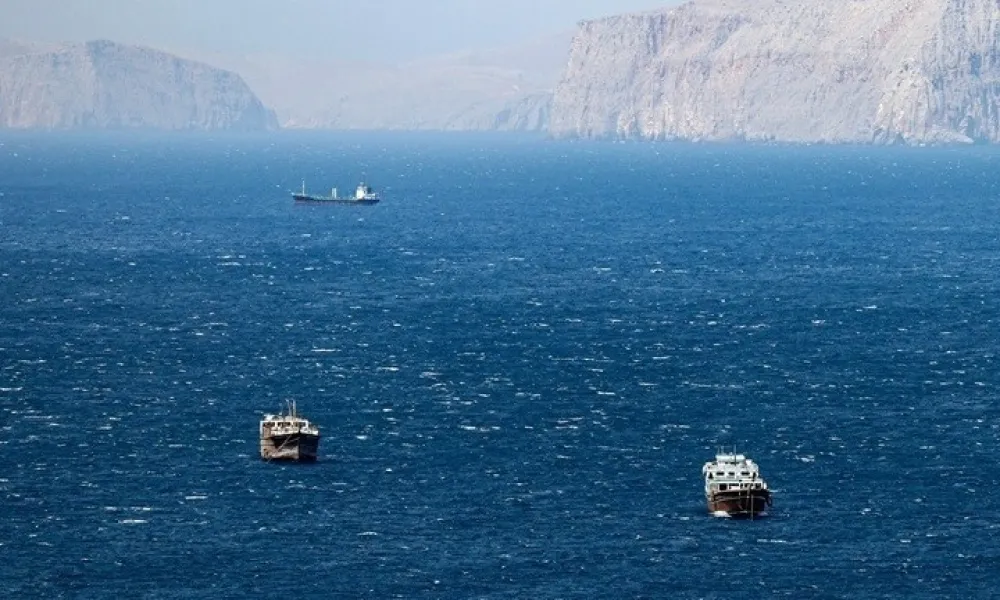
The analysis “A Test of Resolve in Iran”, published in Foreign Affairs on 14 April by Nate Swanson, examines the deadlock in negotiations between the United States and Iran in Pakistan aimed at ending the war, as well as the strategic implications of Iran’s control over the Strait of Hormuz.
Swanson argues that Tehran has gained new leverage through its ability to effectively close the strait, potentially disrupting global trade and collecting revenue through “tolls” from passing vessels. According to the analysis, Donald Trump responded by imposing a naval blockade, with the outcome likely to depend on which side can withstand greater economic pressure.
Despite significant losses, the article suggests that Iran has restored its deterrent capacity and maintained leadership cohesion despite internal tensions following the deaths of senior officials. Swanson concludes that Washington should seek an immediate end to the conflict and the reopening of the strait with limited concessions.
In The Economist, an analysis titled “Donald Trump’s Naval Blockade of the Strait of Hormuz Is a Dangerous Gamble” examines the decision to impose a blockade on Iranian ports and coastline. The measure aims to pressure Tehran to reopen the strait and return to negotiations.
The article notes that the blockade could intensify the global energy crisis and trigger further military escalation. Analysts warn that disruptions to shipping could drive oil prices to as much as 150 dollars per barrel, affecting countries such as India, China and Turkey.
Another report, published by Euronews on 13 April by Marta Pacheco, focuses on the energy policy of Hungary’s newly elected prime minister Péter Magyar. He stated that Hungary will continue to purchase the cheapest available energy, including Russian supplies, despite European Union plans to gradually phase out Russian imports by 2035.
According to the report, Hungary remains heavily dependent on Russian energy, with dependence reaching around 90%, while the suspension of supplies through the Druzhba pipeline in early 2026 forced Budapest to turn to alternative maritime imports via Croatia, increasing costs.
Meanwhile, an article in Deutsche Welle, published on 14 April by Daniel Ameri, examines the consequences of the collapse of US–Iran negotiations in Islamabad for Iranian society. Although a temporary ceasefire remains in place until 22 April, the failure of talks has increased economic and social pressure inside the country.
The report notes that the war has led to job losses, industrial shutdowns, rising prices and restrictions on internet access, while many citizens are calling for the ceasefire to be maintained.
Middle East media coverage
Iranian outlet NourNews published an analysis titled “Failure in War, Gamble at Sea: Will America Attack Again?”on 12 April. The article argues that the joint US–Israel attack on Iran aimed to produce a “strategic shock” by decapitating Iran’s leadership and paralysing its administration.
According to the report, however, the 40-day conflict demonstrated Tehran’s resilience and its ability to respond militarily. The text interprets the decision by Donald Trump to impose a naval blockade as part of a strategy of “smart maximum pressure”, combining military, economic and psychological tools.
The article concludes that the conflict has entered a more complex strategic phase in which war and negotiations operate simultaneously.
In Israel Hayom, journalist Shirit Avitan Cohen analyses debates surrounding Israel’s proposed security zone in southern Lebanon. Defence Minister Israel Katz described the operation as aiming to destroy structures in border villages and extend defensive positions up to the Litani River in order to prevent Hezbollah infiltration.
Former prime minister Ehud Barak defended Israel’s withdrawal from southern Lebanon in 2000, while former brigadier general Effi Eitam argued that the security zone remains essential for protecting northern communities.
Asian media coverage
In the Taipei Times, columnist Wang Hung-jen examined a new package of ten policy measures announced by Beijing concerning Taiwan. The measures include youth exchanges, trade facilitation for agricultural products, the resumption of flights and expanded cultural cooperation.
The analysis suggests that the initiative seeks to reshape representation of Taiwan through party-to-party mechanisms, potentially bypassing Taiwan’s democratically elected government.
Meanwhile, the South China Morning Post published an article by Jianlu Bi analysing the first meeting between Chinese President Xi Jinping and Kuomintang leader Cheng Li-wen. According to the article, the meeting signals a shift in cross-strait relations and links political dialogue to practical cooperation measures such as direct flights, infrastructure projects and expanded cultural exchanges.
Russian and Ukrainian media coverage
Russian newspaper Izvestia published an article titled “After the Ceasefire”, arguing that the Easter ceasefire in Ukraine was short-lived and that the conflict is unlikely to end soon. The report claims that Ukrainian forces violated the truce multiple times, citing statements from the Russian Ministry of Defence.
At the same time, the article notes that there is genuine public desire for peace within Ukrainian society, while fatigue over continued military funding is reportedly increasing in Europe and the United States.
Another analysis in the Kyiv Post describes a growing power struggle within the Russian political elite, involving Defence Minister Andrei Belousov and Kremlin adviser Sergei Kiriyenko ahead of the September parliamentary elections.
According to journalist Mikhail Zygar, the dispute centres on control over candidate lists for the ruling party United Russia, including the allocation of up to 150 parliamentary seats to veterans of the war in Ukraine. The article suggests that the elections will test the stability of the current Russian power structure.