
The United Arab Emirates has warned that Iran must not be allowed to “hold the global economy hostage” through actions that threaten shipping in the Strait of Hormuz, one of the world’s most critical energy corridors.
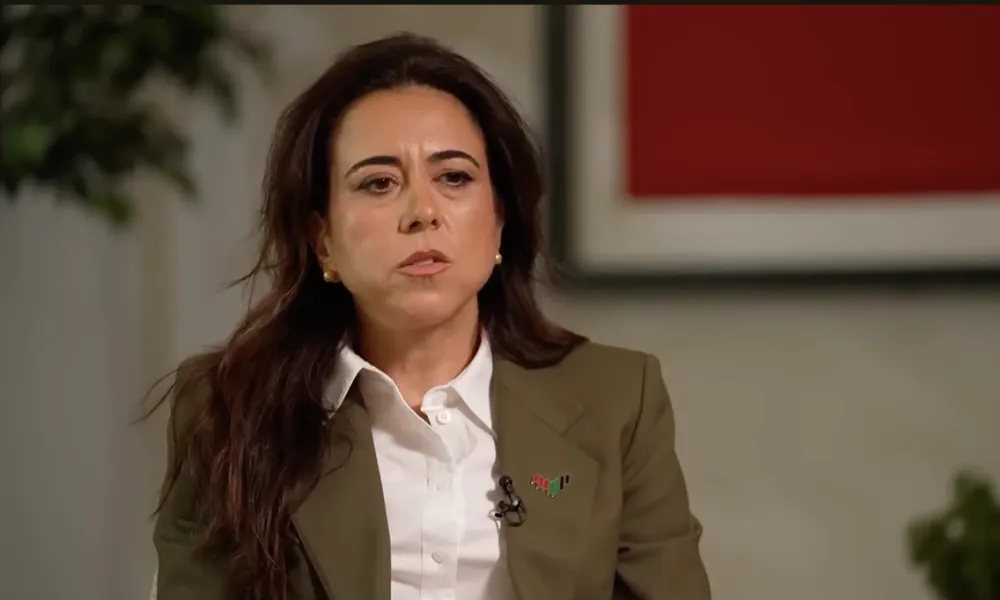
In an interview, UAE Minister of State for Foreign Affairs Lana Nusseibeh said Iran’s behaviour risks destabilising global supply chains at a time when the region is already under severe strain from escalating conflict.
Speaking from Abu Dhabi, Nusseibeh described the situation as a global concern rather than a purely regional one, stressing that the consequences of disruption in the Gulf would be felt far beyond the Middle East.
A strategic chokepoint for global energy
The Strait of Hormuz, a narrow waterway between Iran and Oman, carries roughly one fifth of the world’s oil supply, making it one of the most important maritime routes for global energy markets.
According to Nusseibeh, any sustained disruption could rapidly affect energy prices and ripple through global supply chains.
“Globally, about 20% of the world's energy supplies travel through that narrow waterway,” she told Euronews.
“If that is disrupted, it has an impact not only on global energy prices but also on global food security and food supplies.”
She added that the effects would ultimately be felt by households worldwide through rising costs at petrol stations and grocery stores.
UAE positions itself as stabilising supplier
Amid growing instability in the Gulf, the UAE has sought to reassure international markets that it remains a reliable energy partner.
Nusseibeh emphasised that the country intends to continue playing a stabilising role in global energy and logistics networks.
“In terms of energy supply, we are a responsible and committed supplier to the global energy market, and we will continue to do what we can,” she said.
The UAE also views its logistics infrastructure as critical to maintaining global trade flows.
“We are a global logistics hub. We connect destinations from Dubai, for example, to over 155 destinations around the world,” she said.
Gulf governments face strategic balancing act
The comments come two weeks into a conflict that has seen Iranian drones and missiles strike targets across the Gulf region.
According to the UAE government, the country has absorbed the highest number of Iranian missile and drone attacks among Gulf states since the escalation began.
“We've had an incredibly challenging 14 days,” Nusseibeh said, although she added that life in the UAE has largely returned to normal despite the attacks.
For Gulf governments, the response to the crisis requires a delicate strategic calculation. A strong military reaction risks widening the confrontation with Iran and drawing more regional and international actors into the conflict. At the same time, a weak response could leave critical infrastructure and civilian populations exposed.
Defensive readiness and economic resilience
Nusseibeh said the UAE had spent decades preparing for geopolitical volatility in the Gulf.
“We have been preparing for various scenarios in a very turbulent region for decades, so these are not new plans,” she told Euronews.
Those preparations include investments in military capability, logistics infrastructure and supply chain resilience.
The UAE has also strengthened its food and goods supply systems to withstand disruptions in global trade routes.
“We've built resilience into our food supply, in our market supply, and in our access to global goods,” she said.
She also highlighted the role of the country’s defence systems, describing the UAE’s air defence capabilities as “best in class”.
“Our UAE air defence systems are honed over decades of investment and real operational experience as part of coalitions,” she said, adding that the armed forces had kept communities and residents safe.
Avoiding escalation while defending stability
Despite the attacks, the UAE leadership says it is seeking to avoid further escalation while remaining ready to defend the country.
“We don't believe in military escalation, but we're tough when what we have fought so hard to build is challenged,” Nusseibeh said.
For the UAE, the stakes extend beyond immediate security concerns. The government sees itself as protecting a broader model of stability and economic openness in a region often marked by conflict.
“The red lines are the security, the prosperity, and the well-being of our Emirati community and our expatriate community,” Nusseibeh said.
“We consider all of them part of this country, and they deserve our protection.”
Source: Euronews & NBC