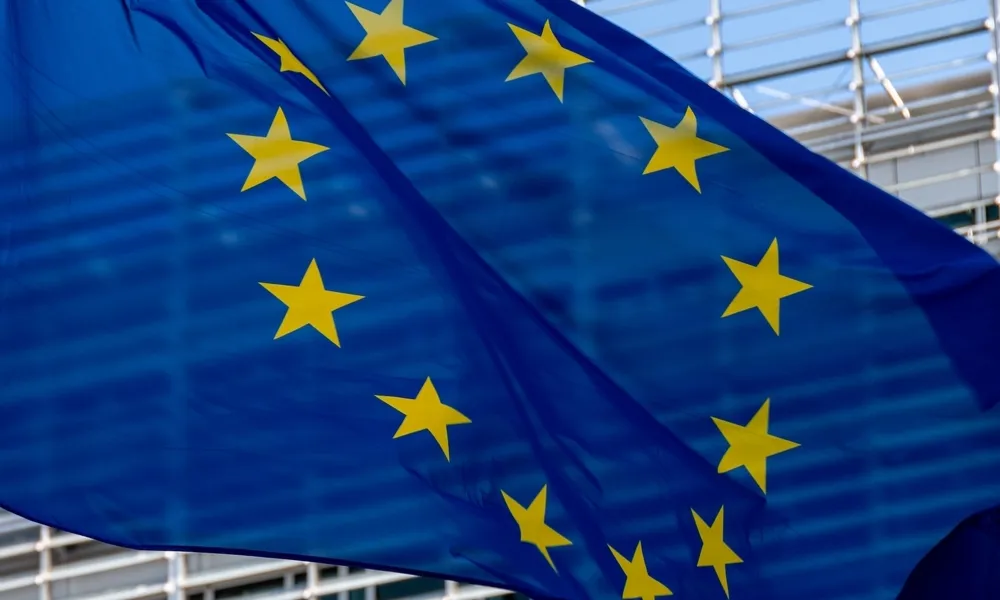
The European Commission said it is analysing the United States Supreme Court ruling that struck down Donald Trump’s sweeping emergency tariffs, as it seeks clarity from Washington on the next steps.
In a statement issued after the judgment, the Commission said it had taken note of the decision and remained in close contact with the US administration. It said businesses on both sides of the Atlantic depend on stability and predictability in the trading relationship. The Commission added that it continues to advocate for low tariffs and to work towards reducing them.
The response came after the US Supreme Court ruled, by six votes to three, that Mr Trump exceeded his authority by using the International Emergency Economic Powers Act, known as IEEPA, to impose broad import taxes.
Chief Justice John Roberts, writing for the majority, said the 1977 law does not grant the president the power to impose tariffs. The court held that IEEPA’s authority to “regulate importation” does not include the power to introduce tariffs.
IEEPA was passed by Congress and signed by former president Jimmy Carter. It allows a president to regulate commerce after declaring a national emergency. Historically, it has been used to impose sanctions or freeze assets. It does not specifically mention tariffs.
The court said that allowing tariffs under IEEPA would intrude on Congress’s constitutional authority over taxes and tariffs. The majority also relied in part on the “major questions” doctrine, which requires clear authorisation from Congress for executive actions of vast economic and political significance.
Chief Justice Roberts wrote that if Congress had intended to give the president such “distinct and extraordinary power” under IEEPA, it would have done so explicitly. He said the president must point to clear congressional authorisation to justify imposing tariffs, and “he cannot”.
The dissenting justices were Clarence Thomas, Samuel Alito and Brett Kavanaugh. Justice Kavanaugh wrote that tariffs are a traditional tool to regulate imports and argued that the text and history of IEEPA supported the administration’s position. He warned the ruling could create uncertainty around trade agreements facilitated by the tariffs.
Joining Chief Justice Roberts in the majority were conservative justices Neil Gorsuch and Amy Coney Barrett, along with liberal justices Sonia Sotomayor, Elena Kagan and Ketanji Brown Jackson. The liberal justices did not join the section of the opinion invoking the major questions doctrine.
The legal challenges were brought by small businesses and 12 Democratic-governed states. The US Court of Appeals for the Federal Circuit had sided with the businesses and the states. A separate ruling also favoured a family-owned toy company, Learning Resources.
Mr Trump began using IEEPA to impose tariffs after returning to office in January 2025. He applied import taxes to nearly every US trading partner. He cited trade deficits and the trafficking of fentanyl and other illicit drugs as national emergencies. In February and March 2025, he imposed tariffs on China, Canada and Mexico. On 2 April, which he called “Liberation Day”, he announced what he described as “reciprocal” tariffs on most trading partners.
The tariffs became central to his economic and foreign policy. They were used to press for concessions in trade negotiations and to respond to political disputes.
Economists at the Penn Wharton Budget Model estimated that more than 175 billion dollars had been collected under the IEEPA-based tariffs. That amount may now need to be refunded. The administration has not released tariff collection data since mid-December. The Congressional Budget Office had estimated that if all current tariffs remained in place, including those under IEEPA, they would generate about 300 billion dollars a year over the next decade. US Treasury data show that net customs duty receipts reached a record 195 billion dollars in fiscal year 2025, which ended on 30 September.
Some tariffs imposed under other laws are not affected by the ruling. Based on government data from October to mid-December, those measures account for around one third of the revenue from Mr Trump’s tariffs.
Treasury Secretary Scott Bessent has said the administration will examine other legal authorities to retain as many tariffs as possible. These include provisions allowing tariffs on goods that threaten national security and measures permitting retaliation against unfair trade practices.
The Supreme Court, which has a 6-3 conservative majority, had previously backed Mr Trump in several emergency decisions since his return to office. This ruling places a clear limit on the use of emergency powers for trade policy and reinforces Congress’s authority over tariffs.